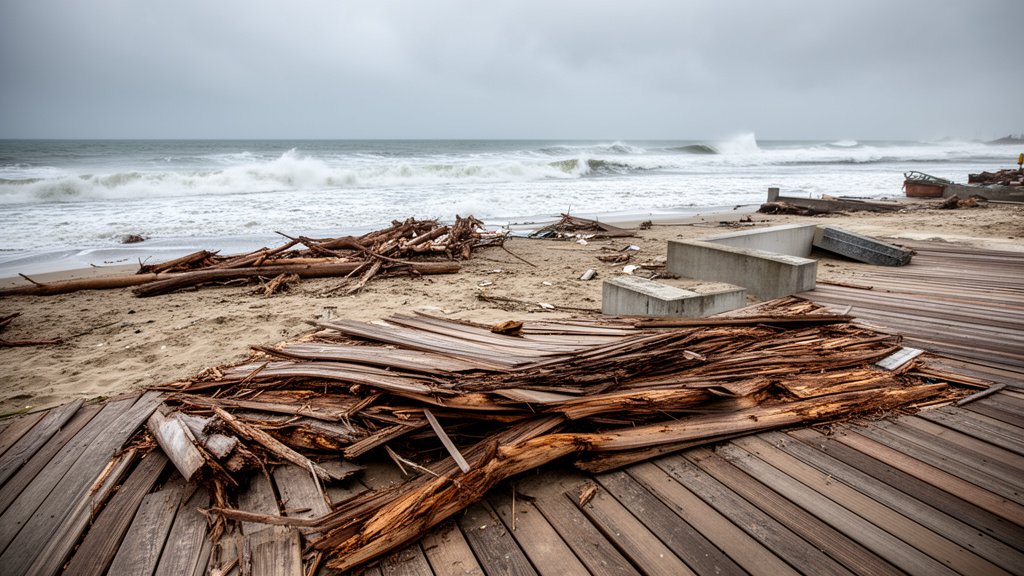
Coastal authorities are scrambling to assess the catastrophic damage left in the wake of a potent post-tropical cyclone that battered California’s coastline this week. The storm, which funneled immense wave energy directly into the Long Beach waterfront, has left boardwalks splintered, beachside homes flooded, and local infrastructure in a state of emergency. This event represents a significant escalation in the 2024 Pacific storm season, serving as a grim testament to the compounding volatility caused by El Niño.
Key Highlights
- Infrastructure Collapse: Significant portions of the iconic Long Beach boardwalk have been structurally compromised or entirely destroyed by heavy wave action and storm surge.
- Meteorological Convergence: The destruction was driven by a post-tropical cyclone, which delivered sustained, high-velocity wind and record-breaking wave heights along the Southern California coast.
- El Niño Impact: These weather events are part of a broader, record-breaking storm pattern exacerbated by ongoing El Niño conditions, which typically intensify Pacific storms and increase coastal flooding risks.
- Ongoing Risk: With the soil saturated and the Pacific storm season ongoing, experts warn that beachfront properties remain at high risk for further foundation damage and structural failure.
The Crisis on the Coast: Engineering vs. The Pacific
The recent devastation in Long Beach is not merely a product of a single storm, but the result of a catastrophic synergy between atmospheric conditions and coastal vulnerability. As the Pacific storm season continues to break records, the engineering limitations of California’s aging waterfront infrastructure have been laid bare. When a post-tropical cyclone makes landfall or brushes the coast, it does not act as a standard winter storm; it brings a complex, high-energy surge that can move thousands of tons of sand and debris in hours, effectively sandblasting boardwalks and undermining the foundations of seaside homes.
The Meteorological Drivers: Why This Storm Was Different
While Californians are accustomed to seasonal storms, the recent event highlights a dangerous shift in the frequency and intensity of oceanic behavior. Meteorologists at the National Oceanic and Atmospheric Administration (NOAA) have pointed to the interaction between the post-tropical cyclone and the current El Niño cycle. El Niño is characterized by warmer ocean temperatures in the equatorial Pacific, which shifts the jet stream and, crucially, creates a ‘highway’ for storms to track further south than usual. This means that areas like Long Beach, which might typically be shielded from the most intense northern Pacific storms, are now directly in the crosshairs.
Furthermore, the ‘post-tropical’ nature of this cyclone means it possessed a distinct structure, often holding significant moisture and erratic wind fields that differ from standard mid-latitude cyclones. This moisture, often associated with atmospheric rivers, compounded the wave energy, creating a dual-threat of ocean-side flooding and terrestrial inundation from heavy rainfall.
Infrastructure Under Siege: The Long Beach Case Study
The boardwalk in Long Beach is more than a tourist destination; it is a critical piece of coastal infrastructure designed to protect the immediate shoreline from erosion. However, the recent event proved that current mitigation strategies were insufficient. The damage observed—splintered wood, eroded concrete foundations, and debris-filled walkways—illustrates the force of ‘overtopping,’ where waves crash entirely over sea walls or barrier dunes.
Local civic leaders and the Long Beach City Council are now facing a difficult reality. The cost of repair is one factor, but the secondary angle of this story is the debate over ‘managed retreat’ versus ‘hardened infrastructure.’ Do we rebuild the boardwalk as it was, knowing the ocean is encroaching? Or do we invest in massive, expensive seawalls that may alter the very nature of the coastal environment? The consensus among urban planners is that the current approach is unsustainable, yet the economic reliance on tourism makes immediate retreat an unpalatable option for local businesses.
The Climate-Economic Nexus: Future-Proofing the Waterfront
Beyond the physical splintering of wood and concrete, there is a looming economic crisis for property owners and municipalities. The insurance sector is already recalibrating risk models for the Pacific Coast. As storm surges become more frequent, the ‘100-year flood’ becomes a recurring 10-year event. For homeowners, this translates to skyrocketing flood insurance premiums and a potential drop in property values for homes situated in the high-risk ‘splash zone.’
Moreover, the economic impact extends to the tourism sector. The Long Beach boardwalk is a vital artery for the local economy. Prolonged closures for repairs represent millions in lost revenue for restaurants, rental properties, and retail outlets. The city’s recovery effort is not just about logistics; it is a race against time to prepare for the next round of storms before the current season concludes. The reliance on emergency funds from FEMA (Federal Emergency Management Agency) is becoming a permanent fixture of annual budgeting rather than an occasional necessity.
Adaptation and Resilience: The Way Forward
Looking toward the future, the integration of new technologies is essential. Smart coastal monitoring, which uses buoy networks and satellite radar to predict wave energy before it hits the shore, is providing some respite. However, physical adaptation remains the primary hurdle. Architects are now proposing ‘resilient design’—elevated boardwalk structures that allow water to pass underneath, and the use of composite materials that are more durable than traditional timber. Yet, these designs come with significantly higher upfront costs.
As California grapples with the fallout of this post-tropical cyclone, the conversation is shifting from ‘disaster recovery’ to ‘disaster mitigation.’ The events of this week are a stark reminder that the coastline is not static; it is an active, evolving environment that is reacting sharply to changing global temperatures. If the current El Niño conditions persist, this may be the new normal for the Golden State—a reality where engineering must advance rapidly to keep pace with the power of a warming, restless ocean.
FAQ: People Also Ask
1. What makes a post-tropical cyclone different from a standard storm?
A post-tropical cyclone is a system that has lost its tropical characteristics (like a warm core) but can still retain high wind speeds and, crucially, carry vast amounts of moisture. When they interact with mid-latitude jet streams, they can create intense, prolonged weather events that cause significant flooding.
2. Is this level of flooding expected with El Niño?
Yes. El Niño conditions typically alter the path of the jet stream, directing storms further south toward California. This increases the likelihood of strong storm surges, heavy rainfall, and coastal flooding along the Southern California coast.
3. Will the Long Beach boardwalk be rebuilt?
The city has initiated emergency repair protocols. However, the scope of the reconstruction is under review. Officials are assessing whether to simply repair the existing structure or to redesign portions of it to withstand higher-energy wave impacts in the future.
4. How can homeowners protect against these storms?
Experts recommend installing flood barriers, ensuring proper drainage around property foundations, and reviewing flood insurance coverage. Given the increasing unpredictability of these storms, many are also looking into elevating critical electrical and utility infrastructure.