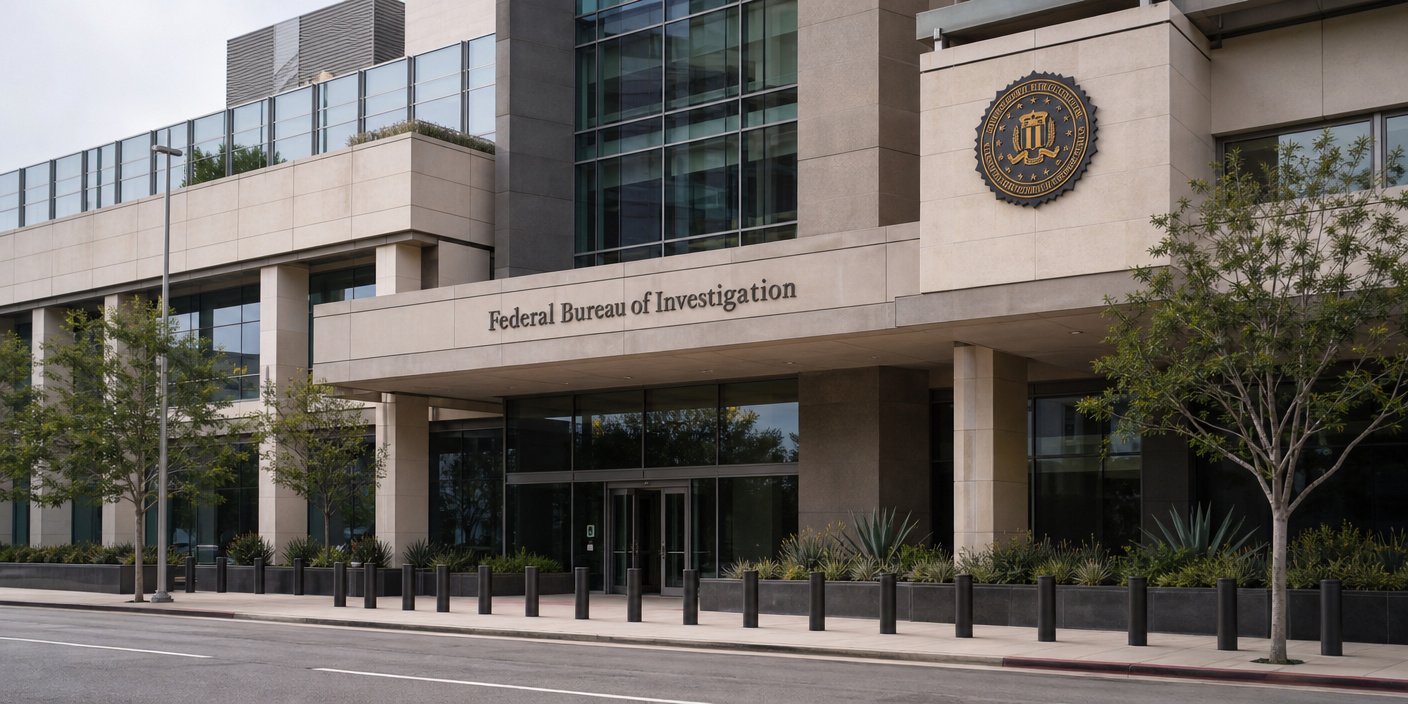
A newly emerged whistleblower report has ignited a firestorm of controversy, alleging that former President Donald Trump exerted significant pressure on the Department of Justice to initiate a targeted FBI investigation within Los Angeles. The document, which has been submitted to federal oversight committees, claims this directive was intended to impact local political dynamics, raising renewed alarms regarding the long-standing debate over the independence of federal law enforcement agencies from executive interference.
Key Highlights
- The Allegation: A formal whistleblower complaint asserts that former President Trump actively pressured federal officials to launch a specific investigative probe centered in Los Angeles.
- Politicization Concerns: The report suggests the directive was aimed at influencing local political developments, intensifying the national conversation regarding the separation of powers.
- Institutional Tension: Law enforcement experts and government oversight advocates are citing this report as a critical test for institutional integrity and the independence of the Department of Justice.
- Congressional Response: The allegations have prompted calls for immediate congressional review, with lawmakers demanding clarity on the extent of executive influence over active FBI investigations.
The Anatomy of the Allegation: Executive Authority vs. Federal Independence
The core of the report centers on the delicate, and often contested, boundary between the Executive Branch’s role in overseeing the Department of Justice and the operational independence required by the FBI. According to the whistleblower’s submission, the directive to launch an investigation in Los Angeles was not born out of traditional criminal predicate—such as evidence of a federal crime—but rather originated from top-down pressure intended to serve political objectives.
This specific allegation brings to the forefront the broader, multi-year scrutiny regarding the “politicization” of the DOJ. By targeting a specific metropolitan area like Los Angeles—a critical nexus for both economic and political activity in the United States—the report suggests a strategy of localized pressure that could reverberate across national law enforcement priorities. The whistleblower, who reportedly held a position of responsibility within the federal government, details specific communications that, if verified, could indicate a breach of established protocols designed to insulate investigative decisions from political influence.
Investigating the Los Angeles Connection
Los Angeles has frequently been the site of complex federal investigations, ranging from public corruption cases to organized crime operations. However, the whistleblower report contends that this particular probe was distinct in its origins. The account suggests that the focus was not on a traditional criminal threat but on entities or individuals holding specific relevance to the political climate of the time.
Critics of the administration at the time have long argued that the FBI’s regional field offices, including the LA Division, were vulnerable to being leveraged for political signaling. This whistleblower report appears to provide the most concrete documentation to date of such a directive. The report outlines specific timelines where instructions were allegedly funneled through layers of the Justice Department chain of command, effectively bypassing the internal filters meant to prevent partisan weaponization of the bureau.
The Fragile Boundary of DOJ Independence
The independence of the Department of Justice is a cornerstone of the American legal system. Under the “Watergate-era” reforms and post-Watergate norms, the President generally does not involve themselves in specific, ongoing FBI investigations. This firewall exists to ensure that law enforcement decisions are based solely on evidence and the rule of law, not the political fortunes of the current administration.
If the whistleblower’s claims are substantiated, it suggests a profound erosion of this firewall. Legal scholars point out that the issue is not just the initiation of the investigation, but the potential for the investigation to have been used as a tool for leverage, intimidation, or public perception management. The ripple effects of such a move are significant: they threaten to undermine public trust in the FBI and potentially complicate thousands of other criminal cases where the defense could claim, even tangentially, that investigations were influenced by political bias rather than objective evidence.
Potential Legal and Political Fallout
The release of this report initiates a high-stakes verification process. Congressional oversight committees are expected to demand access to internal communications, email chains, and testimony from the officials cited in the report. The burden of proof will now rest on these investigative bodies to determine the veracity of the claim—whether this was a legitimate law enforcement action that was simply mischaracterized, or a clear violation of executive norms.
For the FBI, the fallout is operational as well as reputational. The agency has spent years attempting to maintain a stance of non-partisanship in an increasingly polarized political environment. An allegation of this magnitude, regardless of the ultimate finding, forces the Bureau to defend its independence once more. Moreover, it places current leadership in a difficult position: they must balance the need for transparency with the necessity of protecting ongoing, sensitive investigative methods and sources.
As the investigation into these claims begins, the focus will remain on the specific directives allegedly issued and the chain of command that allowed them to be executed. The ultimate resolution of this controversy will serve as a precedent, defining the limits of presidential power over the nation’s premier law enforcement agency for years to come.
FAQ: People Also Ask
1. What is the significance of the Los Angeles FBI field office in this report?
The Los Angeles FBI field office is one of the largest in the country. The report focuses on it, likely because the alleged investigation targeted figures or political organizations unique to the LA area, potentially intending to create a localized impact that would have wider national political ramifications.
2. Does a whistleblower report automatically prove wrongdoing?
No. A whistleblower report is an allegation submitted through official channels. It serves as a starting point for investigations, not as a conclusive finding of guilt. It must be subjected to rigorous corroboration, including the review of physical evidence and testimony from other involved parties.
3. How does the DOJ maintain its independence from the President?
While the Attorney General is an appointee of the President, historical norms and departmental regulations generally forbid the White House from interfering in specific, ongoing investigations. These rules are designed to prevent the President from using the Department of Justice as a personal instrument for political gain.
4. What are the potential consequences if the allegations are proven true?
If proven, the consequences could range from congressional censure and legislative changes to tighten DOJ independence, to significant damage to the credibility of the institutions involved. It could also lead to legal challenges in cases that were tangentially related to the investigation in question.