Governor Gavin Newsom has officially proclaimed a state of emergency across California to proactively manage the risks associated with a forecast ‘historic’ El Niño season. The measure authorizes state agencies to expedite resource staging, infrastructure hardening, and emergency readiness to mitigate flood, landslide, and coastal risks before winter conditions intensify. This proclamation serves as a strategic pivot, shifting the state from long-term drought management to an aggressive, urgent posture against potential atmospheric rivers and extreme precipitation events that characterize intense El Niño cycles.
Key Highlights
- Proclamation Scope: The emergency declaration grants the California Governor’s Office of Emergency Services (Cal OES) and the Department of Water Resources (DWR) immediate authority to bypass standard procurement delays to acquire flood-fighting equipment and services.
- Infrastructure Hardening: Primary focus is directed at stabilizing aging levee systems in the Central Valley and clearing drainage channels in urban areas susceptible to flash flooding.
- Strategic Resource Staging: Over $135 million in flood-response resources, including specialized pumps, sandbags, and heavy equipment, have been pre-positioned in high-risk zones.
- Agency Coordination: The directive mandates unprecedented cooperation between the California National Guard, local sheriff departments, and FEMA to ensure seamless response capabilities in the event of levee breaches or mass evacuations.
The Shielding of California: Tactical Resilience Against El Niño
The proclamation of a state of emergency is not merely a bureaucratic gesture; it is a vital operational tool designed to collapse the time required to mobilize the state’s massive logistical apparatus. Historically, California’s response to disaster has often been reactive. By declaring an emergency before the first major storms of the season arrived, the Newsom administration has effectively moved the state into a ‘pre-emptive defense’ posture, specifically aimed at mitigating the catastrophic potential of a significant El Niño event.
Mobilizing the State Apparatus
At the heart of this directive is the activation of the California Governor’s Office of Emergency Services (Cal OES). Their mandate, under this proclamation, is to streamline the flow of funds and labor. In previous years, local jurisdictions often faced delays in securing state or federal reimbursements for emergency repairs to drainage systems or debris management. The current declaration removes these fiscal bottlenecks, allowing cities and counties to initiate critical infrastructure work—such as reinforcing embankments or clearing storm drains—without waiting for lengthy administrative approval cycles.
This administrative agility is coupled with a technological integration effort. The Department of Water Resources (DWR) has integrated satellite-based precipitation forecasting with ground-based sensor networks. This data-sharing architecture allows state planners to predict not just where the rain will fall, but where the highest probability of landslide and debris flow exists, enabling the proactive deployment of heavy equipment to those specific coordinates before the weather event makes access impossible.
The Infrastructure Frontline
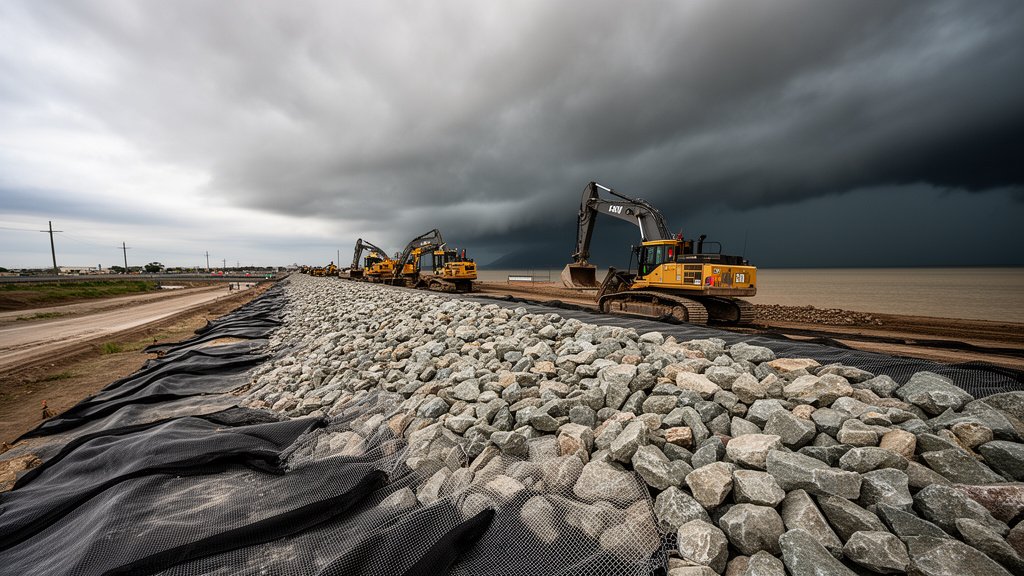
The primary adversary in this battle is the fragility of California’s water infrastructure. Decades of deferred maintenance on the levee systems that protect the Central Valley and the Sacramento-San Joaquin Delta have created a critical vulnerability. Under the emergency provisions, the state has prioritized the ‘hardening’ of these levees. This involves the deployment of specialized geotextiles and reinforced riprap—large rock used to armor shorelines against water erosion.
Furthermore, the emergency status has authorized the Department of Transportation (Caltrans) to prioritize the repair of coastal highways. Highways 1 and 101, notorious for their susceptibility to cliffside landslides during intense precipitation, have seen a surge in mitigation efforts, including the installation of netting and catchment basins designed to halt boulders and mudflows before they reach active traffic lanes. This is a critical economic imperative; maintaining these transportation arteries is essential for the supply chain, as their closure can isolate coastal communities and disrupt agricultural logistics.
Adapting to the Climate Whiplash
A secondary, yet crucial, angle to this story is the psychological and logistical ‘whiplash’ that California is experiencing. For years, the policy focus was almost exclusively on drought mitigation, water conservation, and arid-land management. The sudden, state-mandated shift toward flood preparedness highlights the extreme volatility of California’s climate trajectory. Experts suggest that the state is moving into a period where the oscillation between extreme dry and extreme wet will become the new normal.
This emergency proclamation is, therefore, a prototype for future climate adaptation policies. It demonstrates that the state can manage resources for both ends of the spectrum—drought and deluge. Economic analysts are also watching closely: the cost of proactive flood mitigation, while high, is estimated to be a fraction of the total economic loss that a large-scale, unmanaged flood event would incur. By investing in these protective measures now, the state is attempting to insulate the multi-billion dollar agricultural industry from the devastating loss of crops and land destruction that historically accompanies the overflow of the state’s major river systems.
FAQ: People Also Ask
Q: What specific powers does a state of emergency grant the Governor?
A: It allows the Governor to suspend certain statutes, regulations, or rules that would otherwise hinder the rapid response to an emergency. This includes expediting contracts for equipment, diverting funds to emergency agencies without legislative sessions, and mobilizing the California National Guard.
Q: How does this proclamation protect individual homeowners?
A: While the proclamation focuses on state-level infrastructure, it provides the legal framework for local agencies to receive state support. This means that local flood control districts get the resources they need to keep drainage systems functioning, which directly reduces the risk of neighborhood-level flooding.
Q: Is this proclamation related to climate change?
A: Yes. Governor Newsom and climate scientists have linked the increased frequency and intensity of El Niño-driven weather patterns to broader climatic shifts, necessitating more robust and flexible emergency response strategies.
Q: What is the primary risk of a strong El Niño in California?
A: The primary risks include excessive precipitation leading to flash floods, the saturation of hillsides leading to catastrophic mudslides, and the stress on levees from prolonged high water flows, which could cause breaches in the Delta and Central Valley.