California regulators have taken a decisive step to address the environmental footprint of the artificial intelligence boom, with the California Energy Commission (CEC) officially expanding its oversight of AI data centers. The new directive mandates that operators disclose specific metrics regarding water consumption, cooling system efficiency, and the potential impact of these facilities on local municipal water supplies. This shift marks a pivotal moment where the rapid development of generative AI is being directly tethered to the reality of the state’s long-term water scarcity and grid reliability.
Key Highlights
- Mandatory disclosure requirements for water usage (Water Intensity) are now enforced for large-scale data facilities.
- Cooling system efficiency data, including Power Usage Effectiveness (PUE) metrics, must be reported to the CEC.
- The audit emphasizes the protection of municipal water districts, preventing private AI infrastructure from outcompeting local residential needs.
- New compliance deadlines are set for operators to submit current consumption data, aiming to establish a baseline for future regulatory limits.
The Regulatory Pivot: Confronting the Water-Energy Nexus
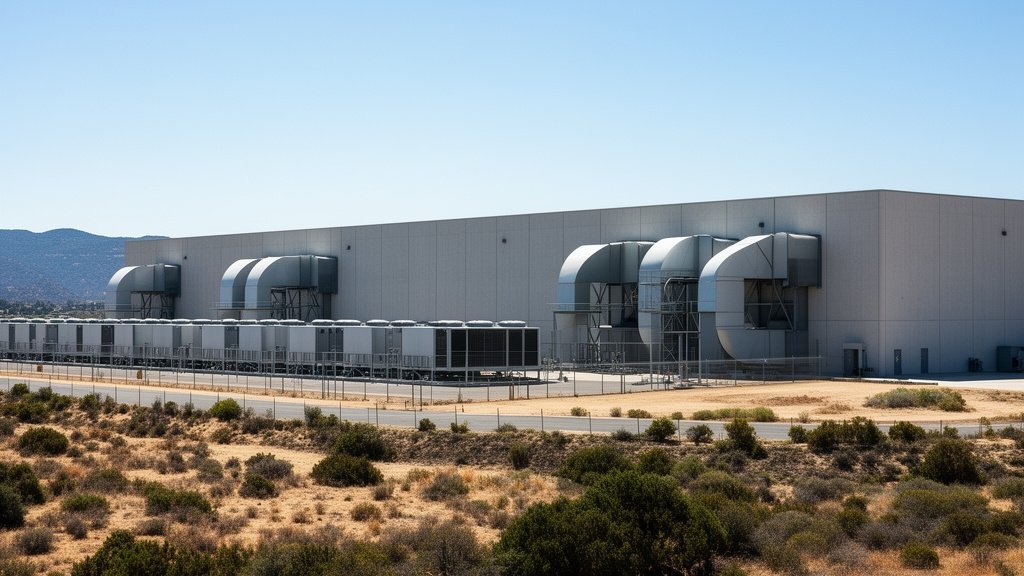
The California Energy Commission has long overseen the energy consumption of industrial facilities, but the surge in power-hungry AI training clusters has forced a change in strategy. Historically, data centers were viewed largely through the lens of electricity demand. Today, the CEC is prioritizing the “water-energy nexus,” acknowledging that the thermodynamics of cooling massive server arrays requires staggering amounts of water. Many modern data centers utilize evaporative cooling systems—essentially giant fans that blow air through wet membranes—to keep chips from overheating. While cost-effective, this process consumes millions of gallons of water annually.
The Thermodynamics of Cooling
As AI models increase in complexity, the hardware powering them, such as advanced GPUs (Graphics Processing Units), generates significantly more heat than traditional server hardware. Standard cooling methods are often insufficient, pushing operators to rely on water-intensive solutions. By mandating disclosure, the CEC aims to strip away the opacity surrounding these operations. The goal is to obtain granular data on “Water Usage Effectiveness” (WUE), a metric that tracks how much water a data center consumes per kilowatt-hour of energy utilized. Without this data, regulators argue, California cannot accurately project the strain these facilities will place on municipal water tables over the next decade.
Implications for Big Tech Infrastructure
For hyperscalers like Google, Meta, and Microsoft, which operate massive server farms within California, this regulatory expansion introduces a new layer of operational overhead. Compliance is not merely an administrative task; it is an engineering challenge. The audits will likely pressure these companies to pivot away from evaporative cooling and toward more sustainable alternatives, such as closed-loop systems, air-side economization, or advanced liquid cooling solutions that circulate coolant directly against the silicon. The regulatory signal is clear: the era of unchecked resource consumption in the name of AI scaling is coming to an end.
Future-Proofing Data Center Architecture
Looking ahead, this regulatory movement is expected to catalyze a redesign of the data center. Infrastructure architects are already exploring high-density computing modules that require less floor space and, crucially, less water per compute unit. Furthermore, there is significant discussion regarding “grid-aware” data centers that can modulate their energy and water usage dynamically based on the state’s current supply conditions. By forcing transparency now, the CEC is effectively creating an incentive structure that rewards efficiency, likely pushing future AI development toward locations with cooler climates or more advanced water-recycling infrastructure.
FAQ: People Also Ask
Q: Why is water usage a concern for AI data centers?
A: AI data centers house thousands of high-performance servers that generate immense heat. Evaporative cooling systems are commonly used to dissipate this heat because they are efficient at maintaining stable temperatures, but they require constant water replenishment, which can strain local water supplies in drought-prone areas like California.
Q: What specific metrics are operators required to report?
A: Operators must report total water consumption, efficiency ratios such as Water Usage Effectiveness (WUE), cooling system type (e.g., evaporative vs. closed-loop), and the potential environmental impact on the specific municipal water district serving the facility.
Q: Will this regulation slow down AI development in California?
A: While it adds compliance costs and engineering constraints, it is primarily designed to ensure long-term sustainability. It may force operators to prioritize more efficient, higher-cost cooling technologies, which could impact the capital expenditure of future AI infrastructure projects within the state.