The idyllic serenity of Big Sur, California, has been shattered by a fatal traffic accident that local residents are calling the inevitable conclusion to years of unmanaged overtourism. For those who call the rugged coastline home, the tragedy was not a surprise but a warning finally realized—a culmination of years spent watching narrow, winding roads become clogged with distracted drivers, haphazard parking, and the relentless pressure of mass tourism.
The Anatomy of a Crisis
The recent fatal incident, which has drawn intense scrutiny from the California Highway Patrol (CHP) and Monterey County authorities, occurred along a notoriously dangerous stretch of Highway 1. While specific details of the collision remain under investigation, the incident has served as a catalyst for a community already at its breaking point. Residents, who have long complained about the degradation of their living conditions and the erosion of basic public safety, are now escalating their calls for immediate, aggressive intervention by state officials and Caltrans.
For years, the refrain among the local population has been hauntingly consistent: “People kept saying someone is going to die.” That chilling prediction has now become a reality, shifting the conversation from a quality-of-life grievance to a critical issue of public infrastructure and emergency management.
The ‘Instagramification’ of Danger
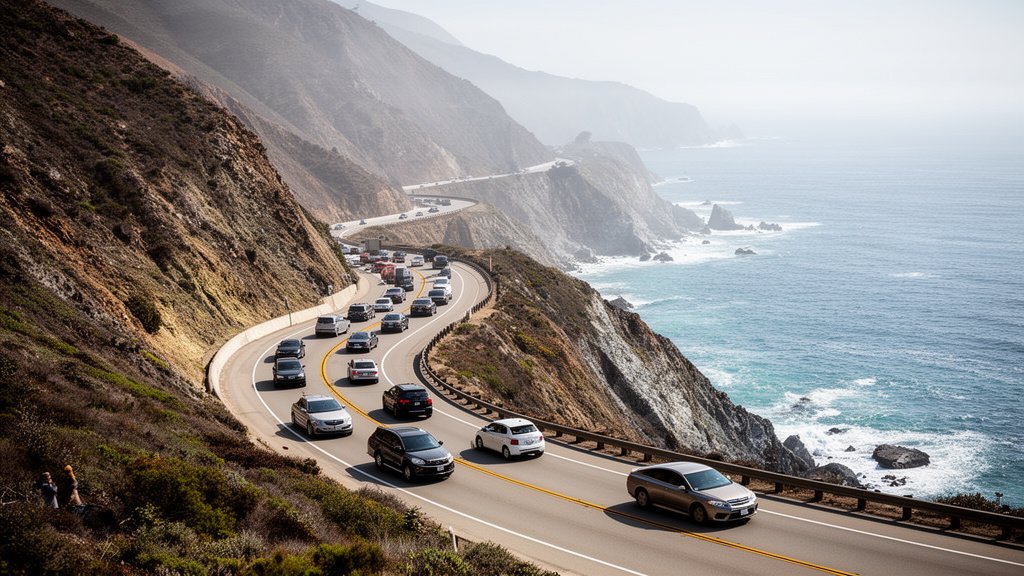
A primary secondary angle in this crisis is the impact of digital geography. The rise of social media and location-tagging platforms has transformed Big Sur from a bucket-list destination into a high-density tourist corridor. Unlike traditional state parks with controlled entry points, Highway 1 is a throughway with limited pull-outs and narrow shoulders. Visitors, driven by the desire for the perfect photo, often stop illegally on blind curves, force lane changes in dangerous areas, or walk into traffic. This “Instagramification” of the coastline puts a strain on the physical road that it was never engineered to bear, creating localized hotspots of gridlock and reckless driving that emergency responders struggle to navigate.
Infrastructure Mismatch: A Legacy Road in a Modern Era
The fundamental conflict lies in a mismatch between 1930s infrastructure and 21st-century tourism volume. The highway was built for scenic navigation, not for the sheer volume of vehicles currently attempting to traverse it during peak season. Caltrans faces a monumental challenge: managing a fragile, cliffside road that is prone to geological instability and landslides, while also attempting to accommodate a level of traffic that consistently exceeds capacity. Residents argue that without a managed reservation system or more restrictive access, the road remains a death trap waiting to happen. The paradox is clear: the region’s economic reliance on tourism is currently subsidized by the safety of the locals and the environment itself.
The Jurisdictional Tug-of-War
There is also a complex web of governance at play. Big Sur is largely unincorporated, meaning it lacks a singular local government to enforce ordinances. Jurisdiction is split between Monterey County, state agencies like Caltrans, and federal oversight in protected areas. This fragmented authority has historically led to a “not my problem” cycle when it comes to traffic enforcement and infrastructure investment. Residents contend that the bureaucratic inertia has allowed the overtourism crisis to fester, prioritizing visitor throughput over the safety of the residents who live along these dangerous corridors. The recent fatality has shifted the leverage in these negotiations, with community groups now demanding a seat at the table to discuss tolling, stricter parking enforcement, and perhaps even daily vehicle caps.
Looking Ahead: Can Big Sur Reclaim Safety?
The path forward is fraught with difficulty. Solutions such as restricted entry or heavy enforcement come with their own political costs and could stifle the local economy that relies on tourism dollars. However, the tragedy has forced a realization that the status quo is no longer tenable. As authorities piece together the events of the recent accident, the pressure on officials to prioritize human life over tourism revenue is reaching a fever pitch. Whether this serves as a wake-up call for comprehensive reform or merely another chapter in a long history of infrastructure neglect remains to be seen.