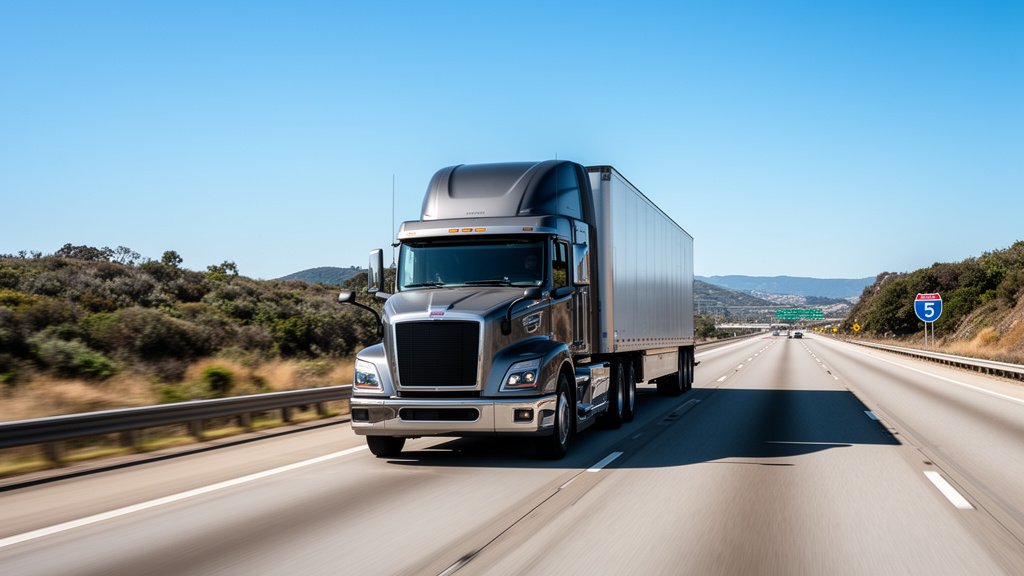
Washington state is spearheading a transformative shift in logistics, joining forces with Oregon and California to establish the West Coast zero-emission freight corridor. This tri-state coalition aims to decarbonize the massive volume of heavy-duty shipping that travels along the Interstate 5 (I-5) corridor, a vital artery that connects Canada to Mexico and supports the vast majority of goods movement on the West Coast. Backed by $21 million in federal funding, this initiative represents a critical pivot toward sustainable freight infrastructure, addressing the “chicken-and-egg” dilemma that has long hindered the adoption of zero-emission heavy-duty vehicles: the lack of accessible, high-capacity charging and fueling infrastructure.
The Strategic Importance of the I-5 Artery
Interstate 5 is not merely a highway; it is the economic backbone of the American West. From the ports of Los Angeles and Long Beach in Southern California to the international border crossings in Washington and British Columbia, this route facilitates billions of dollars in commerce annually. However, the reliance on diesel-powered trucks has made this corridor a significant source of regional greenhouse gas emissions. By targeting I-5, the states of Washington, Oregon, and California are focusing their resources where the environmental impact and economic necessity intersect most acutely.
The collaboration, involving the Washington State Department of Transportation (WSDOT), the Oregon Department of Transportation (ODOT), and the California Department of Transportation (Caltrans), is designed to create a seamless, interoperable network. The $21 million grant, sourced from the Federal Highway Administration’s (FHWA) Charging and Fueling Infrastructure (CFI) Discretionary Grant Program, will act as the catalyst for private and public investment. Unlike passenger vehicle charging, which can rely on standard 480-volt systems, heavy-duty freight requires high-powered charging stations capable of delivering megawatts of energy to recharge massive battery packs in a time-efficient manner suitable for the logistics industry.
Anatomy of the $21 Million Federal Investment
Securing $21 million in funding is a significant legislative victory, but in the context of infrastructure, it is a seed investment. The funding is specifically earmarked to incentivize the deployment of both battery-electric vehicle (BEV) charging stations and hydrogen fueling stations. The strategy is to create “charging hubs” at strategic intervals along the 1,300-mile corridor. By clustering these sites, the states aim to mitigate range anxiety for freight operators, ensuring that a driver can traverse the entire West Coast without fear of being stranded.
This funding addresses the critical gap in current infrastructure: the lack of commercial-grade high-speed chargers. While the consumer EV market has seen a proliferation of chargers, the freight sector has been neglected due to the unique requirements of heavy-duty trucks. These trucks require higher power output, larger turning radii to accommodate long trailers, and high-security sites. The federal money is intended to lower the barrier to entry for private companies—such as logistics firms and energy providers—to install this specialized equipment. By derisking the initial capital expenditure, the states hope to create a self-sustaining ecosystem where private investment takes over once the network foundation is laid.
The Hydrogen vs. Battery Dilemma
One of the most nuanced aspects of the West Coast zero-emission freight corridor is the decision to support both battery-electric and hydrogen fuel cell electric vehicle (FCEV) technologies. This dual-track approach recognizes that different types of freight movement require different energy solutions. Battery-electric trucks, which are currently more efficient for shorter hauls and urban-to-regional deliveries, are well-suited for the mid-range travel typical of many I-5 freight movements. However, for long-haul shipping where every pound of cargo weight and minute of drive time matters, hydrogen fuel cells present a compelling alternative.
Hydrogen trucks offer shorter refueling times—comparable to diesel—and a higher energy density, which translates to longer ranges and less weight penalty for the vehicle. By supporting both technologies, the tri-state coalition is hedging its bets against future technological bottlenecks. This approach ensures that the corridor remains future-proof, regardless of which propulsion technology eventually claims dominance in the heavy-duty sector. It also allows logistics carriers to select the technology that best fits their specific operational profile, whether it be short-haul port drayage or long-haul interstate transit.
Economic Resilience and Supply Chain Transformation
Beyond environmental goals, this project is fundamentally about economic resilience. The global supply chain is increasingly facing pressure to decarbonize, with multinational corporations demanding “green” logistics from their carriers to meet ESG (Environmental, Social, and Governance) targets. By building out this corridor, Washington, Oregon, and California are effectively “future-proofing” their supply chains. If the West Coast can offer a fully electrified or hydrogen-powered freight route, it maintains its competitive advantage as a global logistics hub.
Furthermore, the shift to electric freight could lower operational costs for shipping companies over the long term. Electricity and hydrogen are, in many scenarios, more stable in price than diesel fuel, which is subject to global oil market volatility. By investing in this infrastructure now, the states are providing companies with the ability to lock in lower, more predictable “fueling” costs, which in turn can stabilize the cost of goods for consumers. The transition will also spur job creation in the green energy sector, specifically for the installation, maintenance, and operation of these high-tech fueling stations.
The Road Ahead: Overcoming Infrastructure Barriers
The road to a fully zero-emission I-5 is not without significant hurdles. The foremost challenge is grid capacity. Heavy-duty charging stations will place a massive, instantaneous load on the electrical grid. Upgrading substations and transmission lines to accommodate these demands will require massive coordination with local utility providers and energy regulators. It is not enough to simply install the chargers; the energy must be available on demand, 24/7, across rural and urban segments alike.
Another critical challenge is regulatory harmonization. While WSDOT, ODOT, and Caltrans are collaborating, they operate under different state laws, building codes, and permitting processes. Creating a “seamless” experience for a truck driver necessitates that the regulatory environment be as consistent as possible. This involves standardizing payment systems, signage, and site design across state lines. The success of the project will ultimately depend on the ability of these three states to navigate the bureaucracy and maintain a unified vision over the coming decade of construction.
As the project moves from planning to execution, the West Coast is positioning itself to lead the nation in heavy-duty electrification. The $21 million is merely the start, but it serves as the crucial “proof of concept” that will likely unlock billions in subsequent private investment, solidifying the I-5 corridor as the first truly green highway in the United States.
FAQ: People Also Ask
1. What is the West Coast Zero-Emission Freight Corridor?
It is a collaborative initiative between Washington, Oregon, and California to build a network of electric vehicle (EV) charging and hydrogen fueling stations along Interstate 5, enabling zero-emission trucking across the entire West Coast.
2. Why was I-5 chosen for this project?
I-5 is the primary logistics artery for the West Coast, connecting major ports, manufacturing centers, and international borders. It carries the highest volume of freight traffic in the region, making it the most impactful location for reducing emissions.
3. How is the $21 million funding being utilized?
The funding, awarded through the Federal Highway Administration’s Charging and Fueling Infrastructure (CFI) program, will be used to lower the capital costs for installing high-capacity EV chargers and hydrogen stations, making it financially viable for private operators to build this infrastructure.
4. Does the project support both electric and hydrogen trucks?
Yes. The project recognizes the different operational needs of freight and supports both Battery-Electric Vehicles (BEVs) for shorter-to-mid-range hauls and Hydrogen Fuel Cell Electric Vehicles (FCEVs) for long-haul requirements.
5. When will these charging stations be operational?
While specific dates for individual station completion vary, the rollout is part of a long-term strategic plan that will see phased implementation over the coming years as grid upgrades and construction permit approvals proceed.