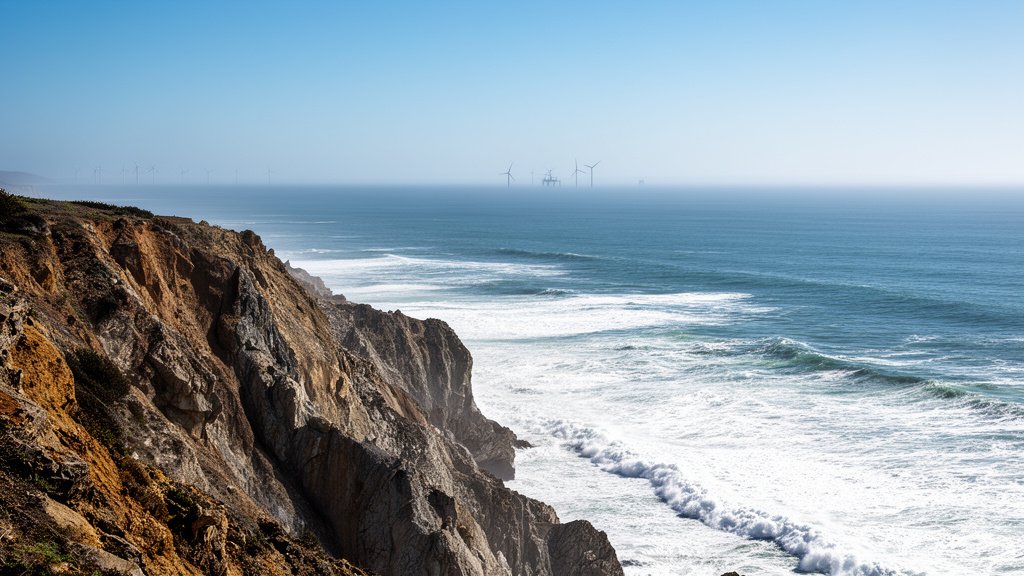
California’s long-standing authority over its 840-mile coastline is under intense scrutiny as federal authorities initiate a review of coastal commerce regulations. This shift, which environmental advocates warn could dilute the foundational power of the California Coastal Commission (CCC), threatens to upend decades of environmental precedent and potentially pave the way for accelerated offshore drilling and renewable energy infrastructure projects that the state currently restricts. The stakes are immense: at the center of the debate is the delicate balance between the state’s stringent environmental safeguards and the federal government’s broader mandate to oversee commerce and national energy infrastructure.
Key Highlights
- Regulatory Friction: A federal review under the Coastal Zone Management Act (CZMA) is testing the extent of California’s ability to veto federal projects in state waters.
- The CCC at Risk: Critics fear the review could establish a precedent that strips the California Coastal Commission of its power to mandate strict environmental compliance for offshore developments.
- Energy vs. Environment: The clash pits California’s robust “Green” legislative agenda against federal pressure to ramp up offshore wind and energy extraction projects to meet national carbon-neutrality targets.
- Economic Implications: Coastal property values, tourism, and marine ecosystem stability hang in the balance, with billions of dollars in state economic output tied to the preservation of the shoreline.
The Constitutional Collision: State Autonomy vs. Federal Mandate
For nearly five decades, the California Coastal Commission has stood as the primary gatekeeper of the Golden State’s shoreline. Established by the 1976 California Coastal Act, the agency holds broad “consistency review” powers, allowing it to evaluate whether federal actions—such as offshore drilling, pipeline construction, or large-scale energy infrastructure—align with the state’s rigorous environmental and preservationist standards. However, the current federal initiative, led by federal agencies assessing coastal commerce, appears to be an attempt to reframe these state-level restrictions as impediments to national trade and energy security.
The core of the legal argument lies in the Commerce Clause of the U.S. Constitution and the nuances of the Coastal Zone Management Act (CZMA). While the CZMA was originally designed to give states a “seat at the table” regarding federal actions, federal officials are now signaling that state-level opposition to specific energy infrastructure may constitute an unreasonable burden on interstate commerce. This is not merely a bureaucratic skirmish; it is a fundamental challenge to the legislative architecture that has kept California’s coastline largely free from the industrial-scale offshore development seen in other parts of the country.
The Offshore Energy Dilemma
At the heart of the controversy is the transition to renewable energy. While the Biden-Harris administration has pushed for rapid expansion of offshore wind energy—seen as essential to meeting national climate goals—the California Coastal Commission has insisted on meticulous oversight to prevent ecological disruption. The CCC has frequently demanded that energy companies prove that their projects will not harm marine biodiversity, disturb migratory paths, or erode the aesthetic and economic value of the coastline.
Federal entities, however, argue that these requirements often devolve into “regulatory bottlenecks” that delay critical green infrastructure for years. There is a palpable fear among state legislators that federal authorities might leverage this review to streamline the approval process, effectively bypassing the CCC’s mandate. For environmental advocates, this is a dangerous slippery slope. If federal power is allowed to override state-level environmental protections for renewable energy, they argue it creates a legal loophole that could just as easily be weaponized to re-authorize offshore oil drilling or gas extraction in the future.
Economic and Environmental Ripples
Beyond the political maneuvering, the economic consequences are significant. California’s coastal economy—a juggernaut driven by tourism, commercial fishing, and high-value real estate—relies heavily on the pristine state of the shoreline. If the CCC is weakened, the certainty that has governed coastal development for nearly 50 years could evaporate. Property owners, local governments, and business owners are watching the federal review closely, fearing that a loss of local control could lead to a sudden influx of heavy infrastructure projects that are currently barred under state law.
Furthermore, the ecological implications are profound. The Pacific coast supports a complex web of marine life, and the CCC’s authority allows for site-specific mitigation strategies that federal “one-size-fits-all” regulations may overlook. Removing the CCC from the decision-making process would essentially centralize power in Washington, D.C., where regulators may lack the granular understanding of California’s unique coastal geography and seismic risks.
Future Outlook: A Precarious Balance
As the federal review proceeds, California is bracing for a protracted legal and political battle. The state is expected to leverage every available legal instrument to defend its “consistency” authority, arguing that environmental preservation is not a barrier to commerce but a prerequisite for sustainable economic health.
Regardless of the outcome, the current tension highlights a growing divide between federal efficiency mandates and state sovereignty. The coming months will likely see a flurry of litigation, as NGOs, the state of California, and potentially even local coastal municipalities seek to intervene in any administrative action that threatens to undermine their oversight. The fight to protect the California coastline is no longer just about preventing a specific project; it is about defending the principle of local environmental self-determination in an era of centralized energy planning.
FAQ: People Also Ask
Q: What is the California Coastal Commission?
A: The California Coastal Commission is an independent, quasi-judicial state agency created in 1972 (and codified in 1976) that regulates land use and development along the California coast to protect marine resources and public access.
Q: What is the “consistency review” power?
A: Under the Coastal Zone Management Act, the CCC has the authority to review federal projects to ensure they are consistent with the state’s coastal management program. If a project is deemed inconsistent, the state can effectively block or require significant modifications to the federal action.
Q: Will this review lead to more offshore oil drilling?
A: While the immediate focus of the federal review appears to be related to speeding up renewable energy and infrastructure, environmental advocates warn that weakening the CCC’s oversight could inadvertently lower the barrier for future offshore oil and gas leases in federal waters.
Q: How does this affect local coastal residents?
A: Local communities rely on the CCC to weigh in on projects that could impact coastal erosion, aesthetic views, and tourism. A shift in power could reduce the local voice in major infrastructure developments that occur off the coast.