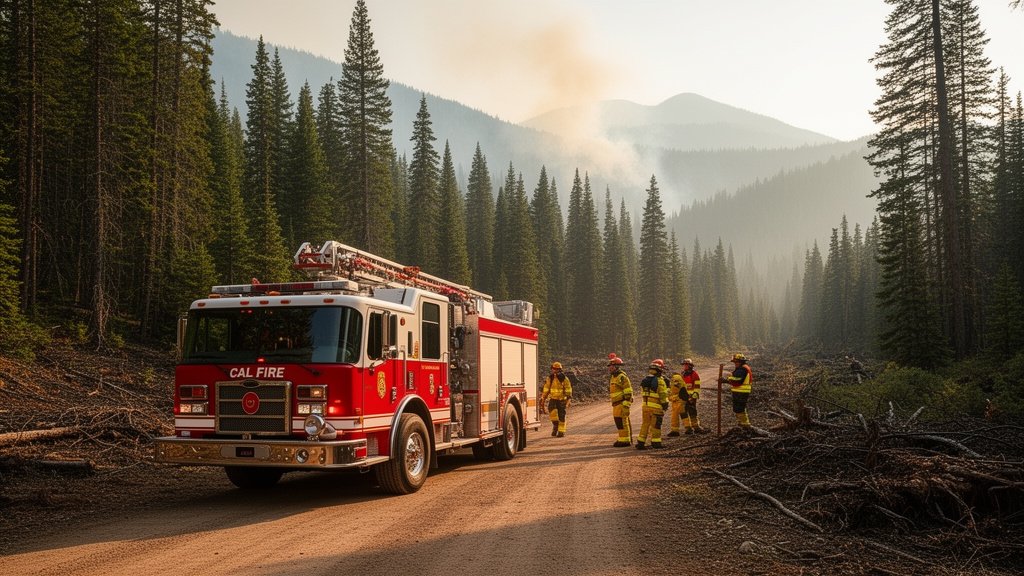
As the intensity of wildfire seasons expands across the American West, the line between state responsibility and federal jurisdiction is blurring. California, leveraging the robust capabilities of the California Department of Forestry and Fire Protection (CAL FIRE), has increasingly become the backstop for federal wildfire crews that are currently stretched to their operational limits. This dynamic, while life-saving in the immediate term, has ignited a fierce debate regarding long-term sustainability, fiscal accountability, and the systemic recruitment crisis plaguing the United States Forest Service (USFS).
Key Highlights
- The Mutual Aid Gap: CAL FIRE resources are frequently deployed to US Forest Service lands, effectively subsidizing federal wildfire suppression efforts due to chronic federal personnel shortages.
- Recruitment Crisis: The US Forest Service faces a significant retention challenge, with wildland firefighters often opting for state-level positions that offer higher base pay and superior benefits compared to federal counterparts.
- Operational Strain: The shift toward year-round fire seasons has exhausted resources, leaving federal crews physically and mentally depleted before peak California fire months even begin.
- Fiscal Friction: Disagreements persist over reimbursement timelines and the long-term impact on California’s emergency budget as state resources remain deployed on federal property for extended durations.
The Mutual Aid Paradox: When States Become the Federal Backstop
The foundation of modern wildland firefighting in the United States rests on the ‘Master Cooperative Wildland Fire Management Agreement.’ Historically, this pact was designed as a mechanism for neighborly assistance: if a fire broke out on the border of a National Forest and state land, the nearest resources would respond regardless of jurisdictional boundaries. Today, however, the arrangement has evolved into a dependency model. Because CAL FIRE operates with a significantly larger budget and a more aggressive compensation structure than federal agencies, the state has become the de facto insurance policy for federal land management.
The Recruitment and Retention Crisis
The core of the problem lies within the federal workforce. The US Forest Service, tasked with managing millions of acres of national land, has struggled to retain qualified personnel. A primary driver of this exodus is compensation. In California, a state firefighter can earn substantially more than their federal counterpart, often with better access to health benefits and retirement packages. This ‘brain drain’ has resulted in a hollowed-out federal fire workforce, leaving the USFS with fewer ‘hotshot’ crews and engine operators to manage active fires. When federal crews cannot be fully staffed, the agency is forced to declare that it cannot manage the blaze, triggering a call for state aid. This effectively pushes the burden of protection onto California’s tax-funded resources, creating a financial paradox where the state ends up footing the bill for federal statutory responsibilities.
The Fiscal Burden on California
While mutual aid agreements allow for cost-sharing and reimbursement, the process is often fraught with administrative complexity and delays. California officials have expressed growing concern regarding the ‘mission creep’ of their state emergency services. When CAL FIRE personnel are deployed to federal incidents, they are not protecting state responsibility areas (SRAs) or local responsibility areas (LRAs). This deployment represents a potential vulnerability for California residents. While the state is reimbursed for these deployments, the reimbursement structure often does not account for the ‘opportunity cost’ of equipment wear-and-tear or the physiological exhaustion of the workforce, which cannot be easily replaced during a high-tempo fire season.
Climate Change and the Year-Round Reality
The climate crisis has effectively eroded the concept of a ‘fire season.’ Previously, there were distinct windows of time where risks were concentrated. Now, drought conditions and higher average temperatures mean that fires can start in January and burn through November. This compressed timeline leaves little ‘shoulder season’ for agencies to conduct prescribed burns, perform maintenance on equipment, or allow crews to rotate and rest. When the federal government is short-staffed, they cannot surge to meet these emerging challenges, making the state-to-federal intervention more frequent and more urgent. The sustainability of this model is being questioned by state lawmakers who argue that federal agencies must receive the funding and policy support necessary to staff their own operations, rather than relying on a state-based safety net.
FAQ: People Also Ask
1. Why are federal wildfire crews stretched thinner than state crews?
Federal agencies, particularly the US Forest Service, face chronic funding shortages and legislative hurdles regarding firefighter pay, leading to high turnover. Conversely, state agencies like CAL FIRE benefit from robust state-level funding and stronger union-negotiated compensation packages.
2. Is California compensated for helping federal agencies?
Yes, under the Master Cooperative Wildland Fire Management Agreement, states are eligible for reimbursement for equipment, personnel, and operational costs. However, administrative delays and the lack of coverage for indirect operational costs remain points of friction.
3. How does this affect residents living near National Forests?
For residents, the immediate impact is often transparent; the primary goal is fire suppression. However, the reliance on state aid for federal land means that in a ‘multi-front’ fire scenario, state resources could be tied up on federal property, potentially reducing the speed of response for local state-responsibility fires.
4. Is there a long-term fix being proposed?
Federal reform efforts, such as the Wildland Fire Mitigation and Management Commission, have proposed increasing the base pay for federal firefighters and restructuring the federal hiring process to mirror the more stable state systems, though these changes face significant budgetary and legislative obstacles.