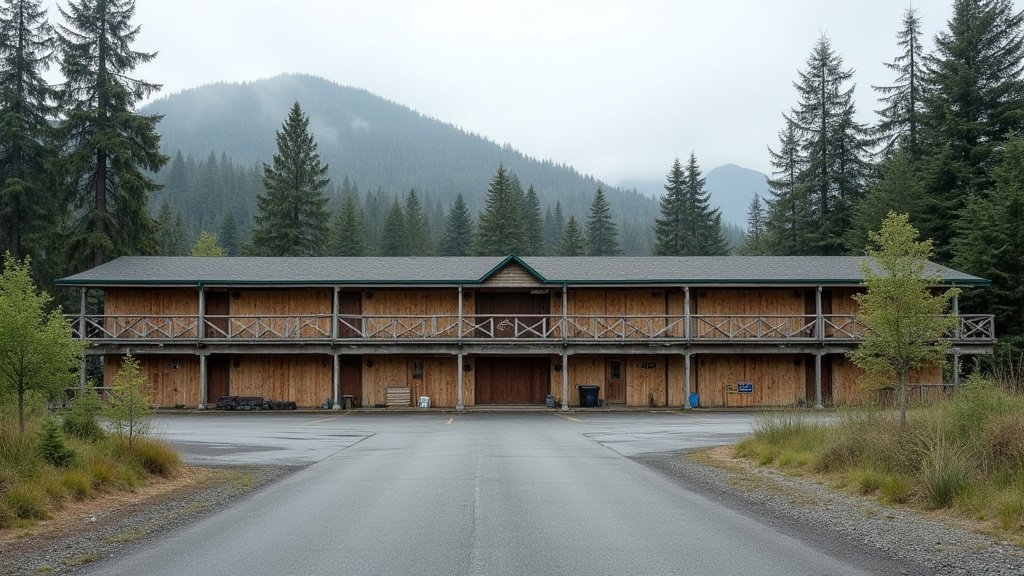
Travelers expecting a scenic getaway to the shadows of Mount Rainier National Park were blindsided this week, arriving at the Gateway Inn in Ashford, Washington, only to find the establishment shuttered, boarded up, and devoid of staff. The sudden cessation of operations has left numerous guests, many of whom traveled long distances, stranded without accommodation and, in many cases, still awaiting refunds for prepaid reservations made through third-party booking platforms.
Key Highlights
- Sudden Closure: Guests arrived to discover the Gateway Inn physically secured and non-operational with no prior notification.
- Financial Fallout: A significant number of travelers report being unable to secure refunds for reservations that were prepaid months in advance.
- Logistical Crisis: Travelers are struggling to find alternative lodging in the Ashford area, where availability is notoriously scarce during peak season.
- Dispute Escalation: Affected visitors are now turning to credit card companies and the Federal Trade Commission (FTC) to initiate chargebacks and consumer protection complaints.
The Anatomy of a Travel ‘Ghost Listing’
The closure of the Gateway Inn, a long-standing property in the Ashford hospitality corridor, highlights a growing friction point between digital travel marketplaces and the physical reality of on-the-ground operations. For many travelers, the journey to Mount Rainier is meticulously planned. Booking the Gateway Inn—a location prized for its proximity to the Nisqually Entrance—offered the convenience of being just minutes away from the park’s primary access point. However, upon arrival, that convenience transformed into a logistical nightmare.
Witness accounts describe a scene of confusion: groups of families arriving with luggage, checking their smartphones for confirmation emails, only to face the silent, shuttered facade of the property. This incident exposes a significant vulnerability in the modern travel ecosystem: the lag time between a hotel ceasing operations and the update filtering through to the major Online Travel Agencies (OTAs) and booking aggregators. When a property owner closes a business without notifying these platforms, the digital listings often remain ‘live,’ continuing to accept bookings and process payments for a facility that no longer exists in a functional capacity.
The Economic Ripple Effect in Ashford
Beyond the frustration of individual travelers, the closure of the Gateway Inn poses a broader economic concern for the Ashford community. Ashford is a ‘gateway town’ in the truest sense—the local economy is almost entirely tethered to the ebb and flow of tourism directed toward Mount Rainier National Park. When a primary accommodation provider like the Gateway Inn shuts its doors, the impact radiates outward.
Local businesses, including gear rental shops, cafes, and guided tour operators, rely on the foot traffic generated by visitors staying in these lodges. The sudden loss of beds creates a bottleneck, potentially pushing future visitors to seek accommodations in more distant towns like Elbe or Eatonville, thereby reducing the time and money tourists spend directly within Ashford. This ‘lodging vacuum’ places immediate stress on the remaining hotels and vacation rentals, which, already operating at high capacity, are unable to absorb the displaced volume of travelers during peak seasons.
The Challenge of Consumer Recourse
For those affected, the immediate challenge is financial recovery. While many travelers secured their rooms through credit cards—which offer the strongest layer of consumer protection—the process of recovering funds for services never rendered can be arduous.
Consumer advocacy groups suggest that travelers who find themselves in this position should immediately take the following steps:
1. Document the Evidence: Take photos of the closed property, the signage (or lack thereof), and obtain written statements from local authorities or tourism boards if possible.
2. Contact the OTA Immediately: Even if the booking site’s automated systems suggest the reservation is still active, speak with a human representative. Escalate the issue to a supervisor if the initial support agent cannot verify the property’s status.
3. Initiate the Chargeback: If the OTA fails to provide a refund within a reasonable timeframe (typically 3-5 business days), contact the issuing bank to initiate a formal chargeback for ‘services not provided.’
The Digital Disconnect: A Regulatory Gap
This incident also raises questions regarding the responsibility of booking aggregators. While these platforms often act as intermediaries, their failure to provide accurate, real-time status updates on property operationality places them in a tenuous position. Critics argue that as these platforms collect commissions on every booking, they have an implied duty to verify the inventory they are selling. Without a standardized requirement for real-time verification of operational status, travelers remain exposed to these types of ‘ghost listings.’ Moving forward, it is likely that tourism boards and state attorney generals may need to scrutinize the verification protocols of major travel sites to prevent similar consumer harm.
FAQ: People Also Ask
Q: Should I trust a third-party booking site for national park lodging?
A: While third-party sites are convenient, they aggregate data from various sources. For national park stays, it is often safer to book directly through the hotel’s official website or the National Park Service’s authorized concessionaire portal (e.g., Rainier Guest Services) to ensure the reservation is verified in the hotel’s internal system.
Q: How do I know if my hotel is actually open before I arrive?
A: A week prior to your trip, place a direct phone call to the property’s front desk. If the phone is disconnected, rings indefinitely, or is forwarded to an automated system that sounds suspicious, take that as a red flag. Cross-reference the property’s status with local Ashford or Lewis County tourism bureaus.
Q: What if the hotel says they are open but I see rumors of closure online?
A: If you find conflicting information, do not rely on the booking engine’s ‘available’ status. Search for recent reviews (within the last 30 days) on platforms like Google Maps or TripAdvisor. If there are no new reviews, it may indicate a silent closure.