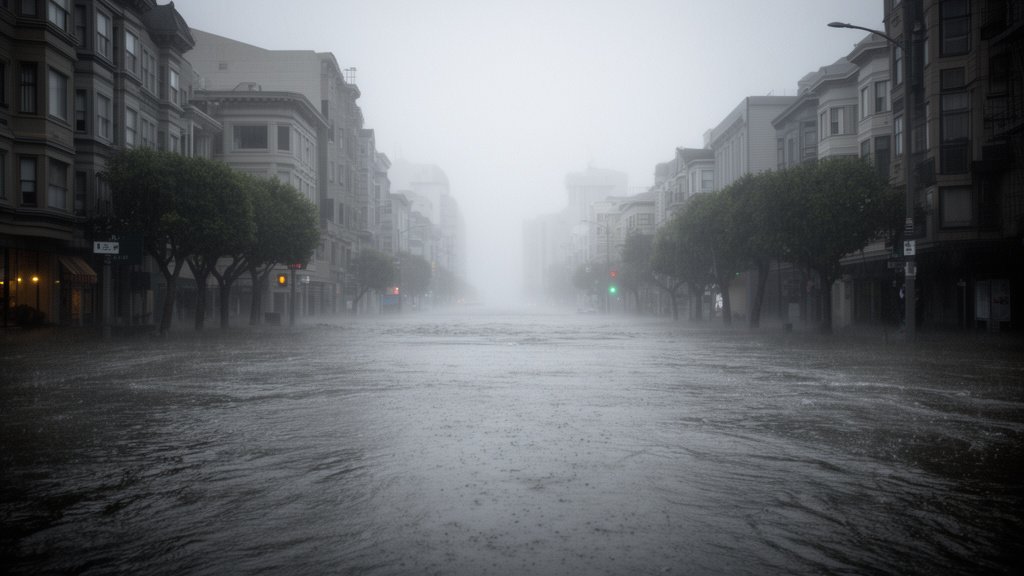
On November 18, 2026, the San Francisco Bay Area was brought to a standstill as an intense atmospheric river unleashed historic, record-shattering rainfall, turning major thoroughfares into rivers and forcing a complete reassessment of the city’s urban resilience. The storm, which stalled over the peninsula, exceeded the capacity of local drainage systems, resulting in widespread property damage and significant disruptions to both public and private transportation networks, including the temporary suspension of Waymo autonomous vehicle services. As the clouds part, the region now faces the daunting task of calculating the cost of this climate event and addressing the vulnerabilities exposed in its infrastructure.
Key Highlights
- Record-Breaking Totals: San Francisco saw rainfall accumulation that shattered daily records for November 18, with some localized pockets reporting multi-inch totals that overwhelmed municipal pumping stations.
- Waymo Suspension: The autonomous ride-hailing provider Waymo suspended all operations in San Francisco due to the hazardous driving conditions caused by deep standing water and unpredictable road closures.
- Infrastructure Failure: Local stormwater infrastructure, largely built for historical climate patterns, reached capacity, leading to localized street-level flooding and debris flow in lower-lying neighborhoods.
- Transit Paralysis: Commuter rail services and public buses experienced significant delays, with the atmospheric river impacting both surface-level traffic and underground transit station accessibility.
The Anatomy of an Urban Deluge: Navigating the 2026 Crisis
The meteorological event that struck the Bay Area on November 18, 2026, was not merely a storm; it was a demonstration of a changing climate interacting with mid-20th-century infrastructure. An atmospheric river, a long, narrow region in the atmosphere that transports most of the water vapor outside of the tropics, parked itself over the San Francisco Bay Area with surgical precision. Unlike frontal systems that sweep through, this stalled system delivered a relentless deluge that the urban environment was ill-prepared to absorb.
Meteorological Intensity and Urban Impact
The National Weather Service (NWS) confirmed that rainfall intensities spiked in the early morning hours, creating a ‘flash-flood’ scenario that caught both municipal response teams and commuters off guard. The deluge exposed the frailty of the city’s ‘combined sewer system,’ which handles both stormwater and sewage. When the volume of rain exceeded the system’s inflow capacity, the resulting overflow triggered automated shutdown protocols in sensitive areas, causing backup onto major arterial roads. Urban planning experts are already citing this event as a bellwether for the necessity of ‘sponge city’ infrastructure, which prioritizes permeable surfaces and decentralized drainage solutions to mitigate the impact of such high-volume atmospheric rivers.
The Digital-Physical Divide: Waymo and Autonomous Transit
The suspension of Waymo services serves as a critical case study in the intersection of autonomous technology and extreme weather. While AI-driven vehicles are designed to navigate complex urban environments, the unpredictable nature of flooded streets—where lane markings are obscured and hazards are submerged beneath several inches of water—posed an operational risk that the company’s safety protocols could not clear. The decision to ground the fleet was met with a mix of relief and frustration; it highlighted the current limitations of Level 4 autonomous systems when confronted with dynamic, non-standard environmental conditions. This shutdown served as a stark reminder that while technology has advanced, the physical reality of climate change requires physical infrastructure solutions that no amount of code can currently bypass.
Economic Ripples: Beyond the Immediate Cleanup
The economic impact of the November 18 storm is expected to ripple far beyond the immediate cleanup costs. Businesses across the Financial District and the Mission, already operating under post-pandemic constraints, saw a significant drop in foot traffic and revenue. Furthermore, insurance adjusters are bracing for a high volume of claims related to basement flooding and vehicle damage. Economists are beginning to look at the ‘resilience tax’—the cost that businesses and municipalities must absorb to retrofit existing structures against the increasing frequency of these atmospheric events. As the city recovers, the conversation is shifting from ‘how to fix’ to ‘how to adapt’ to a new climate reality where the 100-year storm arrives with alarming regularity.
Future-Proofing: The Policy Response
Moving forward, the California Department of Water Resources and local city planners are facing immense pressure to overhaul the region’s flood-mitigation strategies. The failure of critical drainage points to keep pace with the storm’s intensity has ignited a fierce political debate regarding budget allocations. Should the city prioritize the modernization of the existing pipe network, or should it invest in high-capacity overflow basins? This debate is expected to dominate local government sessions for the remainder of the fiscal year, as the city attempts to insulate itself from the next atmospheric river before it hits.
FAQ: People Also Ask
Why was the Waymo fleet suspended during the rain?
Waymo suspended operations because the depth and turbidity of the floodwaters compromised the vehicle’s sensor suite (LiDAR, radar, and cameras). When water levels mask road markings and obscure potential hazards, the safety systems default to a standstill to prevent accidents, as the vehicle cannot safely navigate or predict road conditions under such extreme variables.
How does an atmospheric river differ from a normal storm?
An atmospheric river acts like a firehose in the sky, transporting a continuous, concentrated stream of water vapor from the tropics. While a normal storm might pass through an area in a few hours, a stalled atmospheric river can remain stationary over a single location, pouring down rain for an extended period, which leads to the catastrophic flooding seen on November 18.
Will the city’s infrastructure be upgraded following this event?
The city has faced mounting pressure to upgrade its aging stormwater infrastructure. Following the record-breaking events of November 2026, municipal officials are expected to accelerate feasibility studies for ‘green infrastructure’ projects, such as permeable pavement and expanded retention basins, to handle the increased load that climate-change-fueled storms are placing on the existing system.
Was this storm caused by climate change?
While individual weather events cannot be attributed solely to climate change, climatologists widely agree that warmer atmospheric temperatures increase the air’s capacity to hold moisture. This ‘thermodynamic effect’ directly fuels atmospheric rivers, making the rainfall events associated with them more intense and frequent than in historical baselines.