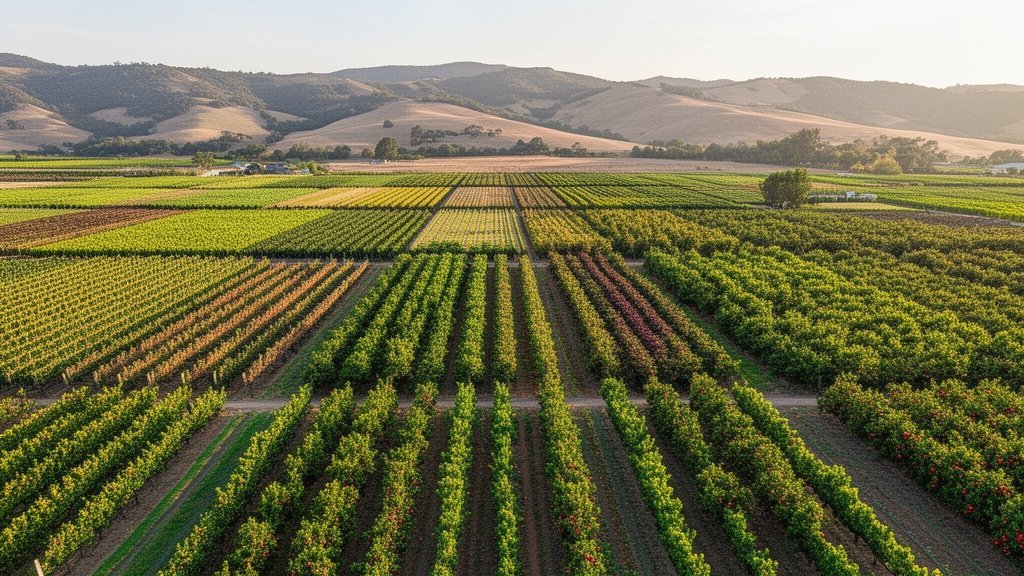
California and Washington have cemented their status as the nation’s premier organic agricultural hubs, according to a recent analysis of organic agricultural intensity conducted by the Auguste Escoffier School of Culinary Arts. While many associate large-scale agriculture with the American Midwest, the study shifts the narrative, highlighting how the West Coast’s unique combination of diverse microclimates, specialized high-value crop production, and robust consumer demand has created an unparalleled organic ecosystem. By prioritizing organic intensity—a metric measuring the concentration and efficiency of organic farming operations rather than sheer land mass—these two states have outpaced national competitors, signaling a long-term shift toward sustainable, high-value agricultural production in the region.
Key Highlights
- Intensity vs. Acreage: The Auguste Escoffier School of Culinary Arts report prioritizes ‘organic intensity,’ ranking states by the concentration of organic operations, which allows California and Washington to lead despite not having the largest total farmland acreage.
- Specialty Crop Dominance: The West Coast’s focus on high-value fruits, vegetables, nuts, and viticulture drives organic adoption, contrasting sharply with the Midwest’s reliance on commodity row crops like corn and soy.
- Economic Multiplier: The report underscores that organic agriculture in these states generates higher revenue per acre, creating a sustainable economic model for small-to-medium-sized farm operations.
- Sustainability Benchmarks: California and Washington are effectively setting the blueprint for climate-resilient farming, with organic practices helping to sequester carbon and preserve soil health in vulnerable ecosystems.
The New Metrics of American Agriculture
For decades, agricultural success was measured primarily by output volume—how many bushels of corn or tons of wheat a state could produce per year. However, the report from the Auguste Escoffier School of Culinary Arts fundamentally challenges this framework, introducing ‘organic agricultural intensity’ as a more meaningful indicator of modern farming health. In the 21st century, the ability to farm sustainably is as critical as the ability to produce in bulk. By this metric, Washington and California emerge as the clear leaders, having successfully integrated organic certification into their core agricultural identities.
The Architecture of Intensity
What does ‘organic intensity’ actually mean? It is a composite score evaluating the density of certified organic farms relative to total farm counts, the diversity of organic crops grown, and the adoption rate of organic farming practices within a given geographic boundary. California has long been the juggernaut of US produce, but this study confirms that its organic sector is not just a niche market—it is the bedrock of its agricultural identity.
Washington, meanwhile, has leveraged its unique horticultural strengths. While California benefits from a Mediterranean climate that allows year-round production, Washington’s success lies in its high-efficiency orchard and vineyard management. By focusing on organic apples, berries, and specialty grapes, Washington has managed to convert a significant percentage of its high-value land into organic-certified space. This strategy creates a resilient economic buffer, shielding farmers from the volatile price swings often associated with commodity markets like conventional grain.
Specialty Crops: The West Coast Advantage
One of the most compelling insights from the data is the role of specialty crops. Traditional agricultural belts—often dominated by federal subsidies for commodity crops—have historically struggled to make the transition to organic due to the complexities of organic pest management and soil health maintenance at massive scale.
Conversely, the West Coast’s agricultural landscape is dominated by specialty crops. These fruits and vegetables, which have a naturally higher consumer price point, offer the margins necessary to offset the increased labor and compliance costs of organic certification. The synergy between what consumers demand (organic kale, berries, almonds) and what these states produce is the engine behind these rankings. As organic produce continues to gain market share in grocery retail, Washington and California find themselves ideally positioned to capture the highest value in the supply chain.
Economic Resilience and Soil Stewardship
Beyond the rankings, the report highlights the secondary effects of this organic shift: economic resilience. Farms that utilize organic methods often employ more diverse crop rotations and cover-cropping strategies, which significantly improve soil structure. This is not just an environmental ‘nice-to-have’; it is a long-term economic imperative.
In California, where water scarcity is a constant threat, organic soil management is proving to be a vital adaptation strategy. Organic matter increases soil water-holding capacity, making farms more resilient to drought cycles. The Auguste Escoffier analysis suggests that states failing to adopt these intensity benchmarks may face long-term productivity declines, whereas Washington and California are investing in the sustainability of their land, ensuring they remain productive for the next century.
The Future of the American Farm
As the agricultural sector looks toward the future, the ‘Escoffier model’ of organic intensity will likely serve as a roadmap for other regions. States in the Northeast and the Pacific Northwest are watching these rankings closely. The transition to organic is not merely about adhering to a set of certification standards; it is about data-driven, intensive farming that maximizes output per acre while minimizing chemical inputs.
This movement is supported by a growing class of ‘agri-preneurs’—farmers and agricultural tech startups who are leveraging precision agriculture, robotics for weeding, and AI-driven soil monitoring to make organic farming as efficient, if not more so, than conventional methods. California and Washington are currently the proving grounds for this synthesis of technology and biology, setting the tone for the next wave of American agricultural prosperity.
FAQ: People Also Ask
Q: Why does the Auguste Escoffier report focus on ‘intensity’ rather than total acreage?
A: Total acreage often favors states with vast, flat, and often less diverse landscapes used for commodity row crops. By focusing on intensity—the percentage of farms and acreage under organic management—the report provides a more accurate view of how deeply organic practices have been integrated into a state’s overall agricultural system, rather than just showing which state has the most land.
Q: Are these rankings based on current data or projections?
A: The report utilizes current data points to evaluate the present state of organic intensity. It focuses on documented certifications and active farm operational metrics to ensure factual accuracy regarding the current landscape of US agriculture.
Q: What makes Washington a top contender alongside California?
A: Washington’s ranking is driven by its highly efficient orchard and vineyard sectors. By dedicating a significant portion of its high-value horticultural land to organic certification, Washington has achieved a high density of organic output that rivals California’s larger, more diverse portfolio.
Q: Does organic intensity correlate with higher profits for farmers?
A: Generally, yes. The report suggests that organic specialty crops command a premium price in the marketplace, which helps offset the higher costs associated with organic certification and non-chemical pest management, resulting in higher revenue per acre compared to many conventional commodity crops.