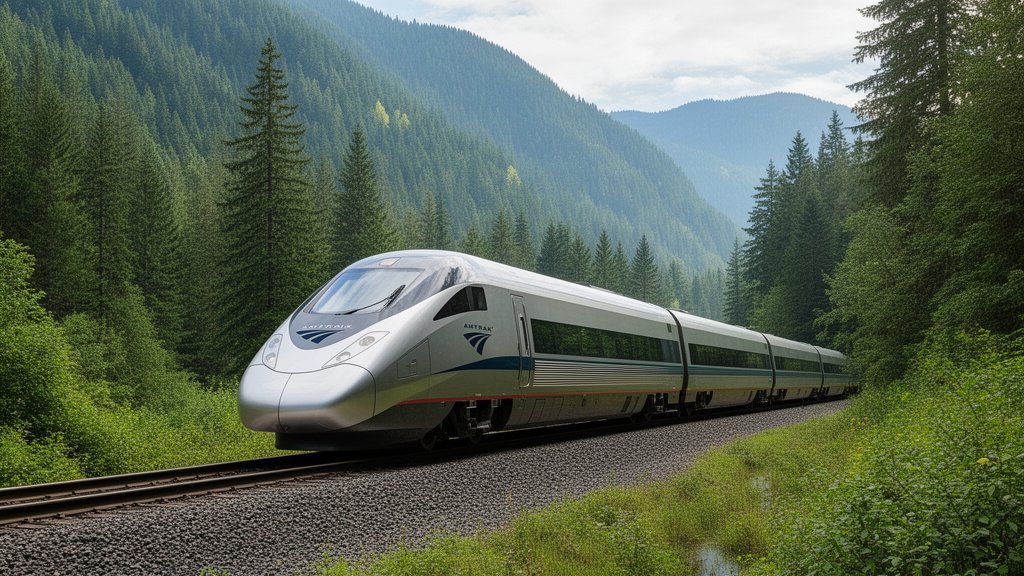
Amtrak Cascades has officially launched its new Airo trainsets, becoming the first rail service in the United States to integrate this upgraded technology, signaling a significant modernization for Pacific Northwest transit. The rollout, which replaces aging legacy equipment with the Siemens Mobility-manufactured Venture trainsets, represents the largest fleet upgrade in the service’s history. This transition is not merely cosmetic; it is a fundamental shift in how passengers experience the corridor spanning from Vancouver, British Columbia, to Eugene, Oregon, balancing state-of-the-art engineering with the unique environmental and operational demands of the Pacific Northwest.
Key Highlights
- First-in-Nation Technology: Amtrak Cascades is the inaugural service to deploy the Amtrak Airo fleet, utilizing the cutting-edge Siemens Venture platform.
- Sustainable Propulsion: The new trainsets feature dual-mode capabilities (diesel-electric and overhead catenary power) designed to significantly reduce emissions and improve fuel efficiency.
- Modern Passenger Amenities: Upgraded features include dedicated USB/power outlets at every seat, enhanced Wi-Fi connectivity, panoramic windows, and improved ADA accessibility.
- Fleet Replacement: The Airo trains are systematically replacing the older Talgo and Horizon equipment, which have served the corridor for decades.
- State Partnership: The launch is the result of a collaborative funding and procurement effort between the Washington State Department of Transportation (WSDOT) and the Oregon Department of Transportation (ODOT).
The Modernization of the Pacific Northwest Rail Corridor
The introduction of the Amtrak Airo fleet into the Pacific Northwest (PNW) corridor marks a definitive turning point for regional rail infrastructure. For years, the Amtrak Cascades line has relied on a mix of Talgo Series 6 and 8 trainsets alongside vintage Horizon cars. While these trains provided reliable service, they were increasingly difficult to maintain and lacked the modern digital infrastructure that today’s travelers demand. By fully integrating the Siemens Venture platform—marketed by Amtrak as the ‘Airo’—the service is aligning itself with contemporary standards of high-frequency rail travel.
Siemens Venture Platform: The Engineering Backbone
The technological cornerstone of this rollout is the Siemens Mobility Venture Quest cars. These trainsets are manufactured in Sacramento, California, providing a boost to domestic manufacturing while adhering to strict Buy America requirements. From an engineering perspective, the Airo trains utilize a lighter-weight aluminum car body design. This reduction in mass directly translates to lower energy consumption and reduced wear and tear on the rail infrastructure.
Furthermore, the trainsets are equipped with ‘dual-mode’ technology, allowing them to switch between diesel-electric and electric power where overhead catenary wires are present. This flexibility is critical for the Cascades route, which transitions between electrified segments near major metropolitan hubs and non-electrified stretches in rural Oregon and Washington. By optimizing power usage, Amtrak is actively reducing the carbon footprint per passenger mile, a key component of the agency’s broader goal to reach net-zero emissions by 2045.
A New Standard for Passenger Comfort and Connectivity
Beyond the technical specifications, the Airo launch addresses the ‘pain points’ of rail travel in the 21st century. The passenger interior has been completely reconfigured. The legacy arrangements often suffered from connectivity ‘dead zones’ and limited power access. The Airo fleet solves this with a robust onboard Wi-Fi system designed for modern bandwidth requirements, ensuring that business and leisure travelers alike remain productive or entertained throughout the journey.
Ergonomics also received a significant overhaul. The seats feature updated cushioning, adjustable headrests, and—critically—individual power outlets and USB ports at every seat. The lighting design within the cabins has been shifted to warmer, ambient LED arrays to reduce eye strain, while the expanded panoramic windows allow passengers to fully appreciate the dramatic topography of the Pacific Northwest. Accessibility has also been prioritized, with automated doors, wider aisles, and more spacious restrooms, ensuring the service remains inclusive for all demographics.
Collaboration Across State Lines: WSDOT and ODOT
The success of the Cascades corridor relies heavily on the inter-state partnership between the Washington State Department of Transportation (WSDOT) and the Oregon Department of Transportation (ODOT). Procurement of the Airo fleet required complex negotiations and long-term financial commitments from both states. This collaborative model serves as a case study for how regional rail can flourish despite the administrative challenges of crossing state boundaries. By pooling resources and standardizing the fleet, WSDOT and ODOT have created a more predictable operational environment for Amtrak, reducing the complexity of maintenance and crew training.
Operationalizing the Future: Fleet Rollout and Maintenance
While the debut marks a historic day, the operational rollout will be gradual. Integrating a new trainset into an active, high-traffic corridor requires meticulous testing and certification. Maintenance crews are currently undergoing intensive training to familiarize themselves with the Venture platform’s diagnostic systems, which are significantly more computerized than the mechanical systems found in the older Talgo fleet. This transition period is essential to ensure that the reliability of the Cascades line—which saw record ridership numbers leading up to this launch—is not disrupted.
Looking ahead, the scalability of the Airo platform allows Amtrak to easily add cars as ridership demand fluctuates, providing a dynamic solution to the rising population density in the I-5 corridor. As the region continues to urbanize, the reliability and efficiency of these new trains will be instrumental in mitigating traffic congestion along the highway network, positioning rail as the preferred mode of transit.
FAQ: People Also Ask
Q: How do the new Airo trains differ from the old Talgo trains?
A: The Airo trains utilize the modern Siemens Venture platform, which is lighter, more energy-efficient, and equipped with significantly better digital infrastructure (Wi-Fi, power at seats) compared to the older Talgo and Horizon cars. They are also designed with modern ADA standards in mind, making them more accessible.
Q: Will the Airo trains be faster than the current trains?
A: While the top speed of the trainsets is high, real-world speeds are limited by track conditions and infrastructure constraints. However, the Airo trains offer faster boarding and better operational efficiency, which contributes to more consistent, on-time performance.
Q: Does this launch affect all Amtrak Cascades routes?
A: The deployment is being phased in. Amtrak is systematically replacing older equipment across the corridor. Passengers should check the Amtrak booking site to see if their specific train number is served by the new Airo equipment, as the rollout continues throughout the coming months.
Q: Are these trains environmentally friendly?
A: Yes. The Airo fleet is designed with dual-mode technology and higher fuel efficiency, contributing to a lower carbon footprint compared to the aging diesel locomotives they are replacing. This aligns with Amtrak’s sustainability initiatives.