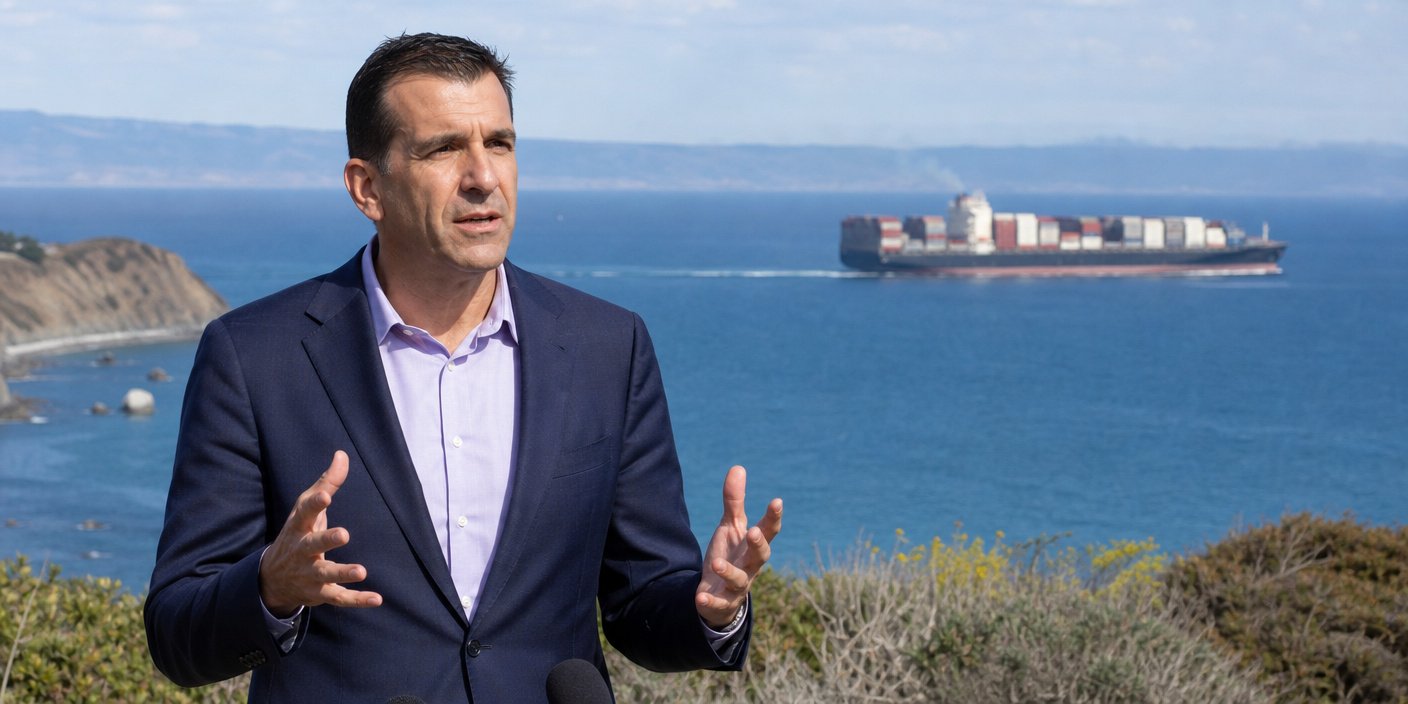
Congressman Sam Liccardo is championing a pivotal bipartisan legislative effort designed to drastically reduce the frequency of whale-vessel strikes along the U.S. West Coast. The initiative, centered on the proposed ‘Save Willy Act,’ seeks to leverage existing Automatic Identification System (AIS) technology to beam real-time, geofenced alerts directly to the bridge of commercial vessels. This move comes as a direct response to a critical spike in maritime incidents, with 145 verified whale collisions reported in 2026 alone. By integrating advanced biological monitoring with existing maritime infrastructure, the legislation aims to foster a safer, more sustainable environment for both marine life and international commerce.
Key Highlights
- Crisis Response: The ‘Save Willy Act’ is a direct policy response to the 145 recorded whale-vessel strikes that occurred along the West Coast in 2026.
- Technological Integration: The bill mandates the use of AIS messaging technology to transmit real-time whale-proximity warnings to ship captains.
- Bipartisan Support: Congressman Sam Liccardo is building a broad coalition to ensure this maritime safety framework moves forward as a bipartisan priority.
- Enhanced Navigation: The framework focuses on bridging the gap between ecological data collection and commercial shipping navigation systems.
Transforming Maritime Safety Through AIS Technology
The core of Congressman Liccardo’s proposal rests on the repurposing of AIS—a global tracking standard that ships already use to identify their position, speed, and course to avoid collisions with other vessels. Currently, while scientific agencies track whale pods using satellite tagging and hydrophone arrays, that data often exists in a silo, separate from the real-time decision-making systems of commercial mariners. The ‘Save Willy Act’ aims to create a dedicated data pipeline where this biological information is automatically broadcast via AIS channels.
When a vessel enters a high-risk zone—defined by whale density and migratory patterns—the ship’s navigation computer will receive a mandatory alert. This is not merely a suggestion; it functions as a digital ‘warning beacon’ designed to force a change in operational protocols. For shipping companies, this integration provides a clear, actionable directive: slow down, alter course, or heighten bridge watch. By automating this warning, Liccardo’s office intends to remove the lag time between identifying a whale presence and communicating that risk to the fleet.
Analyzing the 2026 Collision Crisis
The 145 incidents recorded in 2026 serve as the primary impetus for this legislation. These strikes are not merely environmental tragedies; they represent a significant regulatory failure. Historically, voluntary speed reduction programs have seen mixed compliance rates, as shipping schedules are often governed by rigid, just-in-time delivery requirements.
When a large vessel strikes a whale, the impact often goes unnoticed by the bridge crew, yet the ecological damage is profound. These incidents disproportionately affect the critically endangered North Pacific right whale and blue whale populations, which frequent the busy shipping lanes entering major ports like Los Angeles, Long Beach, and the Port of Oakland. The 2026 data indicates a high concentration of these events in areas where commercial traffic overlaps significantly with seasonal feeding grounds. The proposed act seeks to impose standardized, technology-driven protocols that take the ambiguity out of vessel-whale coexistence.
The Economic and Logistical Impact
Critics of increased maritime regulation often point to the potential for shipping delays and increased fuel consumption. However, the ‘Save Willy Act’ is being framed by Liccardo’s coalition not as a burden, but as a modernization of maritime logistics. Proponents argue that by creating a standardized digital alert system, shipping companies can avoid sudden, emergency deviations—which are more fuel-intensive—and instead plan routes that avoid high-density areas well in advance.
Furthermore, the legislation addresses the potential for ‘maritime liability.’ As legal frameworks around marine mammal protection tighten, shipping companies face increasing scrutiny and potential litigation. Having an AIS-based warning system in place provides companies with a defense mechanism: proof that they were warned of whale presence and responded according to federal safety standards. This creates a market-driven incentive for adoption, as the technology essentially serves as a de facto insurance policy against costly maritime incidents.
Future Outlook: A Global Model for Conservation
While the current focus is squarely on the U.S. West Coast, the ambition behind this legislation extends far beyond regional waters. If the ‘Save Willy Act’ successfully reduces strike numbers in 2027 and beyond, it provides a blueprint for an international standard. AIS is a global protocol defined by the International Maritime Organization (IMO). If a successful pilot of whale-alert AIS messaging is proven in California, it could be exported as a global ‘best practice’ for any nation with high-density whale migratory paths, including the Mediterranean, the Atlantic coast of Europe, and the busy passages of the Indian Ocean.
Liccardo’s push represents a broader, emerging trend in the climate-tech intersection: the shift from observational science to ‘applied ecological intervention.’ This means we are no longer just monitoring species decline; we are utilizing the same high-tech communications infrastructure that facilitates global trade to actively mitigate the damage that trade inflicts on the natural world.
FAQ: People Also Ask
What is the ‘Save Willy Act’?
It is a proposed piece of legislation championed by Congressman Sam Liccardo that would mandate the integration of real-time whale-proximity data into maritime AIS navigation systems to reduce ship-whale strikes.
How many whale strikes happened in 2026?
According to the provided data, there were 145 verified whale-vessel collision incidents along the West Coast in 2026.
How does AIS technology protect whales?
AIS is a navigation tool for ships. The act proposes using this system to send digital alerts to ship captains when they enter areas with confirmed whale activity, allowing them to slow down or change course to avoid a strike.
Is there bipartisan support for this legislation?
Yes, Congressman Liccardo is building a bipartisan coalition, framing the act as a balanced solution that addresses both environmental protection and modern maritime safety efficiency.