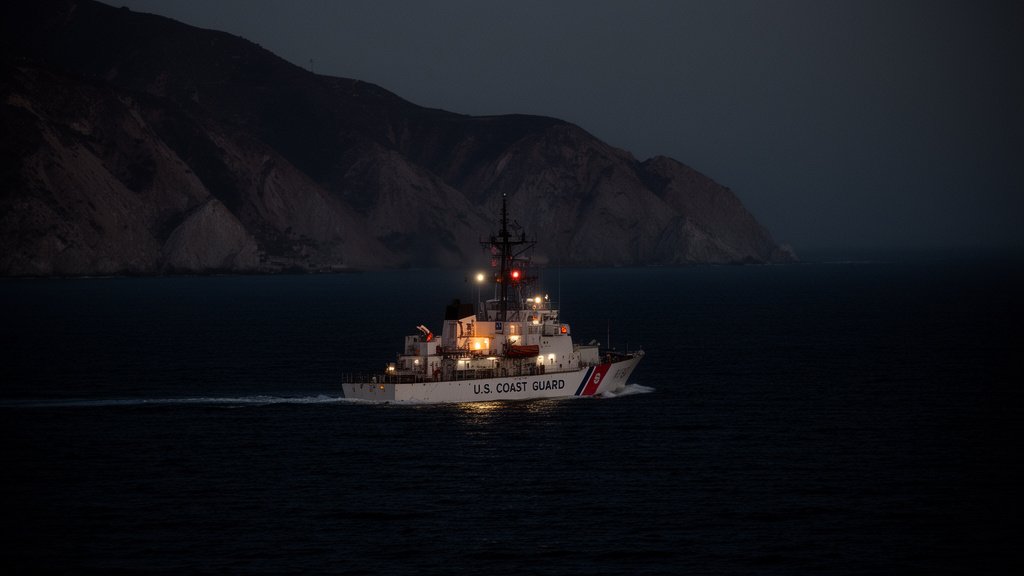
The incident occurred shortly after takeoff, as a medical helicopter—often referred to as an air ambulance or Helicopter Emergency Medical Services (HEMS) craft—went down off the coast of Catalina Island, California. The crash has triggered an immediate and intensive multi-agency search-and-rescue operation as authorities work to locate the single person still missing following the disaster. The tragedy has left the local community in shock and drawn national attention to the rigorous safety protocols surrounding emergency medical flight operations.
The Timeline of the Catalina Incident
According to initial reports, the helicopter was engaged in an emergency transport mission when it encountered difficulties shortly after departing from the Catalina Island vicinity. While the exact cause remains under investigation, the timing of the crash suggests an immediate loss of control or a critical mechanical failure during the initial climb-out phase. Emergency response teams, including the U.S. Coast Guard and local law enforcement, were dispatched to the site within minutes, locating the wreckage and survivors. Two individuals were confirmed dead at the scene, while two survivors were quickly transported to mainland medical facilities in stable condition. The search for the remaining missing individual remains the primary focus for search-and-rescue teams, who are contending with challenging maritime conditions.
Anatomy of an NTSB Investigation
The National Transportation Safety Board (NTSB) has formally launched an investigation into the crash, deploying a “Go Team” to the site. An NTSB investigation of this nature is exhaustive and typically proceeds in phases. First, investigators establish a “party system,” inviting representatives from the aircraft manufacturer, the engine manufacturer, and the operator to provide technical expertise. The investigation will focus on three primary pillars: human, machine, and environment.
Investigators will recover the wreckage, including any flight data recorders or cockpit voice recorders—often termed ‘black boxes’—if equipped, to reconstruct the helicopter’s flight path and systems performance. They will scrutinize the maintenance logs of the helicopter, the training and medical records of the flight crew, and the weather conditions at the time of departure. In maritime accidents, the recovery of wreckage from the ocean floor is paramount, as salt water can rapidly degrade critical evidence. This process is time-sensitive and requires specialized salvage equipment.
The High-Stakes World of HEMS
Medical helicopter operations, known in the aviation industry as HEMS, represent some of the most complex and high-pressure work in the aviation sector. These pilots and flight crews are often required to fly in sub-optimal conditions to reach patients in dire need of care. The “golden hour”—the window of time in which a critically ill or injured patient is most likely to survive if they receive definitive medical care—is the core driver of these missions. However, this urgency sometimes creates operational tension.
Industry safety data shows that medical helicopters are susceptible to specific hazards, including the “night effect” (where pilots lose spatial orientation over dark water or terrain) and the risk of unexpected mechanical failure during low-altitude maneuvers. The aviation community has invested heavily in technologies like Night Vision Goggles (NVGs), Helicopter Terrain Awareness and Warning Systems (HTAWS), and advanced autopilot features to mitigate these risks. Despite these advancements, the inherent danger of flying low-altitude missions, particularly over water at night, remains a sobering reality for the industry.
Maritime Aviation: Navigating Coastal Risks
Flying over water, particularly off the coast of Southern California near islands like Catalina, presents a unique set of challenges distinct from land-based operations. Pilots operating in this region must account for rapid changes in coastal visibility, marine layer fog, and limited emergency landing sites. Unlike over-land flights where a pilot might find an open field or road in the event of an engine failure, a water ditching requires the aircraft to remain buoyant while the crew performs an emergency egress.
This specific crash underscores the difficulty of maritime rescue logistics. When an aircraft goes down in the ocean, the response time is critical—not just for the rescue of survivors but for the containment of aviation fuel and the preservation of the scene for forensic analysis. As the NTSB sifts through the wreckage, the aviation industry will be watching closely to see if this incident points to a broader trend or a specific, isolated anomaly. The investigation could lead to new directives regarding flight paths, equipment requirements for coastal medical transport, or changes to how crews are trained for over-water emergencies.