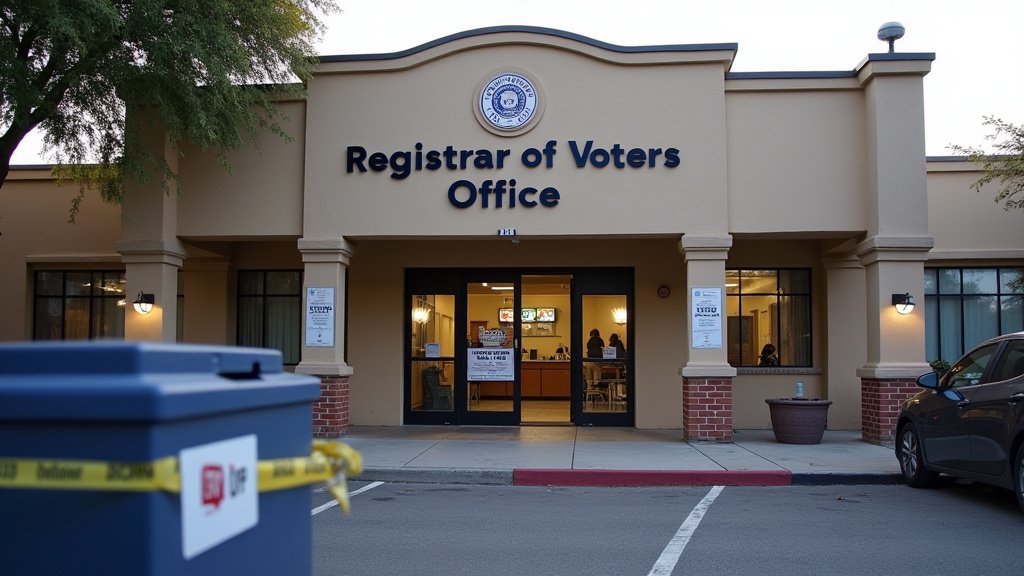
The California legal landscape has undergone a significant shift regarding election integrity, as the state’s judiciary has officially moved to curtail the attempts of local law enforcement to exert control over voting materials. The ruling, which centers on a dispute involving the Riverside County Sheriff’s Department, has effectively cemented the exclusive jurisdiction of election officials over ballot processing and equipment. By blocking attempts to seize and independently investigate voting materials, the court has provided a clear, enforceable boundary that prevents law enforcement from encroaching on the administrative duties of registrars. This decision reverberates far beyond California, serving as a template for other jurisdictions grappling with the intersection of partisan election disputes and established chain-of-custody protocols ahead of the November election.
Key Highlights
- Exclusive Jurisdiction Affirmed: The court ruled that election administration, including the handling of ballots and voting machines, remains the sole purview of certified election officials, not local sheriffs.
- Chain-of-Custody Integrity: The ruling underscores that deviations from established chain-of-custody procedures, even under the guise of an investigation, threaten the sanctity of the electoral process.
- National Precedent: By setting a high bar for legal intervention in election operations, the decision provides a defensive framework for election officials nationwide to counter partisan efforts to ‘audit’ or seize materials without explicit legal cause.
Establishing the Legal Line: Election Administration vs. Law Enforcement
The central tension in this legal battle stems from a series of high-profile attempts by Riverside County Sheriff Chad Bianco to investigate voting procedures and seize equipment. For election officials, the registrar’s office acts as the ultimate arbiter of election administration, operating under the stringent mandates of the California Elections Code. The core argument presented by the Sheriff’s department relied on a broad interpretation of investigative authority, suggesting that law enforcement has an inherent right to audit any public-facing government process if allegations of discrepancies arise.
However, the court’s decision dismantled this premise. The judiciary clarified that the California Elections Code is not merely a set of suggestions but a rigid regulatory framework designed to prevent exactly the kind of outside interference that causes delays and erodes public trust. By prioritizing the administrative code over the general investigative powers of the Sheriff, the court has effectively shielded the electoral process from arbitrary intervention. The decision highlights that election administration is a technical, statutory function rather than a police matter, and requires specific, warrant-backed evidence of a crime to trigger any form of investigative oversight. Mere suspicion or political rhetoric does not constitute the probable cause required to breach the administrative walls surrounding the voting process.
Protecting the Chain of Custody
At the heart of the judicial reasoning is the protection of the chain-of-custody. Election officials are legally required to maintain a continuous, verifiable log of where every ballot is at every moment, from the time it is cast until it is counted and archived. Allowing law enforcement to enter a registrar’s facility, handle machines, or seize ballots creates a ‘break’ in that chain. Such an interruption is not just a procedural error; it is a fundamental threat to the legal validity of the votes themselves. If a chain of custody is compromised, those votes could be legally disqualified or challenged, causing an electoral crisis. By ruling against the Sheriff’s attempt to seize these materials, the court has prioritized the legal stability of the election results over the investigative whims of local law enforcement. This distinction is vital for maintaining voter confidence, as it ensures that only non-partisan election professionals handle the mechanics of democracy.
Nationwide Implications and Future Preparedness
While the ruling is geographically tied to California, its implications are systemic. Across the United States, election offices have faced increased pressure from partisan actors seeking to ‘audit’ outcomes or seize machines in the aftermath of 2020. This California precedent provides election officials in other states with a powerful legal argument to defend their boundaries. When future challenges arise, officials can now point to this precedent to demonstrate that courts are not willing to entertain vague allegations of ‘discrepancies’ as a justification for disrupting election operations.
Furthermore, this ruling forces a necessary recalibration of how law enforcement and election officials interact. It establishes that if a legitimate criminal concern arises, the correct procedure is not a unilateral seizure of equipment, but rather a standard legal investigation that works through the registrar’s office, respecting the administrative integrity of the process. For the upcoming November election, this clarity is invaluable. Election officials can now prepare for potential challenges with the knowledge that their jurisdictional authority is backed by the courts, allowing them to focus on the technical requirements of conducting a secure, transparent election rather than defending their office against unauthorized intrusion.
FAQ: People Also Ask
What did the California court specifically rule?
The court ruled that the Sheriff’s department does not have the legal authority to unilaterally seize or investigate election machines and ballots, affirming that such matters fall under the exclusive jurisdiction of the county registrar of voters as mandated by the California Elections Code.
Why is this ruling significant for the November election?
It provides a clear legal ‘no-go’ zone for law enforcement regarding election administration, ensuring that election officials can perform their duties without interference, which is critical for maintaining the sanctity of the vote.
Does this mean sheriffs can never investigate elections?
No. The ruling does not grant election officials immunity from the law; rather, it mandates that any investigation must follow standard legal channels, including obtaining specific warrants supported by probable cause that do not violate the integrity of the election process.
How does this affect voter confidence?
By reinforcing that only non-partisan election professionals handle ballots and equipment, the ruling protects the chain of custody, which is fundamental to ensuring that voters can trust the outcome of the election.