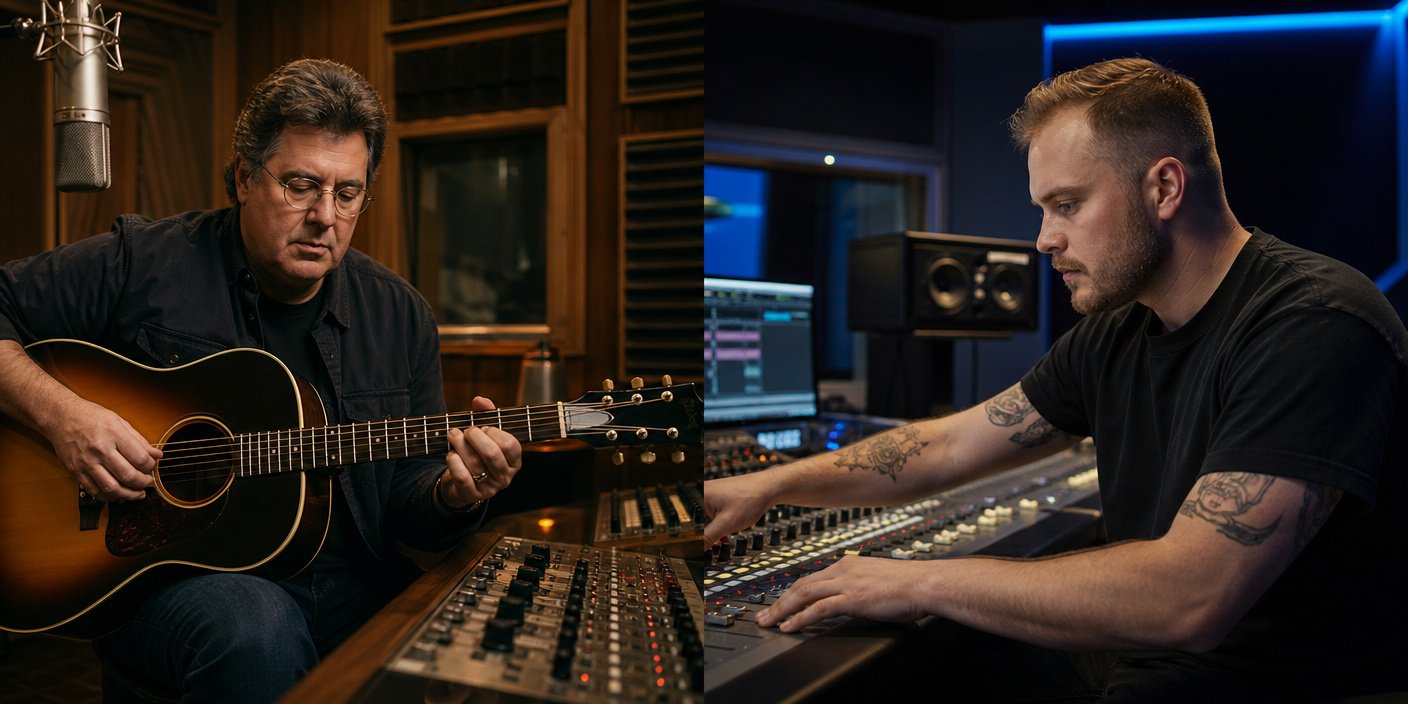
The music industry’s release cycle for the week of October 19, 2026, serves as a masterclass in the current bifurcated state of country music, where legacy artists and digital-native mavericks occupy the same cultural territory. As streaming numbers dictate chart dominance, the diverse offerings from Zach Bryan, Vince Gill, Cody Johnson, and Ashley Cooke highlight a fascinating push-and-pull between raw, unfiltered storytelling and the polished machinery of modern radio success. This week’s arrivals are not merely songs; they represent tactical maneuvers in a high-stakes environment where listener retention is the ultimate currency.
Key Highlights
- Zach Bryan’s EP Strategy: ‘Young Manhood & Other Donatable Organs’ challenges traditional album-cycle expectations by prioritizing thematic, shorter-form artistic statements.
- Vince Gill’s Masterclass: ‘Marty and Me’ reinforces the necessity of the Nashville traditionalist, anchoring the week’s release in storied songwriting and technical instrumental prowess.
- Mainstream Momentum: Cody Johnson and Ashley Cooke continue to dominate the commercial airwaves, proving that traditional country-pop sensibilities still drive the highest engagement metrics on terrestrial radio.
Navigating the New Soundscape: Tradition Meets Disruption
The landscape of the music industry has undergone a radical transformation over the past five years, and the releases on October 19, 2026, exemplify this shift. The modern artist is no longer just a musician; they are a content ecosystem. This week’s releases, ranging from the introspective EP drops of Zach Bryan to the disciplined single-release strategies of Cody Johnson, offer a unique lens through which to view the evolution of the genre.
The Rise of the ‘Micro-Album’ and Zach Bryan’s Methodology
Zach Bryan’s latest EP, ‘Young Manhood & Other Donatable Organs,’ is a calculated departure from the long-playing standard. By utilizing the EP format, Bryan is intentionally circumventing the ‘filler’ criticism often leveled at 18-track albums. This strategy allows for a high-intensity listening experience that is perfectly optimized for algorithm-driven playlists. In an era where listener attention spans are fragmented, Bryan’s refusal to dilute his project with experimental, low-engagement tracks is a stroke of economic genius. He is effectively maximizing his ‘streams-per-minute’ metric, ensuring that the listener engages with every track from start to finish. This approach mirrors the broader industry shift toward ‘snackable’ content—where high-impact, emotional resonance is delivered in bite-sized installments that are easier to digest and share on social platforms. The thematic consistency of ‘Young Manhood’ also allows for stronger brand identity, which is essential for artists who rely heavily on direct-to-fan engagement rather than traditional label-funded marketing pushes.
The Enduring Technicality of Vince Gill
Conversely, the release of Vince Gill’s ‘Marty and Me’ acts as a vital counterweight to the digital-first era. Gill represents the ‘gold standard’ of Nashville craft. While the algorithms might favor the rapid-fire release strategies of newer artists, Gill proves that the ‘song’ remains the fundamental unit of value. ‘Marty and Me’ is not designed for the TikTok feedback loop; it is designed for longevity, acoustic fidelity, and the preservation of the country music canon. For industry observers, this track is a reminder that the institutional memory of country music—its history, its technical demands, and its respect for the session player—cannot be replicated by software or viral trends. Gill’s ability to remain relevant while adhering to a strict, almost analog methodology highlights a specific economic niche: the ‘Legacy-Premium’ market. Fans of this segment are willing to pay for physical media, attend multi-date tours, and engage with high-fidelity audio formats that the casual streaming demographic often overlooks.
The Commercial Engine: Cody Johnson and Ashley Cooke
When we analyze the success of Cody Johnson and Ashley Cooke, we are looking at the ‘commercial engine’ of the genre. Their latest singles are optimized for the ‘Country Radio’ format, a beast that requires specific tempo, lyrical themes, and production values. It is a misconception to view their success as merely ‘popular’; it is, in fact, highly engineered. Both artists have mastered the art of the ‘hook,’ crafting songs that feel both nostalgic and contemporary—a difficult tightrope to walk. Johnson, in particular, has become the archetype for the ‘working man’s star,’ with a production style that blends the grit of Texas country with the polish required for national chart success. Ashley Cooke, meanwhile, brings a pop-inflected precision to the radio format that is essential for crossing over into the broader mainstream market. The synergy between their release schedules and radio airplay campaigns is a blueprint for mid-career artists aiming to move from regional popularity to national household-name status. Their success this week is not just about the quality of the melody; it is about the effective deployment of a single in a saturated media environment.
Future Implications: What This Means for 2027
The dual approach—the streaming-optimized EP and the radio-ready single—will define the 2027 release landscape. We are likely to see a convergence of these two models. Future superstar artists will need to be ‘amphibious’—capable of satisfying the high-fidelity demands of the legacy market while simultaneously dominating the rapid, algorithmic consumption patterns of the digital-first audience. The success of these releases on October 19, 2026, provides a predictive indicator: content that is either hyper-specific (like Bryan) or hyper-polished (like Johnson/Cooke) will continue to win, while the ‘middle-ground’ content, lacking a definitive identity, will continue to struggle for market share.
FAQ: People Also Ask
Q: Why are EPs becoming more popular than full-length albums?
A: EPs allow artists to release music more frequently, which keeps their profiles high in streaming algorithms and reduces the pressure to produce 15+ tracks of consistent quality. It is a strategy of quality over quantity, tailored for the digital consumption age.
Q: How do radio singles compete with streaming-only releases?
A: They don’t necessarily compete; they occupy different funnel stages. Radio singles are designed for mass-market awareness and passive listening, while streaming-focused releases target active, dedicated fan bases. Top-tier artists like Cody Johnson now utilize both channels to maximize their footprint.
Q: Is the traditional country sound dying out?
A: Far from it. As evidenced by Vince Gill’s ‘Marty and Me,’ there is a robust and highly profitable market for traditionalist country music. It functions as a premium commodity, catering to a demographic that values technical mastery and historical continuity over trend-chasing.
Q: What is the significance of the October 19 release date?
A: While Friday is the global standard, releases often cluster around mid-month milestones to capture quarterly streaming data shifts. This specific date aligns with the pre-holiday marketing push, where labels release high-impact material to build momentum before the end-of-year ‘best of’ lists are finalized.