Recent rainfall and significantly cooler temperatures have delivered a much-needed tactical advantage to firefighting crews battling blazes across three of Oregon’s major national forests. After weeks of high-pressure ridges, hot temperatures, and dry lightning—factors that notoriously fuel rapid fire progression—a cooling trend has allowed personnel to secure containment lines that were previously elusive.
While this moisture provides a crucial break, federal and state officials are emphasizing that the reprieve is strictly temporary. The current atmospheric moisture is a welcome relief, but the underlying drought conditions that have plagued the Pacific Northwest throughout the summer remain a persistent threat to forest health and public safety.
The Meteorological Shift and Operational Relief
The arrival of cooler, wetter air represents a significant departure from the dry conditions that defined the earlier half of the wildfire season in Oregon. Meteorological data from the National Weather Service indicates that a Pacific trough moved inland, bringing sustained cloud cover and localized precipitation to the higher elevations of the Cascade Range. For Incident Management Teams (IMTs), this shift is more than just a reduction in temperature; it is a reduction in the fire’s intensity.
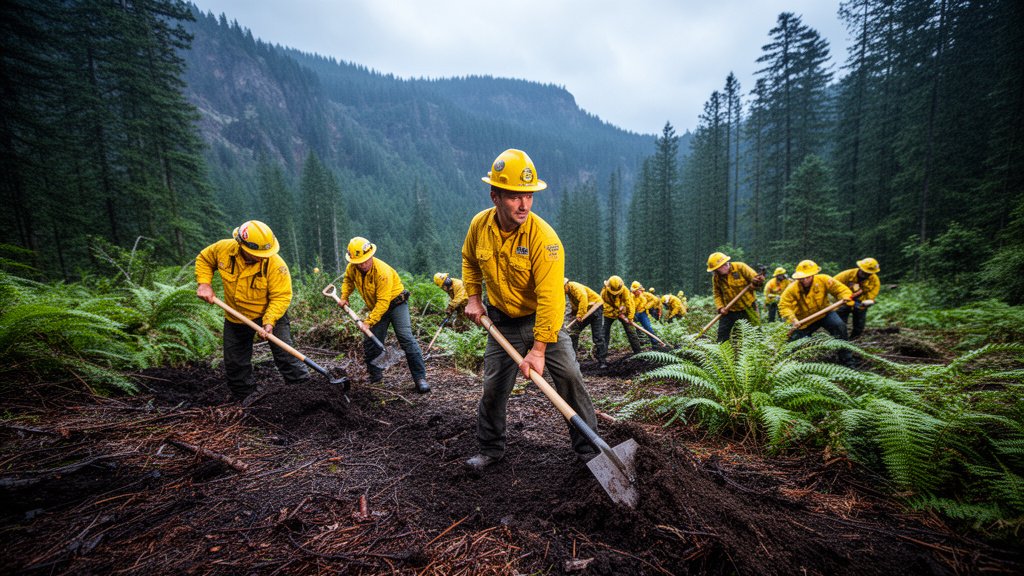
Lower temperatures during the night, historically a time when fire behavior is less active, have allowed crews to pivot from defensive stand-off tactics to active, ground-level containment. Firefighters have capitalized on this window to dig deeper fire lines, clear hazardous fuel breaks, and conduct controlled burning operations to reduce vegetation that would otherwise fuel future flare-ups. This is a critical transition; when fire intensity drops, the rate of spread decreases, allowing mechanical equipment and hand crews to gain the upper hand.
Strategic Challenges in National Forest Management
The ongoing operations in the Willamette, Mt. Hood, and Deschutes National Forests illustrate the complex logistical challenges inherent in suppressing modern wildfires. The U.S. Forest Service (USFS) has been coordinating massive resource deployments, often balancing the need for immediate fire suppression with the long-term goal of forest ecosystem restoration.
Containment is not merely about stopping the fire; it is about creating sustainable barriers. In the rugged, high-elevation terrain of Oregon, the terrain itself often works against ground crews. Steep canyons and dense timber act as chimneys for fire, accelerating spread rates. The current rainfall has saturated surface fuels—leaves, twigs, and grasses—which serve as the primary ignition sources for ground fires. By dampening these ‘fine fuels,’ the rain effectively creates a natural buffer that slows the fire’s ability to hop across suppression lines. However, heavy timber and deep-seated root fires remain a concern. Rain does not always penetrate deep enough to extinguish large, burning logs or subsurface peat fires, meaning the ‘mop-up’ phase of the operation will remain arduous and physically demanding for the weeks to come.
Economic and Ecological Consequences
The wildfire season in Oregon has profound impacts that extend well beyond the immediate threat to human life and property. Economically, the cost of fire suppression is staggering, with national agencies pouring millions of dollars into tactical aviation, heavy equipment rentals, and specialized personnel. The recent rains offer a cost-saving opportunity, as crews can transition to mop-up and patrol status, which is generally less resource-intensive than active suppression.
Ecologically, the fires have been a double-edged sword. While natural fire is an essential component of forest health in the Pacific Northwest—clearing out overgrowth and encouraging native species regrowth—the intensity of recent fires, often driven by extreme drought, has led to severe soil sterilization and erosion risks. The arrival of rain is beneficial, but if the precipitation is too intense, it can cause mudslides in fire-ravaged areas where root systems have been compromised. Managing this post-fire landscape is now a central priority for the Department of Forestry as they assess watershed protection and replanting schedules.
Looking Ahead: The Myth of a Season’s End
Despite the current optimism, agency heads are quick to warn against complacency. The Oregon Department of Forestry has noted that even after significant rain events, ‘drought memory’ persists in the soil and large woody fuels. A few days of warm, windy, or dry weather—a common occurrence in late autumn—can rapidly strip away the moisture gained, leaving forests vulnerable once again.
Fire management strategy is now shifting toward a ‘pre-winter containment’ model. The goal is to reach full containment on all primary fires before the autumn winds return. With climate variability increasing the unpredictability of Oregon’s shoulder seasons, the ability of fire crews to respond to these shifting conditions is the new baseline for success. For now, the fire lines are holding, the smoke is clearing, and the forests are breathing, but the work is far from over.
FAQ: People Also Ask
Does rain fully extinguish wildfires in Oregon forests?
No. Rain significantly slows fire behavior and helps crews build lines, but it rarely extinguishes a deep-seated fire. Heat often remains trapped in root systems and heavy timber, which can reignite once the surface dries out.
Which specific Oregon forests have been affected by recent fires?
Reports have highlighted significant activity across the Willamette, Mt. Hood, and Deschutes National Forests, requiring major coordination between the U.S. Forest Service and local fire districts.
Why do officials say the wildfire season isn’t over yet?
Even with recent rain, the underlying soil moisture remains low due to summer drought. If temperatures rise and wind speeds increase, these forests can quickly dry out, turning the damp surface fuels into fire hazards again.
How does the current rainfall affect firefighting strategy?
Rain allows crews to move from defensive, ‘hold-the-line’ strategies to active suppression, such as digging direct fire lines, thinning dense brush, and conducting mop-up operations, which are safer and more effective.