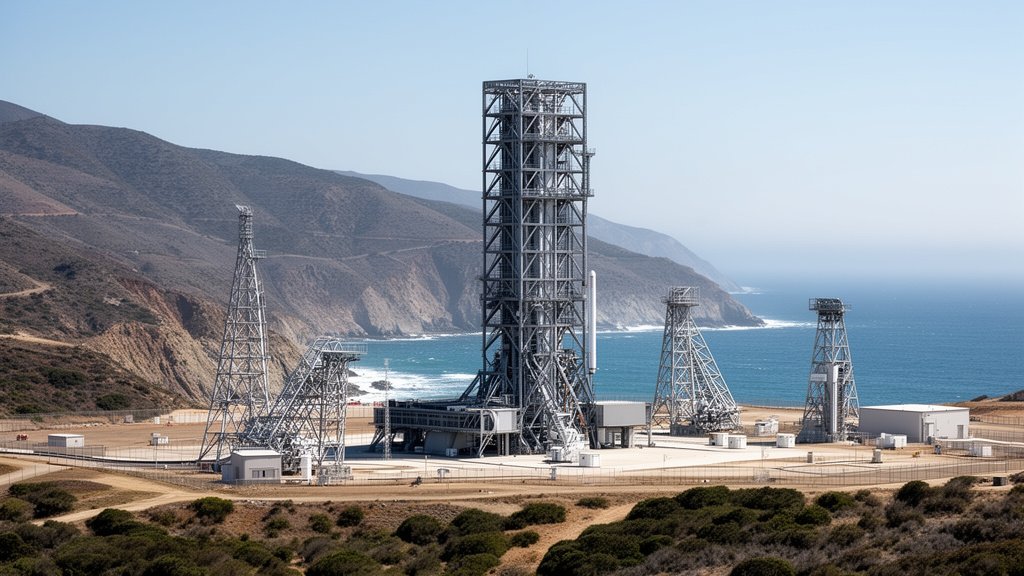
On July 29, Vandenberg Space Force Base (VSFB) served as the epicenter for a transformative discussion as government officials and industry leaders gathered for a pivotal ‘Spaceport of the Future’ Industry Day. The event marked a critical step in the Space Force’s ongoing mission to overhaul its primary West Coast launch facility, aiming to meet the aggressive launch cadences demanded by the rapidly expanding commercial space sector.
Key Highlights
- Modernizing Range Infrastructure: The primary focus remains on upgrading the Western Range to support more frequent, autonomous flight safety operations, reducing the time between launches.
- Workforce Expansion: Strategists identified an urgent need for specialized engineering talent to manage advanced payload processing and launch integration.
- Commercial Synergy: The initiative aims to create a ‘spaceport’ environment that treats commercial spaceflight providers as partners, ensuring Vandenberg remains competitive against global launch competitors.
- Infrastructure Sustainability: New investments are being scoped for environmentally resilient launch pads capable of supporting diverse rocket classes, from small-lift to heavy-lift vehicles.
Reimagining the Gateway to the Cosmos
The July 29 convening at Vandenberg was not merely an administrative meeting; it was a signaling event for the future of American space dominance. As the private space industry accelerates at an unprecedented rate, the traditional bottlenecks associated with government-run launch sites—often centered on human-in-the-loop safety protocols and legacy hardware—are being replaced by a vision of autonomy and speed. This is the core mandate of the ‘Spaceport of the Future’ initiative.
The Shift to High-Cadence Operations
For decades, launch ranges were designed around the cadence of infrequent, high-stakes military or intelligence community missions. However, the commercial sector, led by entities like SpaceX and Rocket Lab, has shifted the paradigm. The current bottleneck is rarely the hardware itself, but the ‘Range’—the airspace clearance, the tracking data, and the flight safety analysis. During the Industry Day, stakeholders discussed moving toward a ‘Range of the Future’ model where flight safety data is processed in real-time by automated systems, allowing for ‘launch on demand’ capabilities that were previously considered impossible.
The Infrastructure Imperative
Infrastructure investment at Vandenberg is being prioritized to address the distinct needs of varying launch vehicle architectures. The initiative is looking closely at modular launch pads that can be quickly adapted for different rocket footprints, as well as modernized propellant loading systems that reduce turn-around time. This investment is crucial for maintaining the Western Range’s unique advantage: its ability to facilitate polar orbit launches without flying over populated areas—a distinct logistical edge over the Eastern Range in Florida.
Building the Space-Ready Workforce
The ‘Spaceport of the Future’ is not just about steel and silicon; it is about human capital. A significant portion of the Industry Day was dedicated to the workforce strategy. The Space Force and its commercial partners are facing a talent shortage in specialized areas: range safety engineering, orbital mechanics, and automated telemetry management. The roadmap discussed involves deeper collaborations with academic institutions and vocational training programs to ensure a pipeline of engineers ready to step into high-tech roles at the base, effectively creating a specialized ‘space ecosystem’ in the central California region.
Secondary Angles: Context and Impact
1. Geostrategic Advantage
Vandenberg’s geography is its greatest asset. By enabling direct polar launches, the base is essential for the growing satellite constellations that require global coverage—a sector dominated by both Starlink-style commercial broadband and military reconnaissance networks. Enhancing the ‘Spaceport’ status of Vandenberg solidifies the U.S. military’s ability to support these essential assets without reliance on more congested ranges.
2. Economic Catalyst
The expansion of Vandenberg as a primary commercial spaceport is set to transform the local California economy. Beyond the direct jobs created on the base, the influx of aerospace logistics, fuel supply chain management, and technical support services will likely drive a significant regional boom, mirroring the economic impact seen around the Kennedy Space Center.
3. The Regulatory Evolution
Perhaps the most complex hurdle discussed was the evolution of regulatory frameworks. To achieve a ‘Spaceport of the Future,’ the Space Force is working to streamline the interaction between FAA commercial licensing and military range safety requirements. This regulatory de-confliction is the ‘invisible’ technology that could be the biggest force multiplier for launch frequency.
FAQ: People Also Ask
Q: What is the primary goal of the ‘Spaceport of the Future’ initiative?
A: The primary goal is to upgrade Vandenberg Space Force Base’s infrastructure and operational processes to support significantly higher launch cadences, ensuring the U.S. maintains its advantage in the competitive commercial and military space sectors.
Q: Why is Vandenberg uniquely important compared to Florida’s Space Coast?
A: Vandenberg is the only major U.S. launch site that can support direct launches into polar orbits without overflying populated areas, making it critical for global satellite coverage and reconnaissance.
Q: Did the Industry Day result in specific new contract announcements?
A: The Industry Day served as a strategy and solicitation forum. While no specific individual contracts were awarded on July 29, the event provided industry partners with the official roadmap and requirements to bid on upcoming range modernization projects.
Q: How does automation affect the future of the Western Range?
A: Automation is the cornerstone of the initiative. By implementing automated flight safety and telemetry systems, the Space Force aims to eliminate manual bottlenecks, allowing for the rapid-fire launch schedules requested by modern satellite operators.