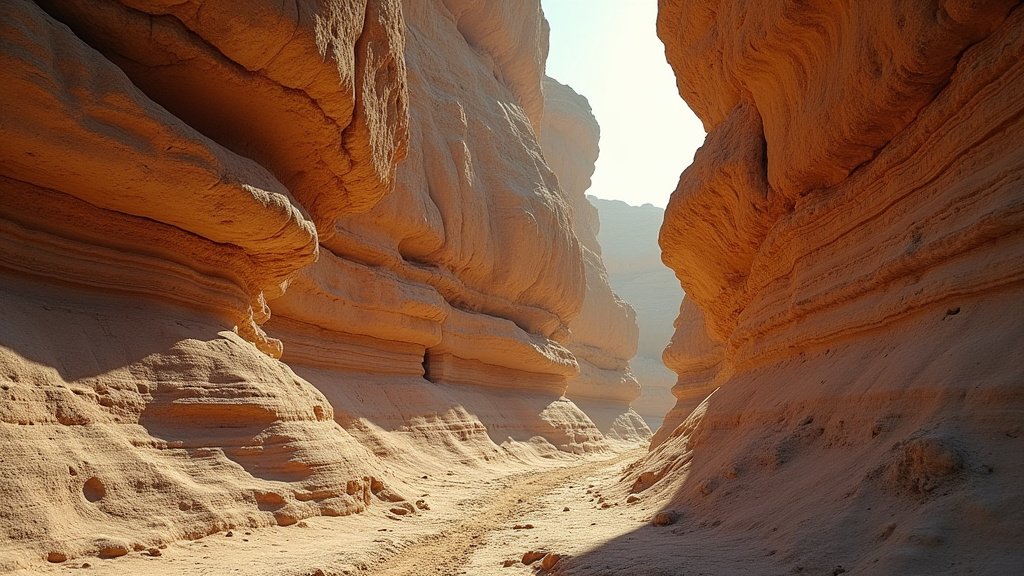
A team of scientists from NASA and the U.S. Geological Survey (USGS) recently embarked on an expedition to California’s High Desert, engaging in the age-old practice of rock hounding to gather valuable geological samples.
Key Highlights:
- Scientists from NASA and USGS collaborated on a rock hounding expedition.
- The mission focused on collecting geological samples in California’s High Desert.
- The collected rocks are intended for scientific analysis, potentially aiding in understanding Earth’s geology and even extraterrestrial mineralogy.
- The expedition highlights the interdisciplinary nature of scientific research, combining expertise from space exploration and terrestrial geology.
Desert Dig: Unlocking Earth’s Secrets
The stark, arid landscape of California’s High Desert served as the backdrop for a unique scientific endeavor as researchers from NASA and the USGS joined forces for a rock hounding expedition. This activity, often associated with amateur enthusiasts, took on a professional guise as the scientists meticulously searched for and collected geological specimens. The primary objective was to gather samples that could provide critical insights into Earth’s geological history and processes. This collaboration underscores a growing trend in scientific research where distinct fields converge to tackle complex questions. The arid environment of the High Desert, known for its exposed rock formations and geological diversity, proved to be an ideal location for such an undertaking. The geological strata in this region offer a window into millions of years of Earth’s history, making it a prime area for sampling.
The Interdisciplinary Approach
The partnership between NASA, an agency focused on space exploration, and the USGS, a scientific bureau dedicated to monitoring natural resources and hazards, might seem unusual at first glance. However, the parallels between understanding Earth’s geology and deciphering the composition of other celestial bodies are profound. Rocks and minerals found on Earth can serve as terrestrial analogs for extraterrestrial materials, helping scientists interpret data from Mars, the Moon, and asteroids. By studying the formation, composition, and alteration of rocks in the High Desert, researchers can develop and refine techniques that will be applied to the analysis of samples returned from space missions or analyzed remotely by probes.
Strategic Sample Collection
The rock hounding was not a casual pursuit but a carefully planned scientific mission. The scientists likely employed advanced geological survey techniques, potentially including remote sensing data and ground-penetrating radar, to identify promising areas for sample collection. The types of rocks targeted would depend on the specific research goals, which could range from studying volcanic activity and ancient lakebeds to analyzing mineral deposits. Each sample collected would be meticulously documented, noting its exact location, geological context, and any associated formations. This detailed record-keeping is crucial for subsequent laboratory analysis, which might involve techniques such as mass spectrometry, X-ray diffraction, and microscopic examination to determine elemental composition, mineral structure, and origin.
Implications for Planetary Science
The rocks gathered in California’s High Desert could have significant implications for planetary science. For instance, certain types of sedimentary rocks or mineral deposits found in arid, ancient environments might resemble those expected on Mars. Studying how these minerals form and are preserved under harsh conditions on Earth can inform the search for evidence of past life or habitable environments on the Red Planet. Similarly, understanding the processes that alter rocks through weathering and erosion in desert climates can help scientists interpret features observed on other arid planetary surfaces. The insights gained from these terrestrial samples act as a vital training ground and calibration tool for missions venturing beyond Earth.
FAQ: People Also Ask
What is rock hounding?
Rock hounding is the hobby of searching for and collecting rocks and minerals, typically in their natural environment. While often a recreational activity, it can also be a valuable scientific pursuit when conducted with specific research objectives, as demonstrated by the NASA and USGS expedition.
Why is the High Desert a good location for geological study?
The High Desert region, particularly in California, is geologically diverse and often features exposed rock formations that have undergone millions of years of geological processes. Its arid climate also means that erosion is less severe, preserving geological features and mineral deposits that might be obscured in wetter climates.
How does studying Earth rocks help NASA?
NASA uses Earth rocks as analogs to understand the composition and geological history of other planets and moons. By studying similar rock types, formation processes, and mineral structures on Earth, scientists can better interpret data gathered from missions to Mars, the Moon, and other celestial bodies, aiding in the search for past or present life and understanding planetary evolution.
What kind of analysis do scientists perform on collected rocks?
Scientists use a variety of sophisticated techniques to analyze rocks, including chemical analysis (like mass spectrometry) to determine elemental composition, mineralogical analysis (like X-ray diffraction) to identify the types of minerals present, and petrographic analysis using microscopes to study the rock’s texture and structure.