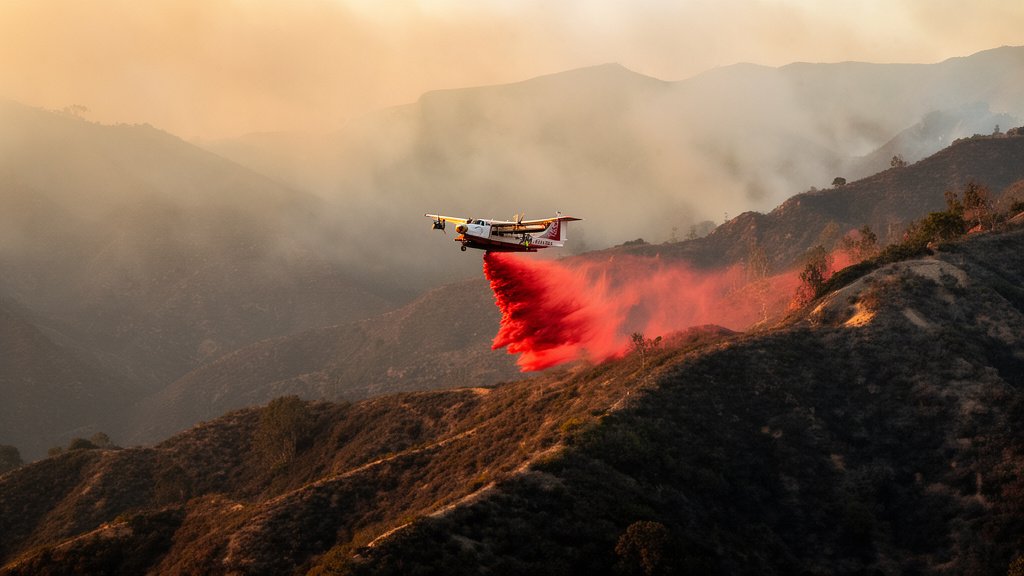
A fast-moving wildfire, identified as the ‘Norte fire’, has erupted in the hills of Orange County, California, creating an immediate and dangerous emergency situation. As of October 17, the blaze has decimated at least 6 homes and triggered mandatory evacuation orders for approximately 16,000 residents, as local authorities scramble to contain the rapidly shifting front of the fire.
Key Highlights
- Immediate Displacement: Mandatory evacuation orders are currently in effect for 16,000 residents as the fire threatens residential neighborhoods.
- Confirmed Damage: Official reports confirm that at least 6 homes have been destroyed in the fire’s path, with damage assessments currently ongoing.
- Operational Scale: Local agencies, including the Orange County Fire Authority (OCFA), are engaged in a massive containment effort, grappling with challenging terrain and shifting wind conditions.
- Urgent Status: The situation remains fluid, with emergency services urging residents in the path of the blaze to adhere strictly to evacuation directives.
Anatomy of a Crisis: Assessing the Norte Fire Impact
The outbreak of the Norte Fire in Orange County serves as a stark reminder of the volatility inherent in California’s wildfire season. The fire, which began with localized ignition, quickly escalated due to a combination of dry vegetation and erratic wind patterns, characteristic of the region’s topography. The speed at which this fire moved from the wildland interface into established residential areas has stretched local emergency resources to their limits, prioritizing the preservation of human life over property.
Current Operational Status and Containment
At the forefront of the response, the Orange County Fire Authority (OCFA) has deployed air and ground assets to establish perimeters. The primary tactical objective remains the protection of structures that currently sit in the fire’s potential path. Firefighters are utilizing specialized heavy equipment to create firebreaks, while aircraft have been dropping fire retardant to slow the advancement of the flames toward denser housing tracts.
However, the terrain in Orange County—often characterized by steep canyons and inaccessible ridges—presents significant obstacles. The unpredictable nature of the Norte Fire means that containment percentages remain low, and the fire’s perimeter is frequently shifting. Officials are constantly re-evaluating the evacuation zones, expanding them as the fire pushes forward. Residents are encouraged to monitor the OCFA dashboard for real-time updates on evacuation zones and shelter locations.
The Human Toll and Evacuation Dynamics
For 16,000 residents, the last 24 hours have been defined by rapid displacement. The evacuation process for such a large population is an exercise in complex logistics. The Orange County Sheriff’s Department has been coordinating the exodus, managing traffic flow on primary arteries to prevent bottlenecks that could trap evacuees.
Emergency shelters have been activated at community centers and schools, providing essential services for those displaced. The psychological impact of losing one’s home is profound; for the owners of the 6 destroyed homes already identified, the reality of this event is permanent. The community response has been swift, with local charities and mutual aid groups mobilizing to provide food, water, and temporary bedding for the thousands currently displaced. The challenge remains maintaining order and safety while the evacuation perimeter continues to expand.
The Meteorological and Environmental Catalyst
The Norte Fire is not an isolated event but a symptom of the broader environmental conditions currently plaguing Southern California. Mid-October often brings the arrival of the ‘Santa Ana’ wind conditions—a meteorological phenomenon that forces dry, hot air from the inland deserts toward the coast. These winds effectively desiccate the local chaparral and scrubland, turning the landscape into a tinderbox.
Furthermore, the accumulated vegetation, fueled by previous seasons of rainfall, has created a significant fuel load. This combination—low humidity, high winds, and dense fuel—creates the perfect environment for a ‘blow-up’ event, where fire intensity increases exponentially. Understanding these conditions is critical for local officials, who are tasked with long-term mitigation strategies, including thinning out vegetation in high-risk zones and upgrading electrical grid infrastructure to prevent sparks during high-wind events.
Looking Ahead: Recovery and Future Prevention
As the active threat is managed, the conversation will inevitably shift toward recovery and future prevention. The economic cost of the Norte Fire will encompass not just the immediate loss of homes, but also the long-term impact on local property values, insurance premiums, and municipal emergency budgets.
There is a growing consensus among urban planners and wildfire specialists that California must rethink its approach to ‘Wildland-Urban Interface’ (WUI) development. Moving forward, stricter building codes, fire-resistant exterior materials, and the development of defensible space around homes will be the primary defenses against future fires. While the immediate focus is on the safety of the 16,000 evacuees, the Norte Fire serves as a sobering lesson on the necessity of community preparedness and the reality of living in an increasingly fire-prone climate.
FAQ: People Also Ask
Q: What is the current containment level of the Norte Fire?
A: Containment levels are currently fluctuating as the fire is active. Authorities are focusing on containing the perimeter, but shifting winds are making precise containment estimates difficult to maintain. Check the Orange County Fire Authority official portals for the latest percentage.
Q: Are there additional evacuation orders expected?
A: The situation remains highly fluid. Emergency management is continuously assessing the path of the fire. Residents on the periphery of the current evacuation zones should remain packed and ready to leave if an order is issued by local law enforcement.
Q: Where can I find information on property damage and support?
A: Official damage assessments are ongoing. Property owners should contact their insurance providers immediately and follow updates from the Orange County government website for information regarding disaster assistance and recovery resources.