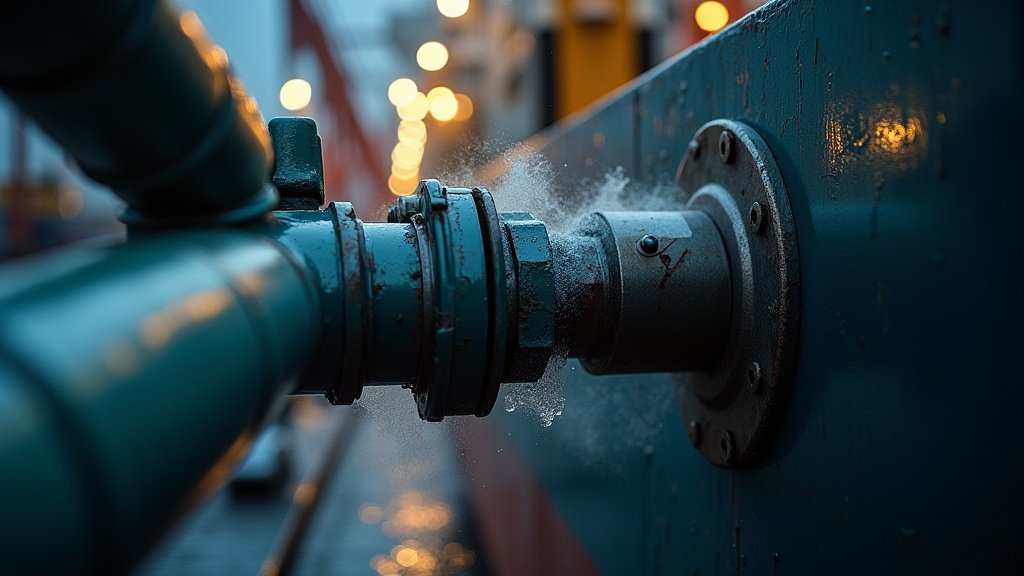
Mitsui O.S.K. Lines (MOL) has inked its first-ever annual liquefied natural gas (LNG) bunkering deal for car carriers operating on the US West Coast, marking a significant step forward in the shipping industry’s transition towards cleaner fuels and reduced emissions.
- MOL has signed its first annual LNG bunkering agreement for car carriers on the US West Coast.
- The deal signifies a major commitment to cleaner fuel alternatives in maritime transport.
- This initiative supports efforts to decarbonize shipping operations along the West Coast.
- The agreement is expected to pave the way for broader adoption of LNG as a marine fuel.
MOL’s Strategic Move Towards Sustainable Shipping
Mitsui O.S.K. Lines (MOL), a prominent global shipping company, has announced a landmark agreement that will see its car carriers receive regular liquefied natural gas (LNG) fuel supplies on the US West Coast. This pioneering deal represents the company’s first-ever annual contract for such services in this critical maritime region. The move underscores MOL’s dedication to environmental stewardship and its proactive strategy to align with increasingly stringent global and regional emissions regulations. By securing a consistent supply of LNG, MOL is not only enhancing the operational efficiency of its fleet but also demonstrating a tangible commitment to reducing its carbon footprint and that of its clients, particularly in the automotive logistics sector.
Environmental Imperatives and Decarbonization Goals
The maritime industry is under immense pressure to decarbonize, with organizations like the International Maritime Organization (IMO) setting ambitious targets for greenhouse gas (GHG) reduction. LNG is considered a transitional fuel, offering a significant reduction in sulfur oxides (SOx) and nitrogen oxides (NOx) compared to traditional heavy fuel oil, along with a notable decrease in carbon dioxide (CO2) emissions. This deal directly supports California’s ambitious environmental goals, which include reducing emissions from the significant volume of maritime traffic along its coast. For car carriers, which often undertake regular voyages between Asia and North America, the availability of reliable LNG bunkering infrastructure on the US West Coast is crucial for the economic and practical viability of adopting this cleaner fuel.
Economic and Operational Advantages of LNG
Beyond the environmental benefits, the adoption of LNG presents several operational and economic advantages. While the initial investment in LNG-powered vessels and bunkering infrastructure can be substantial, the long-term operational costs can be competitive. LNG prices have become more stable, and the reduced need for exhaust gas cleaning systems (scrubbers) can offset some of the upfront costs. Furthermore, by being an early adopter, MOL positions itself as a leader in sustainable logistics, potentially attracting environmentally conscious clients and securing a competitive edge in a market increasingly focused on ESG (Environmental, Social, and Governance) performance. This strategic move also aligns with the growing demand from the automotive industry for greener supply chains.
The Role of Partnerships and Infrastructure
This pioneering deal would not be possible without robust partnerships and the development of essential bunkering infrastructure. While the specifics of the partner providing the LNG and bunkering services were not detailed, such agreements typically involve collaborations with energy suppliers and port authorities. The establishment of dedicated LNG bunkering facilities at key West Coast ports is vital for ensuring seamless refueling operations. MOL’s commitment signals to the industry that there is a growing demand for these services, likely encouraging further investment in LNG supply chains and terminal development along the coast. This proactive approach from a major player like MOL can act as a catalyst for wider industry adoption.
Future Outlook and Industry Implications
MOL’s first annual LNG bunkering deal on the US West Coast is more than just a single contract; it is a bellwether for the future of sustainable shipping. It demonstrates that the logistical and economic challenges of transitioning to cleaner fuels are surmountable. As more shipping lines follow suit, the demand for LNG as a marine fuel is expected to rise, driving further innovation in engine technology and bunkering solutions. This trend is critical for meeting global decarbonization targets and ensuring the long-term sustainability of the global trade network. The success of this initiative could accelerate the development of similar agreements in other major shipping lanes worldwide.
FAQ: People Also Ask
What is LNG bunkering?
LNG bunkering is the process of refueling ships with liquefied natural gas (LNG). LNG is natural gas that has been cooled down to liquid form (-162 degrees Celsius or -260 degrees Fahrenheit), making it much more compact for storage and transport. For ships, it serves as a cleaner alternative to traditional marine fuels like heavy fuel oil.
Why is LNG considered a cleaner fuel for ships?
LNG produces significantly lower levels of sulfur oxides (SOx), nitrogen oxides (NOx), and particulate matter compared to conventional marine fuels. It also results in a reduction of carbon dioxide (CO2) emissions by up to 25% compared to heavy fuel oil, contributing to the decarbonization efforts in the shipping industry.
What are car carriers and why are they important?
Car carriers, also known as ro-ro (roll-on/roll-off) vessels, are specialized ships designed to transport vehicles such as cars, trucks, and other rolling stock. They are a critical component of the global automotive supply chain, enabling the efficient and large-scale movement of vehicles from manufacturing plants to markets worldwide.
What challenges exist in adopting LNG as a marine fuel?
Key challenges include the high initial cost of converting or building LNG-powered vessels, the need for extensive bunkering infrastructure at ports globally, the stringent safety protocols required for handling cryogenic fuels, and ensuring a stable and competitive supply of LNG.
How does this deal impact environmental regulations on the US West Coast?
This deal supports and aligns with the strict environmental regulations in place on the US West Coast, particularly those aimed at reducing air pollution from ships. By using LNG, MOL contributes to meeting emission control area (ECA) requirements and state-specific environmental targets, helping to improve air quality in coastal communities.