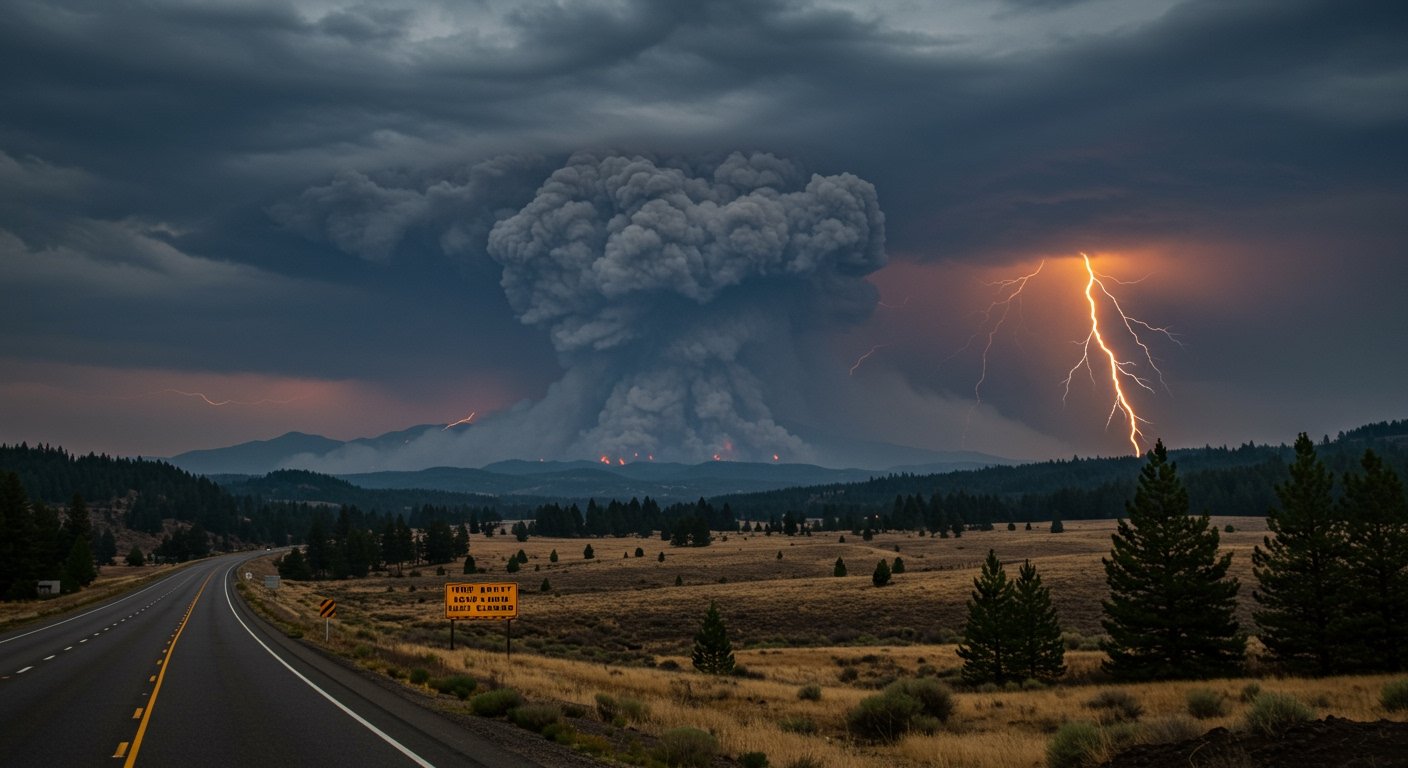
MEDFORD, OR – A series of intense lightning storms on Tuesday sparked a widespread outbreak of wildfires across Southern Oregon, igniting a staggering 72 blazes throughout Jackson and Josephine counties. The sudden proliferation of fires, fueled by persistently dry conditions, has stretched firefighting resources and prompted urgent action from state and regional authorities.
The Onslaught of Lightning
The meteorological event unfolded rapidly, with numerous lightning strikes hitting parched landscapes across the region throughout Tuesday. Firefighters and dispatch centers were quickly inundated with reports of smoke and new fire starts popping up in rapid succession. The final count from the storms settled at 72 distinct incidents across the two affected counties, highlighting the explosive potential when dry fuels meet atmospheric electrical activity.
This widespread ignition event presents a significant challenge for fire managers, requiring rapid assessment and prioritization of resources to contain dozens of simultaneous threats spread across a broad geographic area.
The Neil Creek Fire: Immediate Threat and Highway Impact
Among the fires ignited, one near Ashland quickly escalated, demanding immediate attention. The Neil Creek Fire, located just south of the city, prompted authorities to issue Level 2 “Be Set” evacuation orders for nearby residents. A Level 2 order signifies a significant danger and advises residents to be prepared to leave at a moment’s notice, having their essential items and plans ready.
The fire’s proximity to a major transportation artery also caused significant disruption. One lane of southbound Interstate 5 was closed between milepost 10.5 and 8.5 as a precautionary measure due to smoke, reduced visibility, and firefighting operations in the area. This closure impacted regional travel and underscored the direct threat the fires posed to infrastructure and public safety.
By Wednesday afternoon, fire officials provided an updated estimate for the Neil Creek Fire, reporting that it had grown to cover 124 acres. Efforts to contain the blaze were underway, involving ground crews and aerial support.
Regional Response and Mutual Aid
Responding to the scale of the fire outbreak, emergency management agencies mobilized resources from across the region. In a critical display of inter-state cooperation, resources and personnel were dispatched from Cal Fire, California’s state fire agency, to assist with the Oregon fires. This aid was facilitated through a standing mutual aid agreement between Oregon and California, a vital arrangement that allows states to share firefighting assets like engines, crews, and aircraft during periods of high demand that exceed local or state capacity.
The arrival of Cal Fire resources provided much-needed relief to Oregon agencies grappling with the high number of incidents. This mutual support system is a cornerstone of large-scale wildfire management in the Western United States, enabling a more robust and coordinated response to complex and widespread fire events like the one seen in Southern Oregon.
The Broader Picture: The Elk Fire and State Action
While the Neil Creek Fire prompted immediate evacuation orders, other significant fires were also active in the region. In neighboring Klamath County, the Elk Fire, which was initially reported on Tuesday morning, presented a substantial challenge. By Wednesday afternoon, the Elk Fire had burned over 2,000 acres, illustrating the rapid growth potential of fires under the prevailing dry conditions.
The scale and potential threat of the Elk Fire prompted Oregon Governor Tina Kotek to take decisive action. On Wednesday afternoon, Governor Kotek issued an Emergency Conflagration Act for the Elk Fire. Declaring a conflagration is a formal state declaration that signifies a fire has exceeded local and regional firefighting capabilities and poses a significant threat to life and property. This act mobilizes additional resources from across the state and allows for the Oregon State Fire Marshal to take command of the incident, bringing enhanced coordination and assets to bear on the fire.
The issuance of the Conflagration Act for the Elk Fire underscored the seriousness of the wildfire situation unfolding across Southern Oregon following the lightning strikes.
Compounding Risks and Future Outlook
The outlook for stemming the tide of new ignitions and containing existing fires remains challenging. State Fire Marshal Mariana Ruiz-Temple highlighted the difficult conditions facing firefighters and the public.
Ruiz-Temple noted that continued dry conditions across Southern Oregon and the broader state, coupled with the extended forecast offering no relief in the form of significant precipitation, create an environment highly conducive to fire growth and spread. This lack of moisture means that fuels – grasses, brush, and timber – remain critically dry and readily available to burn.
In light of the natural lightning-caused ignitions and the persistent dry conditions, State Fire Marshal Ruiz-Temple emphasized a critical message for the public: the urgent need to prevent human-caused fires. While natural ignitions like lightning are unavoidable, many wildfires result from human activity, such as unattended campfires, sparks from equipment, or discarded cigarettes. Preventing these preventable fires becomes paramount, especially when firefighting resources are already stretched thin by natural events.
The combination of numerous lightning-caused starts, existing large fires like the Elk Fire, and the high risk of human-caused fires in a dry environment creates a volatile and dangerous situation for Southern Oregon. Authorities continue to monitor conditions and urge residents to remain vigilant and adhere to all fire restrictions and safety guidelines.