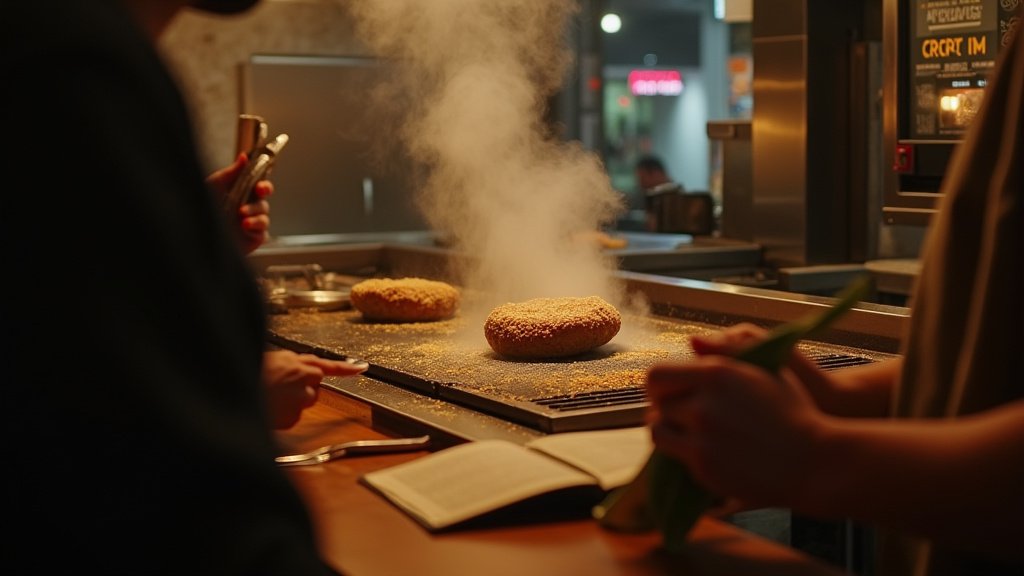
At the corner of downtown San Francisco’s rapidly shifting culinary landscape, a new challenger has emerged, causing both excitement and a baffling amount of ordering confusion. Izzy & Wooks, the latest talk of the city, has diners lining up, but many are finding themselves puzzled by the nuances of the menu. Specifically, the restaurant’s star attraction—the ‘Longa Smash’—is frequently being ordered incorrectly by patrons who assume they know exactly what to expect from a traditional smashburger joint. This dissonance between expectation and reality has become the primary talking point of the week, highlighting how even the most established comfort food tropes are undergoing a radical transformation in the hands of creative chefs.
Key Highlights
- The Menu Trap: Diners are misinterpreting the ‘Longa Smash,’ often failing to realize it is a distinct Filipino-fusion concept rather than a standard beef-based smashburger.
- Cultural Fusion: Izzy & Wooks is utilizing longanisa-inspired flavor profiles to redefine the smashburger architecture, creating a culinary bridge between classic diner food and Filipino heritage.
- Downtown Resurgence: The restaurant’s popularity is a significant indicator of the revitalization of downtown San Francisco’s dining scene, proving that innovative, mid-priced concepts are the key to drawing crowds back to the city center.
Unpacking the Longa Smash: A New Era of Filipino Fusion
When we talk about the ‘smashburger,’ we are talking about a specific, standardized lexicon of flavor: thin, crispy-edged beef, American cheese, pickle, and special sauce on a squishy bun. It is a formula so ubiquitous that diners operate on autopilot when they reach the counter. However, at Izzy & Wooks, that autopilot is crashing. The confusion stems from the very identity of the restaurant’s signature dish. The ‘Longa Smash’ is not a classic beef burger masquerading as something new; it is a thoughtful, deliberate fusion that asks the diner to reset their palate.
The Anatomy of the Misunderstanding
The central issue is a classic case of menu literacy. Because the item is listed in the ‘smash’ category of the menu, diners approach it with preconceived notions. They expect the familiar savory hit of Maillard-reacted ground beef. Instead, they are met with the complex, sweet-savory punch of longanisa—the Filipino sausage staple. The ‘ordering wrong’ phenomenon, as noted by local critics including Cesar Hernandez of the San Francisco Chronicle, isn’t about customers disliking the food; it’s about the momentary cognitive dissonance when the tongue prepares for beef and receives pork-forward, garlic-heavy, and slightly sweet notes instead.
This gap in expectation is not a failing of the restaurant, but rather a testament to the entrenched nature of American ‘fast-casual’ comfort food expectations. When a dish challenges a cultural norm—even a norm as recent as the smashburger craze—the initial friction is inevitable. It requires the diner to slow down, read the menu description, and actually engage with the culinary intent rather than glossing over the components.
Culinary Innovation in a Stagnant Market
Why does this matter? Because downtown San Francisco has spent years searching for a narrative of revitalization. For a long time, the narrative was about closures, vacancies, and a lack of foot traffic. Izzy & Wooks represents a shift toward authentic, identity-driven food that doesn’t cater to the lowest common denominator.
By centering Filipino flavors within a familiar format, the chefs are not just serving lunch; they are engaging in a dialogue about the modern Bay Area palate. The ‘Longa Smash’ uses the smashburger format as a Trojan horse. It lures in the customer who wants a quick, familiar meal, but delivers something that highlights the richness of Filipino-American cuisine. This is the hallmark of a truly successful fusion: it doesn’t just combine two things; it uses the strengths of one to illuminate the other.
The Economics of the ‘Smashed’ Concept
The ‘smash’ technique is economically brilliant for a restaurant operator. It allows for high-velocity cooking, lower wait times, and a consistent product that is difficult to overcook. By applying this to a longanisa patty, Izzy & Wooks has managed to scale a labor-intensive traditional flavor profile into a format that works for the downtown lunch rush. The ‘wrong’ ordering happens in part because the dish looks so similar to its fast-food counterparts that people assume it carries the same flavor, but the preparation method is inherently different. It requires the kitchen to manage the fat content and sugar levels of the longanisa much differently than a standard beef blend.
Looking toward the future of the Bay Area food scene, we can expect to see more of this ‘Trojan Horse’ dining. As real estate prices remain volatile and the demand for value increases, restaurants that can deliver high-concept food in a low-barrier-to-entry format—like the smashburger—will continue to win. The friction currently being felt at the counter is a sign that the market is evolving, and the diners are beginning to catch up.
FAQ: People Also Ask
1. What exactly is a ‘Longa Smash’ at Izzy & Wooks?
It is a signature sandwich that incorporates the flavor profile of Filipino longanisa sausage into a smashburger-style patty, offering a unique blend of sweet, savory, and garlicky flavors.
2. Why are people having trouble ordering it?
Diners are confusing it with a traditional beef smashburger due to the menu placement and visual similarity, leading to unexpected flavor experiences when they take their first bite.
3. Is Izzy & Wooks located in downtown San Francisco?
Yes, the restaurant has quickly become a standout in the downtown area, contributing significantly to the city’s ongoing culinary revitalization efforts.
4. Is this restaurant part of the Filipino-American food wave?
Absolutely. It sits at the intersection of modern fast-casual trends and the growing appreciation for Filipino flavors, making it a key player in the city’s food scene evolution.