A significant legal victory for academic freedom and research unfolded on the West Coast this week, as a federal judge ordered the Trump administration to reinstate a portion of the substantial research funding it had previously frozen for the University of California, Los Angeles (UCLA). The ruling by U.S. District Judge Rita Lin represents a critical development in the ongoing legal and political battles over federal research grants and university oversight.
Background to the Funding Freeze
The dispute centers on federal grants totaling approximately $584 million that were suspended by agencies including the National Science Foundation (NSF), National Institutes of Health (NIH), and Department of Energy in late July and early August 2025. The Trump administration cited concerns over alleged antisemitism on campus, issues related to affirmative action, and participation of men in women’s sports as justifications for the freeze. These actions were framed by the administration as necessary steps to address civil rights violations and compel universities to adhere to specific policies. However, critics argued that these moves were politically motivated, aimed at punishing institutions perceived as being out of step with the administration’s agenda and using research funding as leverage for broader policy changes.
This funding freeze was part of a wider pattern of pressure exerted by the administration on institutions of higher education, often tied to campus conduct during pro-Palestinian protests and broader debates surrounding diversity, equity, and inclusion (DEI) initiatives. The administration also reportedly demanded a $1 billion settlement from UCLA to resolve allegations of antisemitism and restore frozen grant funding, a demand that met strong opposition from university officials and California Governor Gavin Newsom.
The Legal Challenge and Judge Lin’s Ruling
The core of the current legal action lies in a class-action lawsuit originally filed by researchers from the University of California system, including those at UC Berkeley and UC San Francisco. These researchers challenged the administration’s practice of mass grant terminations, arguing they were arbitrary, capricious, lacked specific justifications, and potentially violated constitutional principles. In June 2025, Judge Lin issued a preliminary injunction blocking the NSF and other agencies from terminating research grants without providing grant-specific reasons.
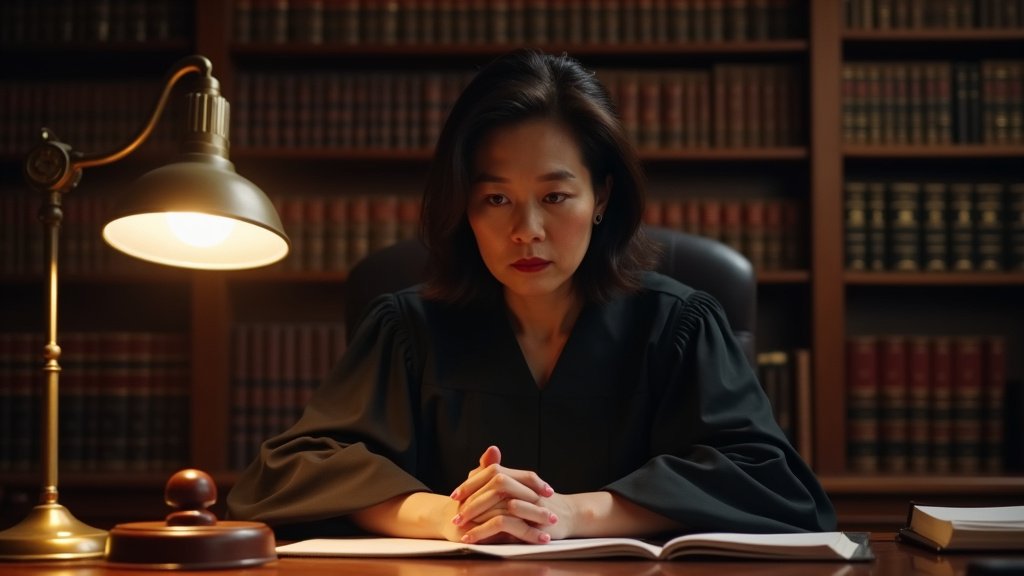
The Trump administration attempted to sidestep this injunction by labeling the recent actions as “suspensions” rather than “terminations.” However, in her latest ruling, delivered on Tuesday, August 12, 2025, Judge Lin found this distinction unconvincing. She stated that the indefinite nature of these suspensions, coupled with a lack of grant-specific explanations, made them functionally equivalent to terminations and therefore a direct violation of her earlier court order. “NSF’s indefinite suspensions differ from a termination in name only,” Lin wrote, emphasizing that the harm to researchers was identical. She ordered the NSF to immediately restore grants that had been suspended between July 30 and August 12, 2025. This order specifically applied to NSF grants, with sources indicating that the restoration of roughly 300 grants, valued at around $81 million, was mandated.
Implications for Research and the Future
While the ruling offers a significant reprieve for a portion of UCLA’s research activities, it does not resolve the entire funding crisis. Grants from the NIH and Department of Energy remain suspended, and the broader dispute over federal oversight of university policies and funding continues. Nevertheless, the judge’s decision is a crucial affirmation for researchers who argued their work was being unjustly halted and potentially jeopardized.
This current news highlights a complex interplay between federal oversight, university autonomy, and pressing social and political issues on campuses across the nation. The legal battle serves as a test case for how federal agencies can wield funding power in response to perceived policy violations, raising broader questions about academic freedom and the potential for politicization of scientific investigations. The ongoing investigations and legal challenges underscore the tense relationship between the administration and academic institutions, particularly on the West Coast, making this a trending topic in higher education news. The fight to restore the remaining suspended funds is likely to continue as institutions and researchers navigate these challenging circumstances.
UCLA’s vice chancellor for research, Roger Wakimoto, confirmed that NSF grants were reinstated following the ruling, stating the university remains committed to protecting its faculty, students, and staff. As this situation evolves, the implications for future federal funding decisions and the autonomy of academic research across the country will remain a subject of intense scrutiny and ongoing reporting.