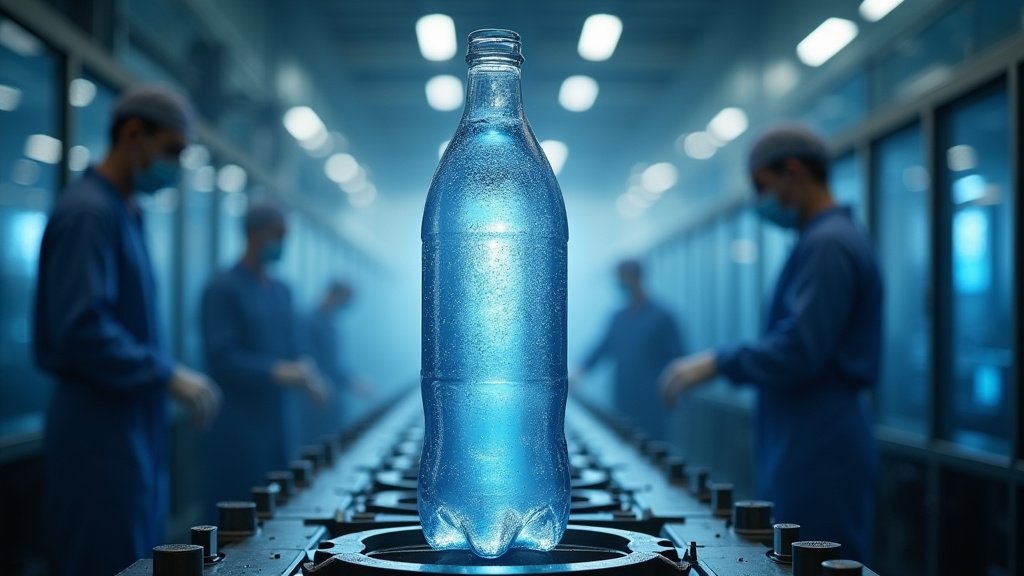
Niagara Bottling has unveiled a state-of-the-art recycling facility in Riverside, California, capable of processing 100% of its plastic bottles back into new bottles. This significant advancement in circular economy practices is expected to drastically reduce waste and reliance on virgin plastics.
- Niagara Bottling’s new facility enables true bottle-to-bottle recycling.
- The plant is designed to process 100% of its PET bottles.
- This initiative significantly reduces the company’s environmental footprint.
- The facility marks a major step towards a closed-loop plastic system.
Niagara’s Circular Economy Leap: The Riverside Facility
The beverage industry has long grappled with the environmental impact of single-use plastics. Niagara Bottling, a major player in the bottled water market, is making a substantial move to address this with its new recycling facility in Riverside, California. This plant is engineered for true bottle-to-bottle recycling, meaning that plastic bottles collected can be processed and reformed into new bottles for their products. This is a critical distinction from many existing recycling processes that downcycle plastic into lower-grade materials or fibers.
The Technology Behind True Recycling
At the heart of this innovation is advanced chemical and mechanical recycling technology. The facility is designed to handle polyethylene terephthalate (PET), the most common plastic used for beverage bottles. Through a multi-stage process, post-consumer PET bottles are sorted, cleaned, and then broken down or purified to a food-grade standard. This purified material can then be re-extruded and molded into new bottles, effectively closing the loop. Niagara Bottling has invested heavily in ensuring the recycled material meets stringent safety and quality standards required for food and beverage packaging.
Environmental Impact and Sustainability Goals
This initiative is more than just an operational upgrade; it’s a cornerstone of Niagara Bottling’s broader sustainability strategy. By achieving 100% bottle-to-bottle recycling, the company aims to significantly decrease its reliance on virgin petroleum-based plastics. This not only conserves natural resources but also reduces the carbon footprint associated with plastic production. The Riverside facility is expected to divert thousands of tons of plastic waste from landfills and oceans annually. Furthermore, by establishing local recycling infrastructure, Niagara Bottling contributes to a more localized and efficient circular economy, reducing transportation emissions associated with waste management.
Economic Implications and Industry Leadership
The development of such advanced recycling infrastructure has considerable economic implications. It creates green jobs in the manufacturing and recycling sectors and can spur further innovation in materials science and processing technology. Niagara Bottling’s investment positions them as a leader in corporate environmental responsibility within the beverage industry. Other companies are likely to follow suit, accelerating the transition towards more sustainable packaging solutions across the sector. The success of this facility could serve as a blueprint for similar operations in other regions.
Challenges and Future Outlook
Despite the promising advancements, challenges remain. Ensuring a consistent supply of high-quality post-consumer PET bottles is crucial for the facility’s optimal operation. Public participation in recycling programs and effective collection systems are vital. Niagara Bottling will likely need to continue engaging with consumers and municipalities to maximize the potential of this investment. Looking ahead, the company may explore expanding these capabilities to other types of plastics or further integrating recycled content into their product lines. The long-term vision is a truly closed-loop system where plastic is perpetually reused, minimizing waste and environmental impact.
FAQ: People Also Ask
What is true bottle-to-bottle recycling?
True bottle-to-bottle recycling, also known as closed-loop recycling, is a process where used plastic bottles are collected, cleaned, and reprocessed into new bottles of the same type. This is distinct from downcycling, where plastic is converted into lower-value products like fibers or packaging films.
What type of plastic does Niagara Bottling primarily recycle?
Niagara Bottling’s new facility focuses on recycling polyethylene terephthalate (PET), which is the standard plastic used for most beverage bottles, including their own.
What is the environmental benefit of bottle-to-bottle recycling?
Bottle-to-bottle recycling significantly reduces the need for virgin petroleum-based plastics, conserves natural resources, lowers greenhouse gas emissions associated with plastic production, and diverts substantial amounts of waste from landfills and natural environments.
How does chemical recycling differ from mechanical recycling in this context?
Mechanical recycling physically grinds down and re-melts plastic. Chemical recycling breaks plastic down to its molecular building blocks, allowing for the creation of higher-purity recycled material, often essential for food-grade applications like new beverage bottles. Niagara’s facility likely employs a combination of both.
What are the challenges for widespread bottle-to-bottle recycling?
Key challenges include ensuring efficient collection systems, reducing contamination of recycled materials, consumer education on proper recycling practices, and the significant capital investment required for advanced recycling infrastructure. Availability of feedstock material is also crucial.