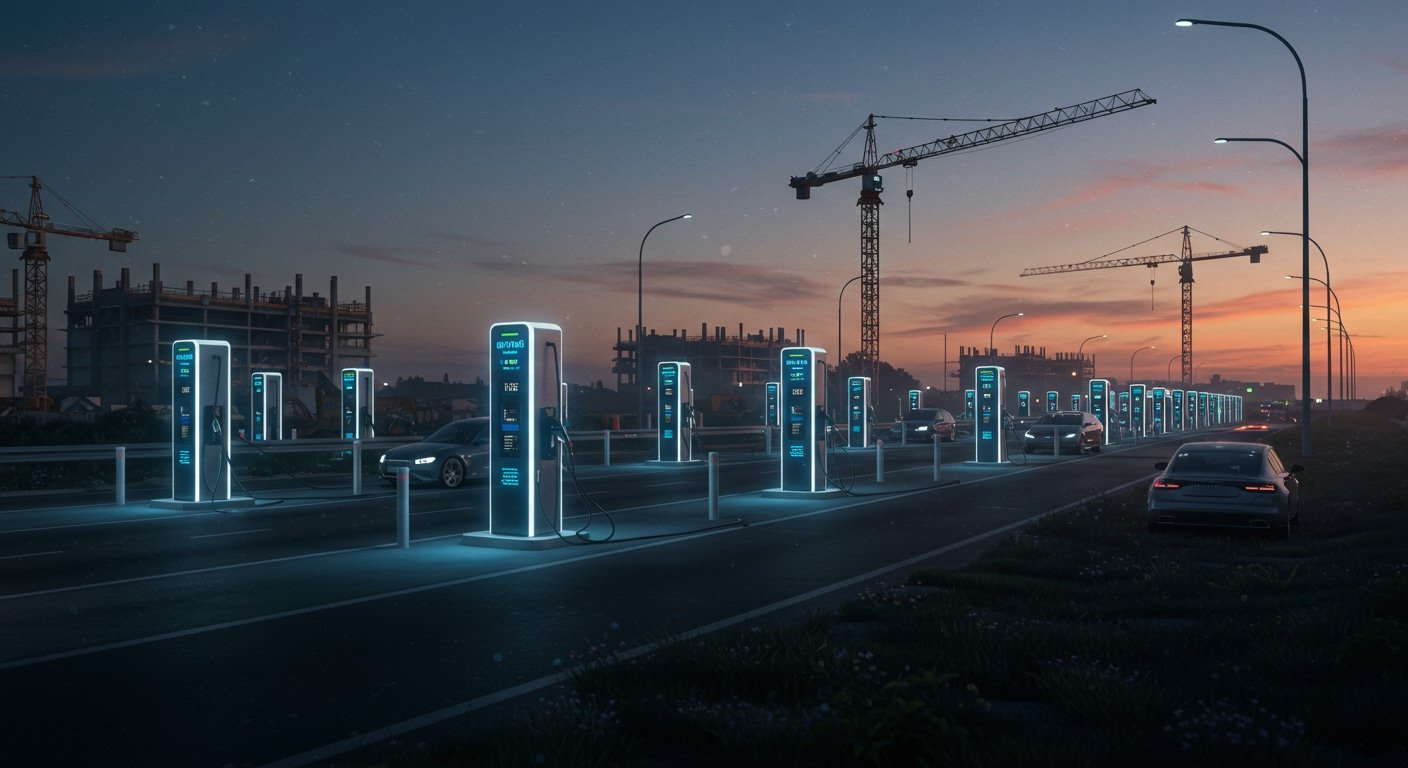
A federal judge has ordered the Trump administration to release billions of dollars allocated for the development of electric vehicle charging stations across more than a dozen U.S. states and the District of Columbia. The ruling, handed down by U.S. District Judge Tana Lin, granted a preliminary injunction that mandates the immediate distribution of funds earmarked for the National Electric Vehicle Infrastructure (NEVI) development program.
The Court’s Mandate
Judge Lin’s order represents a significant legal victory for states seeking to accelerate the buildout of electric vehicle charging infrastructure. The preliminary injunction requires the Trump administration to disburse the frozen funds. The order sets a deadline of July 2 for the administration either to file an appeal or to comply with the ruling by releasing the funds to the states and the District of Columbia.
Background: The NEVI Program
The NEVI program was established under legislation signed into law by then-president Joe Biden in 2021. It was designed to allocate a total of $5 billion from 2022 to 2026 to states for the strategic deployment of EV charging infrastructure, primarily along designated alternative fuel corridors. The aim is to create a reliable, convenient, and accessible charging network across the nation, which is considered crucial for encouraging the adoption of electric vehicles and supporting the transition to cleaner transportation.
However, the planned distribution of NEVI funds was halted in February when the Trump administration’s Department of Transportation (DOT) ceased releasing the allocated money. This decision effectively defunded the program’s ongoing disbursements and impacted expected funding streams for 16 states and the District of Columbia that had been planning their charging infrastructure projects based on these federal allocations.
The Legal Challenge
The abrupt halt in funding prompted a coalition of seventeen attorneys general to take legal action. Led by California, the state with the largest number of electric vehicles and a leading role in clean transportation policy, the attorneys general filed a lawsuit against the Trump administration in May. Their suit sought to compel the administration to release the funds, arguing that the decision to halt the distribution was unlawful and hindered critical state-level infrastructure projects.
Reactions to the Ruling
The court’s decision was met with praise by the plaintiffs. California Attorney General Rob Bonta hailed Judge Lin’s order as a critical defense against what he described as executive branch overreach. In a statement, Bonta emphasized the importance of the NEVI funds for California’s and other states’ efforts to build out essential charging infrastructure.
Conversely, a spokesperson for the Department of Transportation under the Trump administration voiced criticism regarding both the NEVI program itself and Judge Lin’s ruling. While the specific nature of their criticism was not detailed in the provided information, it indicates the administration’s ongoing reservations about the program or the court’s intervention.
States and District of Columbia Impacted
The preliminary injunction specifically applies to the release of funds for the following 16 states and the District of Columbia: Arizona, California, Colorado, Delaware, Hawaii, Illinois, Maryland, Minnesota, New Jersey, New Mexico, New York, Oregon, Rhode Island, Vermont, Washington, Wisconsin, and the District of Columbia. These jurisdictions were expecting to receive the NEVI funds to implement their approved state EV infrastructure deployment plans.
Broader Implications and Next Steps
The court’s order has immediate implications for the pace of EV charging infrastructure development in the affected states. The release of these billions is seen by proponents as essential for enabling states to move forward with planned projects, including the construction of charging stations along major highways, which are vital for reducing range anxiety and facilitating long-distance electric travel.
The Trump administration now faces a critical juncture ahead of the July 2 deadline. They must decide whether to appeal Judge Lin’s preliminary injunction to a higher court or to comply with the order and release the funds. An appeal could further delay the disbursement of money and prolong the legal dispute, while compliance would allow states to access the funds and resume or accelerate their infrastructure buildout plans.
The legal battle highlights the intersection of federal policy, state infrastructure goals, and judicial oversight, underscoring the challenges and complexities involved in implementing large-scale national programs aimed at transitioning the transportation sector.