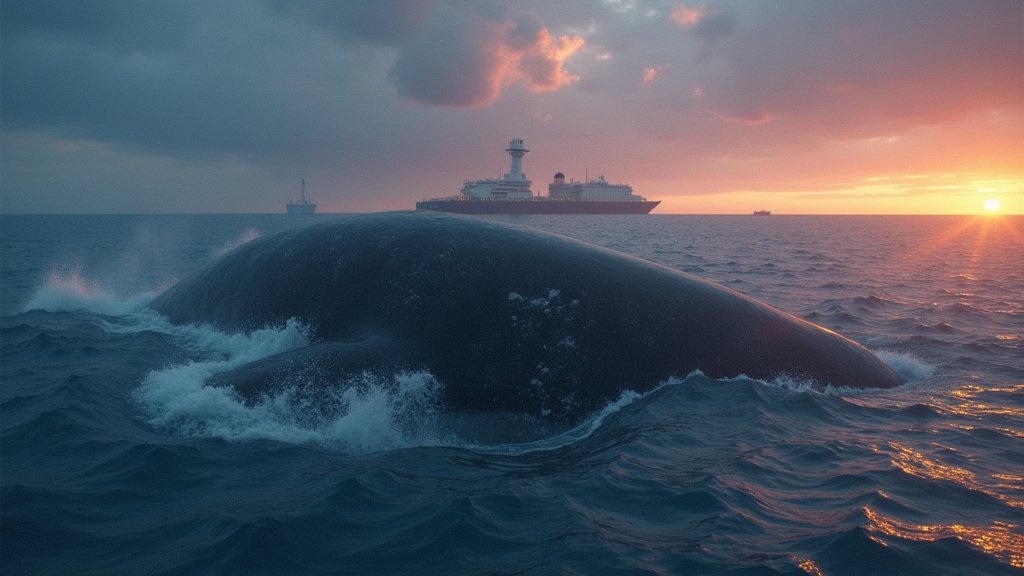
A second humpback whale carcass has washed ashore in Humboldt County, California, within a two-week span, intensifying concerns about a significant increase in whale deaths along the West Coast in 2026. The latest incident, involving a whale found near Centerville Beach, follows another humpback discovery on Mad River Beach earlier in July. These events are part of a broader, alarming pattern that scientists are closely monitoring, as the year’s whale mortality figures are on track to make 2026 one of the deadliest on record for West Coast whales.
Alarming West Coast Mortality Trend
As of late May 2026, at least 51 whales had died along the West Coast. This statistic, compiled by the Center for Biological Diversity, indicates that if the current rate continues, 2026 could become the second-deadliest year for West Coast whales, surpassed only by 2019, which recorded 122 deaths. A comprehensive review of federal data by the Center for Biological Diversity revealed that 521 whales stranded between 2020 and 2025, averaging about 87 per year. The year 2025 saw a peak of 120 whale deaths.
Gray whales constitute the majority of documented deaths, with many occurring in Washington and the San Francisco Bay Area. In the San Francisco Bay Area alone, eleven gray whales died this year, with two suspected to be ship strikes. The causes of death for the two recent humpback whales found in Humboldt County remain undetermined, as both carcasses were in advanced stages of decomposition, hindering external and internal examinations.
Contributing Factors to the Surge
Scientists are investigating multiple factors contributing to the elevated whale mortality rates. A primary concern is the impact of climate change, particularly the warming Arctic, which is altering marine ecosystems and reducing the food supply for species like gray whales. Melting sea ice disrupts the food chain, leading to fewer amphipods and other small creatures that gray whales rely on for sustenance. This nutritional deficit can lead to starvation and debilitation, forcing whales to seek food in less suitable or more dangerous areas, such as San Francisco Bay.
Human activities also play a significant role. Ship strikes are identified as a major cause of whale deaths, with an estimated 80 whales dying annually due to ship strikes, though actual numbers are likely higher as many struck whales sink. Between 2020 and 2025, 82 documented ship strike cases were recorded, with the majority occurring in 2025. Fishing gear entanglement is another critical threat, accounting for 97 stranded whales during the same period. The Center for Biological Diversity is actively suing the U.S. Coast Guard, advocating for mandatory speed reductions in high-risk whale habitats to mitigate ship strike incidents.
Regional Impact and Research Efforts
The Humboldt County incidents, while concerning, are viewed by local experts as not necessarily a red flag for the immediate area, as one to two humpback strandings per year are not uncommon. However, the proximity of these two recent events has drawn attention. Researchers from Cal Poly Humboldt’s Marine Mammal Stranding Program are conducting tests on the retrieved whale samples in hopes of determining the cause of death, despite the challenges posed by decomposition.
Nationally, organizations like the Center for Biological Diversity are pushing for stronger protective measures. They are advocating for measures such as mandatory speed reductions for vessels in whale hot spots and the re-routing of shipping lanes to minimize conflict with whale migration routes. The Cascadia Research Collective has also noted a higher-than-recorded level of early-season mortality among gray whales off the Washington coast, with malnutrition being a key suspected factor.
FAQ: People Also Ask
What is causing the increase in whale deaths on the West Coast?
Several factors are contributing to the alarming rise in whale deaths, including climate change impacting food sources, ship strikes, and entanglement in fishing gear. Human activities and environmental changes are both significant contributors.
How many whales have died on the West Coast in 2026?
As of late May 2026, at least 51 whales had died along the West Coast. If this rate continues, 2026 is projected to be the second-deadliest year on record for West Coast whales.
Are humpback whales specifically at risk?
Humpback whales, along with gray whales and fin whales, are identified as species significantly impacted by ship strikes. Entanglement in fishing gear is also a leading cause of death for humpback whales.
What actions are being taken to address the rising whale deaths?
Efforts include ongoing research into the causes of death, advocacy for reduced ship speeds in whale-heavy areas, and lawsuits against the U.S. Coast Guard to enforce better shipping lane designations. Organizations like the Center for Biological Diversity are at the forefront of these initiatives.
Could climate change be a direct cause of these whale deaths?
Yes, climate change is considered a major factor, particularly for gray whales. Warming Arctic waters disrupt their food supply, leading to malnutrition and starvation.