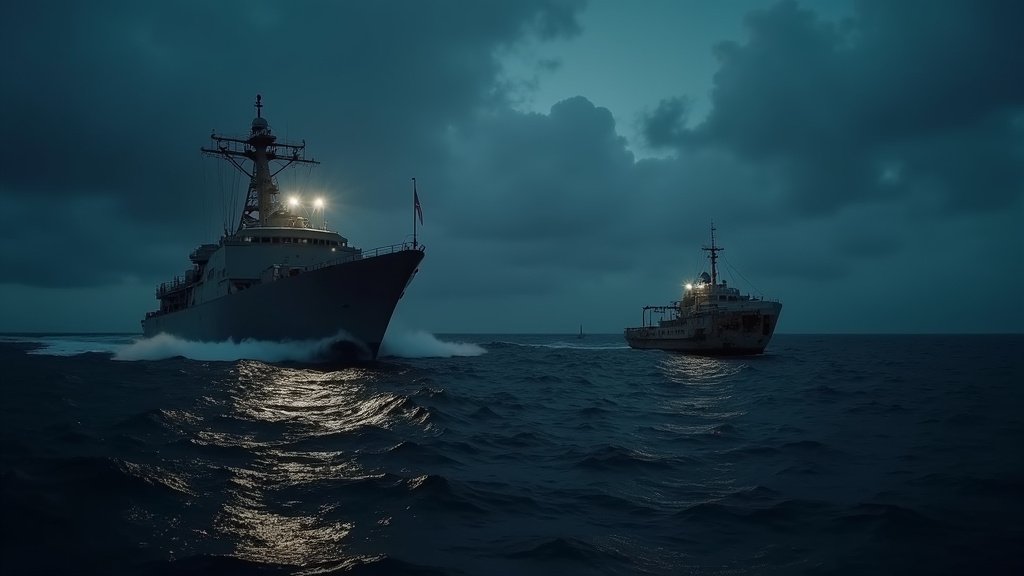
The latest Eastern Pacific Drug Strike, conducted on Thursday, December 4, 2025, resulted in the deaths of four individuals on board a vessel suspected of carrying narcotics. This action, announced by U.S. Southern Command and directed by Defense Secretary Pete Hegseth, was part of Operation Southern Spear, underscoring the U.S. military’s intensifying counter-narcotics efforts in the region. This Eastern Pacific Drug Strike is the latest in a series of controversial actions.
Since September 2, 2025, the U.S. military has carried out at least 22 such strikes targeting vessels in the Caribbean and Eastern Pacific, leading to the deaths of at least 87 people. The frequency of these Eastern Pacific Drug Strikes has drawn significant international attention.
Background and Context of Eastern Pacific Operations
The U.S. military’s campaign against suspected drug boats, including the recent Eastern Pacific Drug Strike, commenced in September 2025. The Trump administration has characterized this initiative as a vital fight against “narco-terrorists.” Intelligence indicated that the vessel targeted in the December 4 Eastern Pacific Drug Strike was operated by a designated terrorist organization and was reportedly transporting illicit narcotics while transiting a known trafficking route.
This campaign has been subjected to considerable scrutiny, with experts questioning the legality of the operations and some labeling the strikes as extrajudicial killings. The U.S. maintains it is engaged in an “armed conflict” with cartels, permitting lethal strikes without judicial review, despite a lack of widely publicized evidence of narcotics or direct threats in many cases preceding the Eastern Pacific Drug Strike.
Controversy Surrounding a Previous Eastern Pacific Drug Strike
A notable point of contention emerged from a September 2, 2025, strike, where reports suggest two survivors were killed in a subsequent “double-tap” attack. Legal experts argue such actions could contravene the laws of war, raising further concerns about the broader implications of the Eastern Pacific Drug Strike operations.
Officials Involved in Eastern Pacific Drug Strike Authorizations
Defense Secretary Pete Hegseth has been instrumental in authorizing these operations, including the recent Eastern Pacific Drug Strike. He claimed to have witnessed the initial strike but not the follow-up, attributing the latter to “the fog of war.”
Admiral Frank Bradley, commander of U.S. Special Operations Command, was involved in the September 2 incident. While he denied issuing an order to “kill everyone,” he confirmed authorizing the second strike. The White House asserted that Bradley acted within his legal authority, a stance now being tested by the ongoing Eastern Pacific Drug Strike actions.
Implications and Concerns of Eastern Pacific Operations
The U.S. military’s approach to drug interdiction, particularly the Eastern Pacific Drug Strike, prompts serious legal and ethical debates. These operations effectively shift drug interdiction from a law enforcement matter to military execution, with critics condemning the killings as unlawful. The family of a fisherman killed in a previous incident has filed a complaint, highlighting the human cost associated with these counter-narcotics efforts.
The campaign also escalates regional tensions. Venezuela has accused the U.S. of using these Eastern Pacific Drug Strike operations as a guise for destabilizing the Venezuelan government, allegations the U.S. denies. This method of drug boat interdiction is distinct from traditional law enforcement and contributes to a complex geopolitical landscape.
Eastern Pacific operations, alongside efforts on the West Coast and East Coast of the Americas, involve collaboration between the U.S. Coast Guard and Navy to maintain operational control. The focus on Eastern Pacific operations reflects a significant shift in strategy, moving beyond traditional naval patrols to direct military engagement.
This ongoing Eastern Pacific Drug Strike initiative is a critical development in international relations, showcasing a stringent stance against narcotics trafficking. The policy remains a central theme in U.S. counter-narcotics efforts, with paramount concerns centering on its legality and the profound human cost associated with each Eastern Pacific Drug Strike.