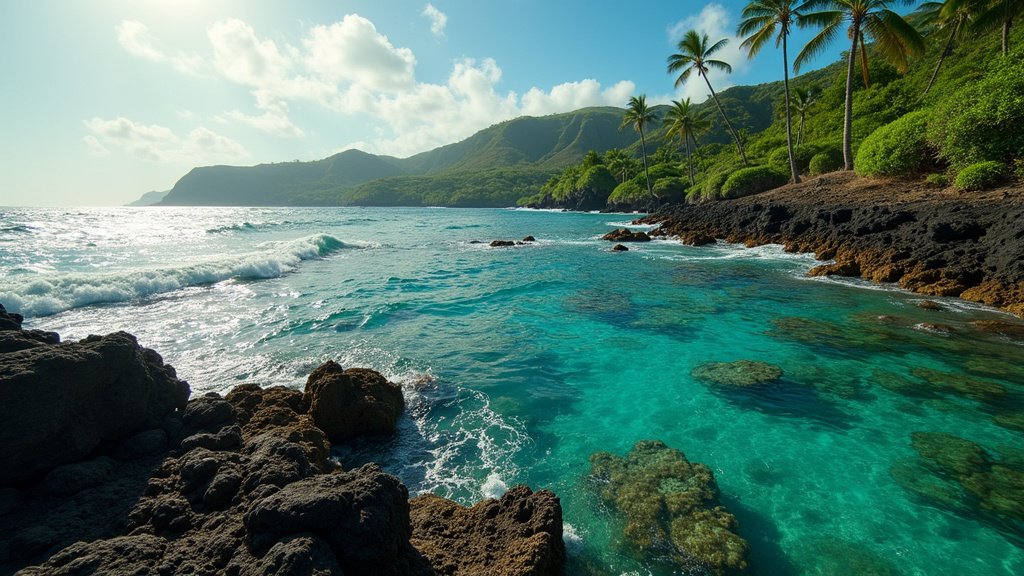
A groundbreaking study by Arizona State University (ASU) researchers has unveiled a pervasive and alarming threat lurking beneath the surface of West Hawaii’s pristine coastal waters: **Hawaii Sewage Contamination**. Nearly half of the region’s coastline is contaminated with raw sewage, posing severe risks to fragile coral reef ecosystems and the health of residents and visitors alike. The findings, which utilized advanced airborne mapping, field sampling, and sophisticated statistical analysis, highlight the urgent need for action to address aging wastewater infrastructure and the pervasive **Hawaii Sewage Contamination**.
Alarming Revelations from the Coastline: Understanding Hawaii Sewage Contamination
Researchers from ASU’s Center for Global Discovery and Conservation Science sampled 47 shoreline sites across the South Kohala, North Kona, and South Kona regions of West Hawaii. Their investigation revealed that 42% of these locations exhibited elevated levels of Enterococcus bacteria, a key indicator of sewage contamination. More troublingly, nearly a quarter (23%) of these sites showed contamination levels high enough to threaten both the environment and human health. This widespread pollution, a direct result of **Hawaii Sewage Contamination**, is not an isolated incident but rather a symptom of a larger, systemic issue tied to the state’s long-standing reliance on outdated wastewater management systems and its troubling **cesspool legacy**.
“It’s concerning how many sites we tested were contaminated, but not surprising when we consider statewide, 55 million gallons of wastewater effluent enters the ground each day — much of that within a few hundred yards of the coast,” stated Kelly Hondula, the study’s lead author and an associate research scientist at ASU. The study identified submarine groundwater discharge (SGD) as a primary conduit for **Hawaii Sewage Contamination**, a phenomenon where groundwater carrying pollutants flows directly into the ocean through porous volcanic rock formations common in Hawaii.
A Deadly Cocktail for Coral Reefs Due to Hawaii Sewage Contamination
The implications for West Hawaii’s iconic coral reefs are dire, exacerbated by **Hawaii Sewage Contamination**. Sewage pollution introduces excess nutrients, such as nitrogen and phosphorus, into the marine environment, contributing to **coral reef pollution**. These nutrients fuel the growth of algae, which can smother corals, block essential sunlight, and disrupt delicate reef ecosystems, leading to **algal overgrowth on corals**. This algal overgrowth and nutrient loading make it harder for coral reefs to reproduce and recover from environmental stressors like ocean warming and acidification, weakening the natural defenses of coastlines against erosion and rising sea levels. Studies in areas like South Kohala have already documented impacts such as increased turf algae cover, growth anomalies, and algal overgrowth on corals, a direct consequence of **Hawaii Sewage Contamination**.
Public Health on the Front Lines of Hawaii Sewage Contamination
The contamination poses a direct threat to **public health risks**, with the potential for swimmers and other ocean users to be exposed to harmful pathogens such as E. coli and Salmonella. “The most alarming thing was how consistently we found contamination at popular swimming sites, places where families take their kids,” noted Hondula. “Some of these sites regularly test above public-health thresholds, meaning swimming there poses a higher risk of disease”. The health risks extend beyond gastrointestinal illnesses, with Hawaii having twice the national average for methicillin-resistant Staphylococcus aureus (MRSA) infections, a concern amplified by **Hawaii Sewage Contamination**.
The Legacy of Cesspools and Hawaii Sewage Contamination
The root cause of this widespread contamination is Hawaii’s extensive use of cesspools. These systems, essentially pits that collect and leach wastewater directly into the ground, are considered outdated and ineffective, directly contributing to **Hawaii Sewage Contamination**. Statewide, over 88,000 cesspools remain in operation, discharging an estimated 53 million gallons of untreated sewage daily into the ground. The porous volcanic geology of islands like Hawaii makes these contaminants travel rapidly through groundwater to reach the coast. Coastal development, particularly structures built within 500 meters of the shoreline, significantly correlates with higher levels of contamination, as these systems are often located in close proximity to the ocean, highlighting the scale of the **cesspool legacy** and its connection to **Hawaii Sewage Contamination**.
A Mandate Facing Hurdles in Addressing Hawaii Sewage Contamination
In response to these environmental and public health risks, Hawaii enacted Act 125 in 2017, mandating the conversion of all cesspools to more effective systems, such as septic tanks or sewer connections, by January 1, 2050. However, the path to compliance is fraught with challenges related to **Hawaii Sewage Contamination**. The cost of converting a single cesspool can range from $30,000 to $50,000 per homeowner, a significant financial burden for many residents. While tax credits and pilot grant programs exist, they offer limited assistance and are not accessible to all property owners. The County of Hawaii Mayor Kimo Alameda has acknowledged the study’s importance in helping to prioritize **wastewater infrastructure** upgrades, indicating a local recognition of the need for solutions to the **Hawaii Sewage Contamination** crisis.
Moving Forward: A Call to Action Against Hawaii Sewage Contamination
The ASU study provides critical, spatially explicit data that can guide policymakers and communities in prioritizing remediation efforts along the West Hawaii coast and beyond to combat **Hawaii Sewage Contamination**. Addressing this pervasive sewage contamination is crucial not only for protecting the invaluable coral reef ecosystems that support marine life and coastal protection but also for safeguarding the **public health risks** and well-being of the communities that call these shores home. The news serves as a stark reminder that local stressors, like inadequate **wastewater infrastructure** and the **cesspool legacy**, can significantly undermine ecological health, even amidst larger global challenges like climate change. Effective solutions will require a concerted effort involving government agencies, researchers, and community engagement to transition away from outdated systems and protect Hawaii’s vital coastal resources from **Hawaii Sewage Contamination** for future generations.