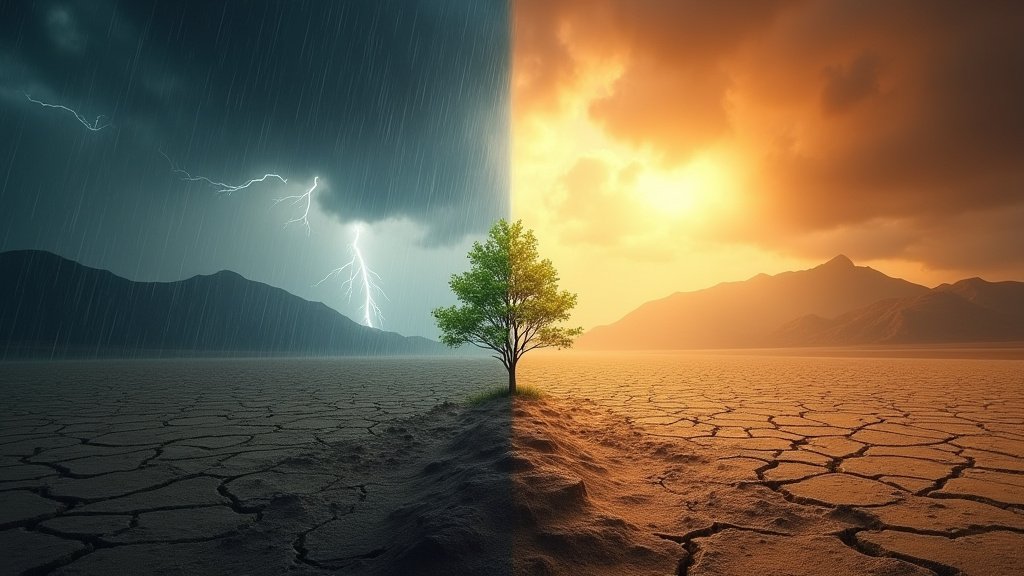
California and the broader Western United States are facing an increasingly precarious water future, caught in a cycle of more intense storms followed by prolonged dry periods. This oscillating pattern is exacerbating existing drought conditions, straining water resources, and posing significant challenges to ecosystems, agriculture, and urban populations across the region.
Key Highlights:
- The Western US is experiencing a trend of heavier rainfall events interspersed with extended periods of drought.
- This climatic shift places immense pressure on already strained water supplies, impacting reservoirs and groundwater.
- The phenomenon affects not only water availability but also agricultural yields and natural ecosystems.
- Climate scientists attribute these changes to broader patterns influenced by global climate change.
The Intensifying Water Cycle in the West
The American West is grappling with a paradoxical climate pattern: when it rains, it pours, but the dry spells in between are becoming longer and more severe. This “weather whiplash” is a critical issue for a region that relies heavily on a predictable water cycle for its survival. Decades of scientific observation and climate modeling point towards a future where such extreme fluctuations will become the norm, driven by the overarching forces of climate change. The implications are far-reaching, affecting everything from the food on our tables to the stability of our landscapes.
Understanding the ‘Weather Whiplash’
Scientists describe this phenomenon as a “weather whiplash” – a rapid and extreme shift between wet and dry conditions. While the West has always experienced periods of drought and heavy precipitation, the intensity and frequency of these extremes are increasing. Warmer global temperatures contribute to this by holding more moisture in the atmosphere, leading to more intense downpours when storms do occur. Conversely, these warmer temperatures also increase evaporation rates, making dry spells more potent and faster to develop. This creates a challenging environment for water management, as infrastructure designed for more stable patterns struggles to cope with such volatility.
Impacts on Water Resources
The most immediate impact is on the region’s water supply. Reservoirs, which serve as the primary storage for rainfall and snowmelt, face immense strain. Heavy storms can cause rapid inflows, sometimes overwhelming spillways, while longer dry spells deplete reserves at an accelerated rate. Groundwater aquifers, already depleted in many areas due to over-extraction for agriculture and urban use, are receiving less recharge during the prolonged dry periods. This dual pressure of increased demand and erratic supply is pushing many water systems to their limits, raising concerns about water security for millions.
Agricultural and Ecological Repercussions
Agriculture, a cornerstone of the Western economy, is particularly vulnerable. Farmers face difficult decisions about crop selection, irrigation strategies, and the long-term viability of their operations. The unpredictability of water availability can lead to significant crop losses and economic hardship. Beyond agriculture, natural ecosystems are also under duress. Forests become more susceptible to wildfires during extended dry periods, and changes in water availability can disrupt delicate habitats for native plant and animal species. The ecological balance of rivers and streams is also threatened, impacting fish populations and aquatic life.
Climate Change as a Driving Force
The scientific consensus is that climate change is a significant driver of these intensifying weather patterns. Global warming is altering atmospheric circulation, ocean temperatures, and precipitation dynamics. Studies by organizations like the National Oceanic and Atmospheric Administration (NOAA) and academic institutions consistently link the observed increase in extreme weather events to human-induced climate change. Addressing this requires not only adaptation strategies to manage the current impacts but also mitigation efforts to reduce greenhouse gas emissions and slow the rate of global warming.
FAQ: People Also Ask
What is causing the intensified storms and longer dry spells in California and the West?
Scientists attribute this phenomenon largely to climate change. Warmer global temperatures mean the atmosphere can hold more moisture, leading to more intense rainfall when storms occur. Conversely, these warmer temperatures also increase evaporation, making dry periods more severe and prolonged.
How are these changes affecting California’s water supply?
The water supply is significantly impacted. Reservoirs face rapid inflows during heavy storms, and extended dry spells lead to faster depletion of stored water. Groundwater aquifers are also receiving less recharge, increasing the risk of water shortages.
What are the economic consequences for the Western United States?
The economic consequences are substantial, particularly for agriculture, which is highly dependent on predictable water availability. Farmers face potential crop losses and increased operational costs. Wildfire risk also poses economic threats to communities and natural resources.
Are there any long-term solutions being proposed or implemented?
Solutions involve a multi-pronged approach, including investing in water infrastructure like recycled water systems and desalination, improving water conservation efforts, implementing drought-resilient agricultural practices, and, crucially, reducing greenhouse gas emissions to mitigate further climate change.