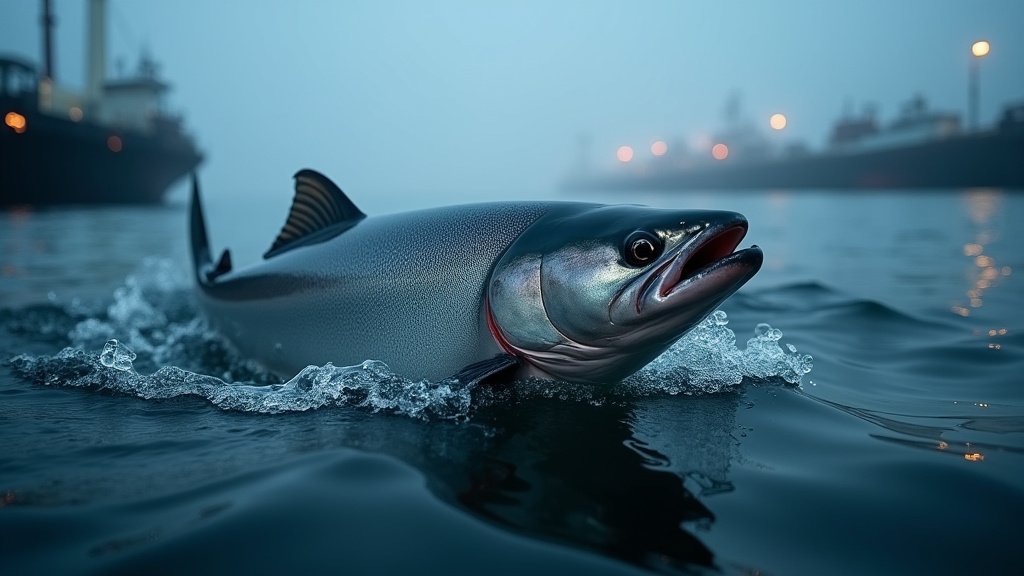
After three years of historic silence at the docks, California’s commercial salmon fleet is finally preparing to head back to sea this spring. The Pacific Fishery Management Council (PFMC), the regulatory body overseeing West Coast ocean fishing, is moving to end the longest, most devastating shutdown of the state’s commercial salmon fishery in history. This return to the water marks a pivotal moment for coastal communities, yet it arrives with a complex set of strict catch limits and management protocols intended to balance the desperate need for economic activity with the precarious state of the California Coastal Chinook population.
Key Highlights
- Return to the Ocean: Commercial salmon fishing is authorized to resume for the first time since 2022, following three consecutive years of total closure.
- Strict Regulatory Oversight: The season will operate under intense scrutiny, with specific harvest limits, short fishing windows, and regional restrictions imposed by the PFMC to prevent overfishing.
- Economic Fragility: While the reopening provides a lifeline, many in the industry caution that the limited season may not be enough to restore the fleet to its former viability.
- Environmental Pressure: The recovery of the salmon population is attributed to recent wet winters, but experts warn that long-term water policy and climate volatility remain significant threats to future stocks.
The New Reality of California’s Salmon Fishery
The decision to reopen the fishery is not a return to the “good old days” of abundant hauls and lucrative seasons. Instead, it represents a tightly controlled experiment in sustainability. For the past three years—2023, 2024, and 2025—the California coast has been effectively ghost-quiet in terms of commercial salmon landings. The unprecedented closure, which decimated local economies from Eureka to San Diego, was driven by historically low returns of Sacramento River fall-run Chinook salmon. These fish are the engine of the California salmon industry, and their collapse—fueled by a multi-year drought, poor spawning conditions, and high water temperatures—forced regulators to make the drastic call to pull the fleet off the water.
Now, with the forecast showing a modest rebound in salmon abundance, the PFMC is allowing a controlled re-entry. However, the regulatory framework is designed for conservation first. Fishermen will be looking at narrow windows of opportunity in May, August, and September. These aren’t the months-long seasons of the past; they are surgical strikes at the fishery designed to provide just enough product to keep the infrastructure alive without depleting the returning adult population. The strategy is clear: provide enough access to keep the industry from disappearing entirely, while maintaining a strict buffer to ensure enough fish return to the rivers to spawn.
The Human and Economic Toll
Behind the policy decisions and the biological metrics lies the human reality of the fleet. The impact of the three-year shutdown was not merely a loss of income; it was a slow-motion unraveling of a specialized industry. Many boat owners have been forced to sell their vessels, turn to alternative livelihoods like whale-watching or tourism, or simply leave the coast entirely. For those who stayed, the challenge is not just finding fish—it is maintaining the complex machinery of commercial fishing after years of deferred maintenance.
Take the case of veterans like Sarah Bates, a fixture at San Francisco’s Fisherman’s Wharf. For three years, her boat, the Bounty, has sat idle. The physical toll on these vessels—from seized hydraulics to rusted tackle—is massive. The economic damage extends far beyond the boat owners. The support ecosystem—the mechanics, the suppliers, the ice plant operators, and the seafood distributors—has been hollowed out. Even with the season opening, the industry faces a “catch-up” phase where the infrastructure is no longer operating at the scale required to support a fully robust fleet. The concern among industry leaders is that if the season remains too restrictive, the knowledge gap will widen. A generation of young fishermen is aging out or pivoting to more stable industries, creating a ‘brain drain’ that could make it impossible to ramp up operations even if salmon numbers eventually return to historical highs.
Water Policy and the Future of the Catch
While the current reopening is cause for cautious celebration, the long-term prognosis for California’s salmon industry is inextricably linked to the state’s complex and contentious water policy. The resurgence of the salmon population this year is largely credited to the exceptionally wet winters of 2023 and 2024, which provided the high river flows and cold water temperatures essential for juvenile salmon survival. However, the industry is increasingly vocal about the threat posed by agricultural water diversions in the Central Valley.
Commercial fishers argue that the state’s water infrastructure—dams, pumps, and massive diversion projects—regularly prioritizes agricultural output over the biological needs of the river ecosystems. As the climate becomes more volatile, the competition for water will only intensify. The fear is that the ‘resilience’ of nature, which has allowed for this year’s reopening, is being pushed to the breaking point. Many in the industry believe that without a radical shift in how the Sacramento-San Joaquin Delta is managed, the current opening is merely a temporary reprieve, not a sustainable recovery.
Furthermore, environmental factors such as harmful algal blooms, ocean forage shifts, and thiamine deficiency have added layers of complexity to the recovery. The industry is finding that even when the river conditions are right, the ocean is a dynamic and often unpredictable environment. The management of the salmon resource is moving into an era of high-frequency adaptation, where the seasons may fluctuate wildly year to year based on a confluence of climate and political factors.
FAQ: People Also Ask
Q: When exactly can commercial boats start fishing?
A: The Pacific Fishery Management Council is finalizing the specific dates, but the season is expected to open in mid-May. There will be specific, limited windows in May, August, and September, varying by region and subject to real-time harvest limits.
Q: Why was the salmon fishery closed for three years?
A: The closure was due to critically low numbers of Chinook salmon returning to the Sacramento River. Factors included a severe multi-year drought, poor water quality for spawning, high temperatures, and ocean conditions that limited the survival of the salmon population.
Q: Is this opening a sign that salmon populations have fully recovered?
A: Not entirely. While the population has increased enough to support a limited, strictly managed fishery, experts warn that the stock is still far below historical levels and remains highly vulnerable to climate shifts and water policy changes.
Q: How will regulators ensure that too many salmon aren’t caught?
A: The season will operate under strict harvest guidelines. If these quotas are reached during the designated windows, the fishery will be closed immediately. Both recreational and commercial sectors are subject to these constraints to ensure protection for the threatened stocks.