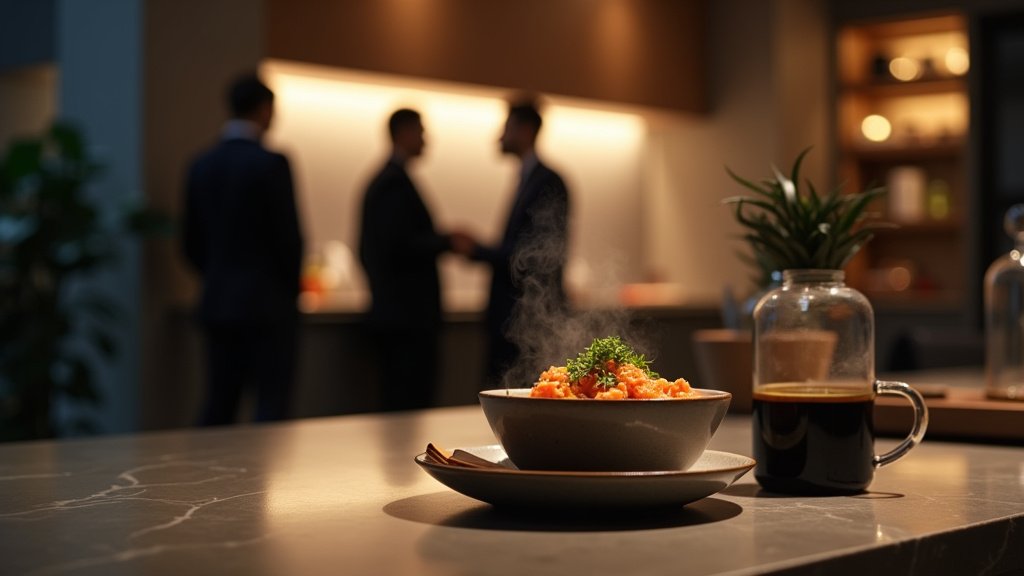
As organizations navigate the complexities of hybrid work, high-quality, catered food has rapidly evolved from a casual perk into one of the most powerful workplace benefits for driving office attendance. While ping-pong tables and nap pods failed to incentivize a mass return to the office, data increasingly shows that culinary experiences are successfully bridging the gap between home comfort and professional necessity. Companies are moving beyond simple coffee stations, instead investing in curated lunch programs, gourmet on-site cafes, and catered team meals that transform the daily commute from a begrudging necessity into a social and nutritional upgrade.
- Food programs are now a top-tier driver for boosting employee engagement and return-to-office metrics.
- Curated on-site dining facilitates spontaneous social interaction, effectively combating the ‘silo’ effect of remote work.
- High-quality office meals serve as a retention tool, signaling that an employer values employee well-being and time.
- Economic shifts have made workplace food a cost-effective alternative to individual restaurant spending for employees.
The Deep Dive
The Psychology of Communal Dining
At the core of the resurgence of workplace benefits is the fundamental human need for community. Remote work, while offering flexibility, has undeniably stripped away the spontaneous ‘watercooler’ moments that build institutional knowledge and culture. Employers are leveraging food as a strategic anchor to reclaim these moments. Unlike forced team-building exercises, a shared meal is organic, low-pressure, and universally appealing. By providing top-tier dining experiences, organizations are creating a ‘communal pull’ that justifies the physical presence of employees. This is not merely about calories; it is about providing a high-value experience that cannot be replicated via a Zoom call. When a company invests in diverse, healthy, and high-quality meal options, it signals a commitment to the holistic health of the employee, shifting the narrative of the office from a place of monitoring to a place of care and community.
The Economic Impact of Office Perks
Inflationary pressures have placed immense strain on household budgets, making the cost of daily lunches a significant concern for the modern workforce. Savvy employers have recognized that high-quality, subsidized, or fully catered food is a tangible economic benefit that directly impacts an employee’s take-home pay. By removing the stress and cost associated with meal planning and dining out during the workday, companies effectively provide a ‘hidden raise.’ Furthermore, from a productivity standpoint, the time saved by having high-quality, nutritious food available on-site ensures employees remain focused and energized throughout the afternoon, rather than suffering from the typical productivity slump associated with poor diet or extended lunch breaks spent off-site. This operational efficiency is becoming a key pillar in the modern employee value proposition.
Designing for the Future of Work
As the landscape of professional life continues to evolve, the ‘office-as-a-destination’ strategy is replacing the ‘office-as-an-obligation’ model. The most successful organizations are transforming their physical spaces to prioritize dining and social areas, effectively rebranding the cafeteria as a collaborative hub. This design-led approach prioritizes flexibility, aesthetics, and culinary variety. We are seeing a move toward ‘micro-kitchens,’ rotating local food truck partnerships, and healthy, customizable buffets that cater to diverse dietary preferences. This hyper-personalization of workplace food is essential; it respects the diversity of the workforce and proves that the company is attentive to modern needs. By integrating these culinary benefits into the broader office experience, companies are not just managing a return-to-office mandate—they are creating an environment where employees genuinely want to be. The future of the workplace, it seems, is served on a plate.
FAQ: People Also Ask
Does offering free food actually increase office attendance?
Yes, recent industry studies indicate that high-quality, consistent food offerings are a leading reason employees cite for choosing to come into the office, often ranking higher than traditional perks like gym memberships or office gaming equipment.
How are companies balancing health requirements with office catering?
Modern workplace catering has shifted significantly toward health-conscious, nutrient-dense menus. Employers are working with vendors to offer diverse options that accommodate vegan, gluten-free, and keto diets, ensuring the perk is inclusive and supports long-term employee health.
Is providing food a sustainable long-term business strategy?
While it represents an upfront investment, many companies view it as a highly efficient spend. The costs associated with employee turnover and the loss of collaborative synergy due to remote silos far outweigh the expenses of a comprehensive on-site dining program.