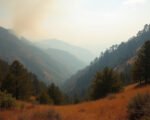
Severe weather events, including widespread wildfires and storms, significantly impacted solar energy generation across the Western United States around October 3, 2025. While the West experienced reduced solar output due to smoke and adverse atmospheric conditions, the Eastern U.S. saw a notable increase in irradiance, benefiting from weather patterns conducive to solar power production.
Wildfire Smoke’s Shadow Over Western Solar
The impact of wildfire smoke on solar energy generation in the Western U.S. has become a significant concern. In the Pacific Northwest, for instance, reductions in clear-sky irradiance reached up to 10%. This curtailment was attributed to residual smoke and particulate matter suspended in the atmosphere, which scatter and absorb sunlight, thereby diminishing the amount of solar radiation reaching photovoltaic panels. Research indicates that wildfire smoke can reduce solar panel output by nearly 50% in some cases, particularly when smoke plumes are dense or linger for extended periods. While some studies suggest that the impact of transported smoke is modest, typically less than 5% and sometimes below 2%, localized and dense smoke can cause substantial, short-term losses, affecting grid stability due to fluctuations in power output.
Storms Add to Western U.S. Solar Woes
Beyond wildfire smoke, other weather phenomena exacerbated the challenges for solar energy in the West. Tropical Storm Mario, for example, contributed to suppressed solar performance by bringing increased moisture and atmospheric instability to the region. Along the coast, sea spray and storm debris further compounded the effects of cloud cover, reducing the irradiance available for solar generation. Generally, storms bring heavy rain and cloud cover, which can temporarily reduce sunlight exposure and lower energy output by over 50%. While solar panels are designed to be durable, conditions like high winds, hail, and debris carried by storms can pose physical threats and potentially damage equipment, leading to reduced efficiency.
Eastern U.S. Solar Shines Amidst Western Downturn
In stark contrast to the West, the Eastern United States experienced favorable conditions for solar energy production. Analysis of irradiance anomalies showed that while the West and Midwest underperformed, the Northeast, South, and parts of Canada recorded a strong month for solar generation. This boost in the East was driven by atmospheric patterns that favored clear skies and ample sunlight. For instance, stagnant high-pressure systems delivered favorable conditions, allowing irradiance levels to climb. In some areas, irradiance anomalies reached as high as 30% above climatology, particularly from the Great Lakes to the Southeastern U.S. and into coastal Quebec. Such weather patterns, characterized by clear skies, allow more solar radiation to reach the Earth, which can be converted into power by solar panels.
Regional Contrasts and Future Outlook
The divergence in solar performance between the Western and Eastern U.S. highlights the significant influence of regional weather patterns on renewable energy generation. While the West grappled with the dual threats of wildfires and storms, the East benefited from stable, high-pressure systems. This news underscores the importance of localized weather forecasting and the need for grid operators to manage the variability inherent in solar energy production, especially as the U.S. continues to increase its reliance on renewable sources. The projected growth in solar capacity nationwide, with solar power expected to constitute a significant portion of new electricity generation in the coming years, means that understanding and mitigating the impacts of extreme weather will be critical for ensuring grid reliability and maximizing renewable energy potential across all regions of the country. The year 2025 is anticipated to be a record-breaking year for new utility-scale capacity additions, largely driven by solar power, signaling a transformative shift in the U.S. energy landscape.