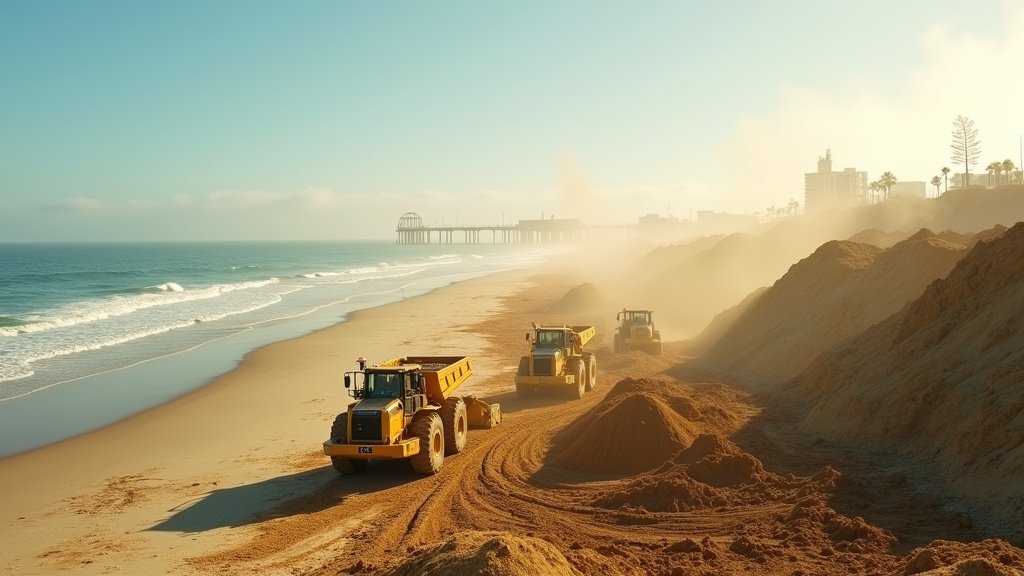
California’s famed coastline, a sprawling ribbon of golden beaches and crashing waves, is more than just a postcard-perfect backdrop; it’s a vital economic engine and a cherished part of the state’s identity. However, this iconic feature is under increasing threat from erosion and rising sea levels, prompting massive, long-term, and costly preservation efforts. The story of these efforts, particularly exemplified by the ongoing sand replenishment projects along the Santa Monica and Venice beaches, reveals a complex interplay of engineering, environmental concerns, and significant financial investment.
The Genesis of Artificial Shores
For decades, California has engaged in a monumental undertaking to maintain and expand its beaches, a practice that began in earnest in the mid-20th century. The initial context of a project in Santa Monica and Venice, involving the dumping of millions of cubic yards of sand, points to a strategy that has been a cornerstone of coastal management in the region for over half a century. Between 1945 and the late 1960s, an estimated 30 million cubic yards of sand were deposited on the beaches of Santa Monica Bay alone. This massive influx of sand was often sourced from offshore dredging, the construction of harbors like Marina del Rey, and even the excavation of dunes. The goal was not only to protect vital infrastructure and properties from the encroaching sea but also to create and maintain the expansive, inviting beaches that draw millions of tourists and residents annually.
The Economics of Beach Nourishment
The financial implications of these large-scale beach nourishment projects are staggering. While the exact costs for the historical Santa Monica and Venice projects are not readily available, contemporary efforts provide a clear indication of the substantial investment required. For instance, a recent beach nourishment project in San Clemente, aimed at widening the beach and restoring a protective buffer, had a construction cost of $16 million, with federal and state funding covering the majority of the expense. These projects are not one-off solutions; they are ongoing commitments. Natural processes, exacerbated by climate change and sea-level rise, mean that beaches continuously erode. Consequently, regular renourishment is often necessary. In San Clemente, for example, the beach is projected to require renourishment every six years.
This continuous need for sand has significant economic ripple effects. A 2024 USC study predicted that beach erosion could make coastal living in Southern California five times more expensive by 2050, partly due to the escalating costs of beach nourishment. The global demand for sand has increased, driving up prices, and the logistical challenges and permitting processes for sourcing and placing sand are themselves onerous for coastal communities. As sea levels rise, the frequency and cost of these interventions are only expected to increase.
Beyond the Sand: Environmental and Social Costs
While beach nourishment is a primary strategy, it is not without its critics and associated costs that extend beyond the monetary. The process of dredging sand from offshore or river channels can disrupt marine ecosystems and alter sediment transport dynamics, potentially impacting down-coast beaches and habitats. Furthermore, the artificial nature of these wide, flat beaches, maintained through frequent grooming, has turned some areas into “ecological wastelands” where native vegetation struggles to grow.
In response to these concerns, a shift towards more ecologically sound methods is emerging. Projects like the Santa Monica Beach Restoration Project are now focusing on restoring natural dune habitats using native vegetation. This approach not only helps to trap sand and build dunes that can serve as natural buffers against sea-level rise and erosion but also creates vital habitat for native species, including the federally threatened Western Snowy Plover. This nature-based solution is often more cost-effective and visually appealing than hard structures like seawalls, which can lead to the loss of the beach itself.
The Looming Threat of Climate Change
The imperative for these costly preservation efforts is amplified by the accelerating impacts of climate change. Sea levels along California’s coast have risen nearly 8 inches in the past century and are projected to rise significantly more by the end of the century, potentially by as much as 20 to 55 inches. This rise exacerbates coastal flooding and erosion, threatening millions of people, billions of dollars in property and infrastructure, including roadways, power plants, and tourist destinations. Without adaptation strategies, federal estimates suggest that up to three-quarters of California’s beaches could be eroded by 2100. The erosion rates are projected to triple by 2050, demanding a fivefold increase in sand requirements and costs.
The California Coastal Commission, established in response to public outcry over development restricting beach access, plays a crucial role in regulating coastal development and protecting these resources. However, the challenge of balancing development, public access, environmental protection, and adaptation to climate change is immense. Numerous grant programs, such as those offered by the California Coastal Conservancy and the State Water Resources Control Board, aim to support these vital restoration and resilience efforts.
A Continuous Battle for the Coast
The story of California’s beaches is a testament to the state’s enduring commitment to its iconic coastline. From the massive sand-dumping operations of the mid-20th century to the innovative dune restoration projects of today, the effort to save these cherished features is a continuous battle. The high cost, both financially and environmentally, underscores the complex challenges of coastal management in an era of climate change. The ongoing news and editorial discussions around these issues highlight the critical importance of finding sustainable and effective solutions.
This investigation into the high cost of saving California’s beaches reveals a dynamic and evolving field. While the initial strategies relied heavily on brute-force sand replenishment, the current approach is increasingly incorporating ecological principles and adapting to the undeniable reality of climate change. The future of these iconic features depends on continued investment, innovative planning, and a deep understanding of the delicate balance between human needs and the natural forces shaping our planet.