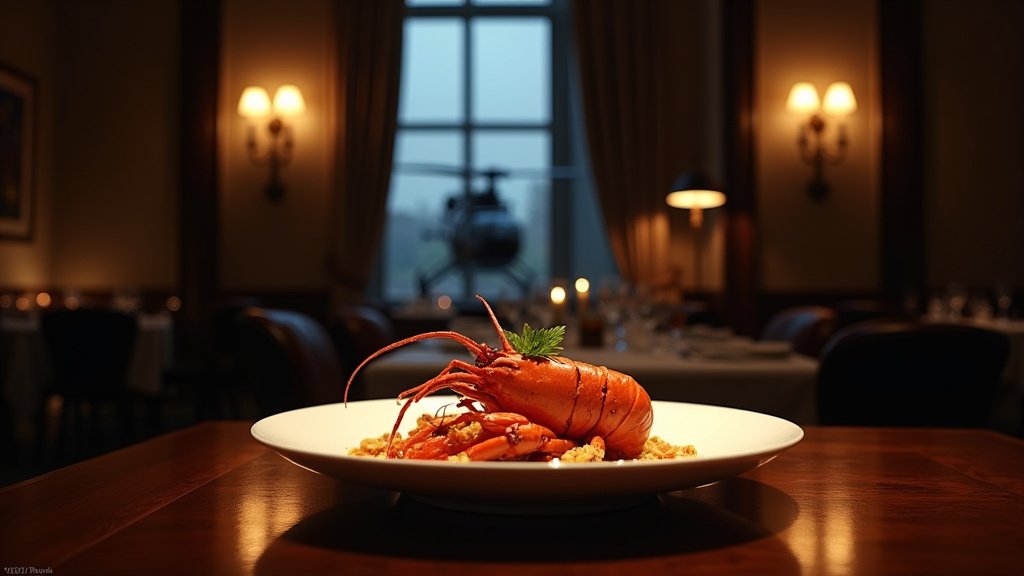
A Queenstown hotel has been fined $22,000 for illegally selling recreationally caught crayfish as part of a luxury experience, and for failing to maintain proper records. Rees Management Limited, trading as The Rees Hotel, was convicted on multiple charges under the Fisheries Act 1996 and Fisheries (Recordkeeping) Regulations 1990, following a prosecution by the Ministry for Primary Industries (MPI). The hotel’s chief executive at the time, Mark Rose, was discharged without conviction for his role in the offending.
The Lavish “Heli-Crayfish Experience”
The case centred around “The Rees Ultimate Heli-Crayfish Dining Experience,” a high-end package that cost guests between $4,650 and $7,750. This exclusive offering involved helicopter flights to remote locations, typically on the West Coast or in Fiordland, where a diver would collect crayfish. Guests were charged an additional $100 each to have the freshly caught crayfish prepared and served as part of a multi-course meal back at the hotel.
Under New Zealand’s Fisheries Act, a commercial fishing permit is mandatory for anyone intending to take fish for sale. The law defines any use of seafood as part of a business’s commercial activities as a “sale.”
Warnings Ignored, False Claims Made
Fisheries officers first became aware of the hotel’s practice in 2021. A fishery officer, Ian Henderson, warned the hotel’s chief executive, Mark Rose, that a commercial fishing permit was required and that the “Heli-Crayfish Experience” package, as it was then presented, was in breach of the Fisheries Act. Henderson explicitly stated that any fish used commercially was considered a “sale.” Despite these warnings, the hotel continued to offer the experience. Documents reveal that Rose made a series of false claims to fisheries officers, stating that the divers were not paid, that they dined with the guests, and that three uninvoiced crayfish tails found in the hotel’s freezer were a personal gift. Investigations later found that divers were indeed paid $800 cash for their recreational catch, and the crayfish were prepared and served by hotel chefs.
Over 2021 and 2022, the hotel organised at least six such heli-crayfishing trips. Records from these operations were not properly kept, making it difficult for MPI to quantify the full extent of the offending. The hotel was convicted on four charges of unlawfully possessing fish for sale and one charge of being a dealer in fish without keeping proper invoices.
Consequences and Broader Implications
The Ministry for Primary Industries emphasized that fisheries regulations are in place to safeguard marine resources for current and future generations, protect the integrity of fisheries management, and ensure fair competition among businesses. Garreth Jay, Fisheries New Zealand’s regional manager for the South, stated that the offending persisted despite clear advice that the package did not comply with the Fisheries Act. He also highlighted that illegal sourcing of crayfish gives offenders an unfair economic advantage over licensed operators.
While The Rees Hotel was fined $22,000, Mark Rose, who had admitted to three charges related to his duty as a director, was granted a discharge without conviction. The judge noted his significant community standing and that a conviction would cause undue shame to him and his family, deeming the consequences of a conviction to outweigh the seriousness of his specific offending, which involved a relatively small number of crayfish.
MPI is also prosecuting a third-party company involved in providing the helicopter services for the excursions. This ongoing investigation serves as a reminder of the critical importance of adhering to fisheries laws and regulations for all businesses operating within New Zealand’s tourism and hospitality sectors, particularly when dealing with New Zealand’s valuable seafood resources. This news is currently trending and forms part of ongoing investigations into the proper handling and sale of seafood.
Ensuring Sustainability
The case underscores the importance of compliance with the Fisheries Act and the significant penalties associated with its breach. Fisheries New Zealand encourages the public to report any suspected illegal fishing activity by calling 0800 4 POACHER (0800 476 224). The rules are designed to ensure the sustainability of fisheries for the future, and adherence to these regulations is a shared responsibility. The incident also highlights the importance of thorough record-keeping for all businesses involved in the sale or use of seafood, a crucial element in maintaining the integrity of New Zealand’s fisheries. The West Coast’s pristine waters and valuable marine life are protected by these regulations.