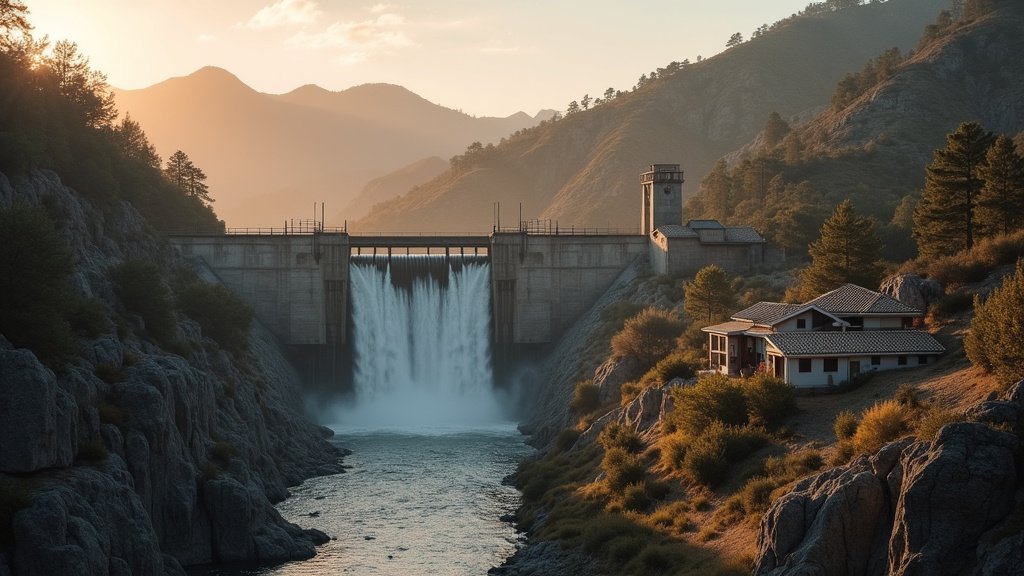
Nestled in the rugged foothills of California’s Sierra Nevada, approximately 140 miles east of the bustling metropolis it serves, lies Moccasin, an unincorporated community with a population that hovers around just 63 people. Despite its diminutive size and tranquil, almost sleepy, lifestyle, this remote enclave plays an indispensable role in the daily functioning of San Francisco and the broader Bay Area. Owned almost entirely by the San Francisco Public Utilities Commission (SFPUC), Moccasin is far more than a quiet collection of Spanish Colonial-style cottages; it is a critical hub for the Hetch Hetchy Water and Power System, the lifeline that supplies 85% of San Francisco’s water and generates vital hydroelectric power.
The Lifeline of San Francisco: Water and Power from the Sierras
The Hetch Hetchy Water and Power System, a monumental feat of engineering initiated over a century ago, draws its water from snowmelt in the pristine watersheds of Yosemite National Park. This precious resource travels 160 miles by gravity through a complex network of aqueducts, tunnels, and pipelines to reach the 2.7 million people across 29 Bay Area cities and counties. At Moccasin, a key junction in this vast system, water flows through the Moccasin Penstock to the Moccasin Powerhouse. Here, the sheer force of this water is harnessed to generate electricity, producing approximately 295,000 megawatt-hours annually – enough power to keep San Francisco City Hall, the San Francisco International Airport, and the Municipal Railway (Muni) operating. The system ensures up to 200 million gallons of water per day reach Bay Area faucets, making Moccasin an unseen, yet essential, pillar of urban life.
A Company Town’s Enduring Legacy
Moccasin’s existence is intrinsically tied to the Hetch Hetchy project, originally serving as a crucial headquarters for its construction in the late 1910s and 1920s. It developed into a quintessential company town, with most of its charming homes, built in a distinctive Spanish Colonial style, owned by the SFPUC and designated for its employees. For decades, the town’s population fluctuated, but its purpose remained singular: to support the vital water and power infrastructure. Once described as “possibly California’s last remaining intact company town,” Moccasin stands as a testament to a bygone era of industrial development, a quiet sentinel in the west that has adapted to modern needs.
Life in the Shadow of the Sierras
Today, the roughly 63 residents of Moccasin are almost exclusively SFPUC employees and their families. The town lacks the typical amenities of a conventional community, such as grocery stores or gas stations; its primary functions revolve around the operation and maintenance of the Hetch Hetchy system. The lifestyle here is markedly different from San Francisco’s urban dynamism – characterized by a slower pace, close-knit community ties, and a deep connection to the surrounding natural landscape. While remote, the SFPUC has invested in maintaining the town’s infrastructure, ensuring that its workers have suitable housing and facilities.
Resilience in the Face of Challenges
Moccasin has not been without its trials. Over the years, the community and its critical infrastructure have faced significant challenges, including the threat of wildfires, near catastrophic failures of vital components like the Mountain Tunnel and Moccasin Dam, and periods where its population dwindled to precarious lows. In the 1990s, the town’s population dropped significantly, leading to many homes becoming vacant and buildings falling into disrepair. However, through focused efforts and substantial investment, Moccasin has demonstrated remarkable resilience, continually adapting to ensure the reliability of the Hetch Hetchy system.
Modernizing for the Future: Investing in Infrastructure
The SFPUC recognizes the aging nature of its extensive infrastructure and has undertaken significant modernization projects. Notably, the Moccasin Penstock, some sections of which date back to 1924, is undergoing replacement or rehabilitation to enhance system reliability. Furthermore, the powerhouse’s generators, originally commissioned in 1969, are receiving substantial upgrades, including new stator cores, coils, and transformers, part of a broader multi-year capital improvement program. The cost of these upgrades runs into tens of millions of dollars, underscoring the commitment to maintaining the integrity and efficiency of this crucial facility. These ongoing news items highlight a continuous effort to safeguard San Francisco’s essential resources.
An Enduring Connection
While Moccasin might seem like an anomaly in the modern landscape, its strategic importance to San Francisco’s water and power supply is undeniable. It is not a tourist destination, and access is primarily for those involved in its vital operations. The town’s continued existence, maintained by the SFPUC, ensures the seamless delivery of water and power to millions. It represents a unique, enduring partnership between a vast urban center and a tiny, purposeful community in the Sierra Nevada, a relationship that is fundamental to the continued vitality of the Bay Area.