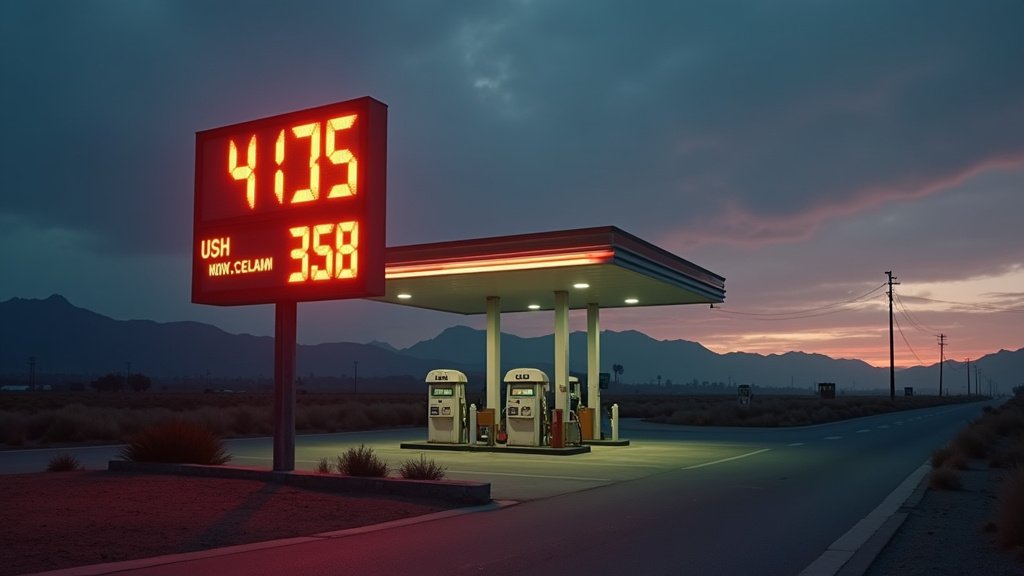
West Coast Fuel Prices Diverge Sharply from National Trend Amid Refinery Closures and Tax Hikes
NEWS ANALYSIS
The United States is experiencing a notable divergence in gasoline prices, with most regions enjoying a reprieve from higher costs, while the West Coast faces an intensifying upward pressure. As the rest of the country anticipates or already sees gasoline prices dipping below $3 a gallon, the West Coast stands as a stark exception, with projections indicating continued price increases and heightened volatility. This trend is largely attributed to a confluence of factors, including significant refinery closures, robust state fuel taxes, unique environmental regulations, and logistical challenges inherent to the region.
Shrinking Refinery Capacity Fuels West Coast Price Hikes
A key driver behind the West Coast’s distinct price trajectory is the planned closure of major refining facilities. Phillips 66 is set to cease operations at its Wilmington refinery in the Los Angeles area by the end of 2025, a facility with a capacity of 139,000 barrels per day (b/d). Shortly thereafter, Valero has announced its intention to idle, restructure, or cease operations at its 145,000 b/d Benicia refinery in Northern California by April 2026.
Collectively, these closures are poised to eliminate approximately 17% of California’s oil refinery capacity and 11% of the overall West Coast (PADD 5) capacity over the next year. This reduction continues a downward trend in refinery capacity on the West Coast, following earlier closures such as Phillips 66’s Rodeo refinery and Marathon’s Martinez refinery. The U.S. Energy Information Administration (EIA) forecasts that this shrinking capacity will have an outsized impact on the region, as the West Coast lacks the logistical connectivity to easily offset supply shortfalls from other U.S. refining centers.
A Perfect Storm: Taxes, Regulations, and Isolation
Beyond the immediate impact of refinery closures, several underlying factors contribute to the persistently higher fuel prices on the West Coast. State taxes play a significant role, with California, Washington, and Oregon consistently levying some of the highest gasoline taxes in the nation. Washington state, for example, recently enacted a six-cent per gallon gas tax increase, bringing its total state tax to 55.4 cents per gallon, making it the third-highest in the U.S. behind California and Pennsylvania. Oregon is also considering a gas tax increase, which could add another 6 cents per gallon.
Furthermore, California’s stringent environmental regulations and unique fuel specifications, such as the California Reformulated Gasoline Blendstock (CARBOB), add considerable cost to the refining process. The state’s cap-and-trade program and Low Carbon Fuel Standard (LCFS) are also estimated to add substantial costs per gallon, with cap-and-trade allowances alone potentially adding up to 47 cents per gallon to gasoline prices.
The West Coast’s geographical isolation from major U.S. refining hubs, such as the Gulf Coast, exacerbates these issues. Limited pipeline infrastructure means that the region relies heavily on imports, often from Asia, which introduces additional transportation costs and potential supply chain volatility.
Broader Economic and Supply Implications
The confluence of these factors is expected to translate into higher retail gasoline prices for consumers across the West Coast. The EIA forecasts that while national average prices may fall below $3 a gallon in 2026, West Coast prices will likely remain closer to $4 a gallon. This situation poses challenges for households and businesses alike, potentially increasing the cost of goods as transportation expenses rise.
With reduced in-state refining capacity, the West Coast will likely increase its reliance on imported fuels. This dependency introduces risks associated with longer transit times and potential geopolitical disruptions. While Phillips 66 plans to produce some California-grade gasoline at its Washington refinery, and refineries in Asia can meet specifications, these imports may not fully offset the domestic supply gap or mitigate price volatility.
News Outlook: Continued Pressure Expected
As the U.S. energy landscape evolves, the West Coast continues to navigate a challenging environment. The ongoing trend of refinery closures, coupled with robust state taxes and environmental mandates, suggests that fuel consumers on the West Coast will likely continue to bear higher prices compared to the rest of the nation. This news highlights the complex interplay of market forces, regulatory policies, and infrastructure limitations shaping energy affordability in the region. The EIA’s projections indicate that this price disparity is likely to persist into 2026, underscoring the structural challenges facing West Coast fuel markets.