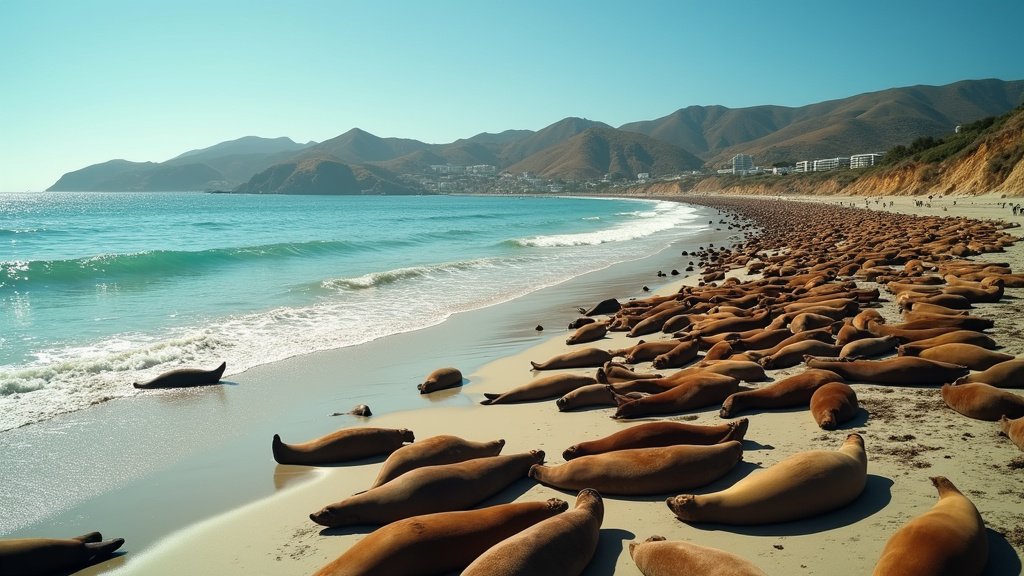
San Carlos Beach in Monterey, California, has once again experienced a temporary closure to the public due to an overwhelming influx of California sea lions. This recurring event highlights the complex relationship between humans and wildlife along the coast, as the popular beach becomes a favored resting and feeding spot for these marine mammals. City officials are urging the public to maintain a safe distance, reinforcing federal protections for the animals.
An Annual Phenomenon: Sea Lions Take Over San Carlos Beach
The picturesque San Carlos Beach, a well-loved destination near Monterey’s Cannery Row, has seen its access restricted as hundreds of sea lions have congregated on its shores. This phenomenon, while not entirely new, has intensified in recent years, leading to repeated closures. The most recent closure began on Thursday, with city officials actively monitoring the situation alongside the Monterey Bay National Marine Sanctuary. This isn’t the first time this year the beach has been affected; a similar closure occurred on June 4th due to sea lion activity. In the past, such as in August 2024, the beach was closed for seven weeks, indicating the significant impact these gatherings can have on public access.
Why the Surge in Sea Lion Numbers?
California sea lions, known for their social nature and adaptability, are a common sight along the west coast. Their presence in Monterey Bay is attributed to several factors. These marine mammals often follow the migration patterns of their prey, such as anchovies and squid, finding the waters of Monterey Bay particularly rich in food sources. For subadult and adult male sea lions, this region serves as a crucial resting and feeding ground between their breeding territories in Southern California and further north. The sheltered environment of the bay offers a safe haven from predators and rough seas, making it an appealing stop during their journeys. Experts from The Marine Mammal Center have noted that while congregations are common, the sheer numbers seen at San Carlos Beach represent a significant annual event.
Navigating the Closure: Safety and Regulations
The City of Monterey has taken measures to ensure the safety of both visitors and the sea lion population. Officials are reminding the public to observe the animals from a respectful distance of at least 50 yards, or approximately half the length of a football field. This guideline is in accordance with the Marine Mammal Protection Act (MMPA), a federal law that prohibits the harassment, feeding, capturing, or killing of marine mammals. Violators could face significant fines or even jail time. The city’s Parks and Recreation department, in coordination with the Monterey Bay National Marine Sanctuary, is monitoring the beach and a nearby recreation trail to track the animals’ activity and provide updates on beach access. This news is a reminder that coastal areas are shared habitats, and respecting wildlife is paramount for a balanced lifestyle.
Economic and Environmental Considerations
While the sea lion influx is a natural event, it also brings economic and environmental considerations. The cost of beach closures can impact local businesses reliant on tourism, though conversely, sea lion sightings are a major draw for visitors, contributing significantly to the local economy, as seen with San Francisco’s Pier 39. The well-being of the sea lion population is also a key indicator of ocean health. Researchers are closely observing these congregations to better understand their ecological implications and the broader food web dynamics. The adaptive nature of California sea lions, their ability to thrive in human-dominated environments, and their trending population growth since gaining federal protection in 1972, underscore the importance of managing these interactions effectively. This news serves as a regular point of discussion for conservationists and the public alike.
Looking Ahead: Responsible Wildlife Viewing
The recurring nature of these sea lion congregations means that beach closures may become a more frequent occurrence. The City of Monterey encourages the community and visitors to appreciate these magnificent creatures responsibly, understanding that coastal environments are shared. This situation also highlights the importance of educated travel and the choices made by visitors to minimize their impact on local ecosystems. As the sea lions eventually depart, San Carlos Beach will reopen, but the cycle serves as a constant reminder of the wild beauty that thrives along the California coast and the need for vigilance and respect.