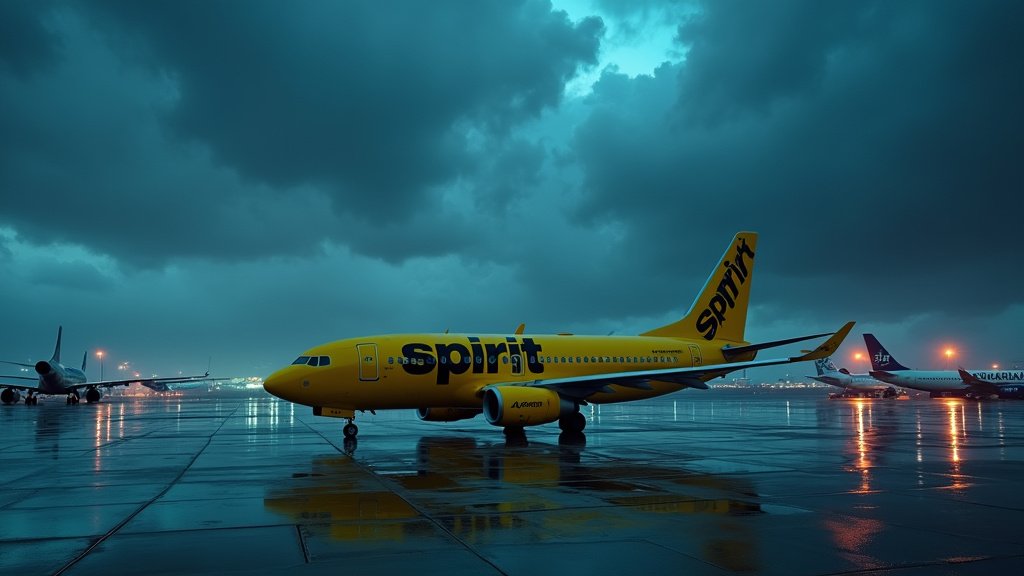
The airline industry is grappling with unprecedented volatility, a trend acutely felt across the nation’s vital West Coast travel hubs. At the forefront of this unsettling shift is Spirit Airlines, which has issued a stark warning regarding its operational future. The low-cost carrier has alerted stakeholders to ‘substantial doubt‘ about its ability to continue flying, sending ripples through the broader aviation sector and sparking significant conversation among consumers and industry analysts alike. This breaking news highlights a dynamic period for air travel, where challenges coexist with new opportunities and evolving passenger services.
Spirit’s Turbulent Skies
Spirit Airlines, known for its budget-friendly fares and extensive domestic network, finds itself navigating particularly turbulent skies. The declaration of ‘substantial doubt‘ regarding its capacity to sustain ongoing operations underscores the significant financial and operational pressures facing carriers in the current economic climate. This candid admission comes as a major piece of trending news for the travel world, raising immediate questions about market stability and consumer confidence. The long-term implications for passengers and the competitive landscape of affordable air travel remain a critical point of concern, potentially reshaping the choices available for those planning their trips across the country and beyond. This development signals a challenging environment for some operators, emphasizing the ever-present financial cost associated with maintaining a large-scale airline.
International and Regional Route Adjustments
While Spirit grapples with its existential challenges, the dynamic nature of international and regional air travel on the West Coast continues to evolve. In a significant adjustment for cross-border connectivity, Aeromexico has announced the suspension of several of its routes connecting to California. This move, impacting various segments of west coast travel, reflects a strategic realignment perhaps driven by shifting demand or operational efficiencies. Simultaneously, Hawaiian Airlines is also recalibrating its service portfolio, discontinuing certain international flights originating from its Honolulu hub. These changes by established carriers highlight a broader industry recalibration, where airlines are constantly assessing the viability and profitability of their routes in response to a changing global travel lifestyle.
New Connections and Domestic Realignment
Yet, it’s not all contractions within the bustling travel landscape. The West Coast is also witnessing expansion and strategic route enhancements. JSX, known for its unique ‘hop-on’ jet service, is injecting new energy into the market with the launch of an anticipated new service from Los Angeles International Airport to the popular resort destination of Cabo San Lucas. This new route offers travelers a premium and expedited option for leisure travel to a vibrant international locale. Meanwhile, Alaska Airlines, a cornerstone of West Coast air travel, is actively refining its network. The carrier is adjusting several routes operating from key California gateways, including San Francisco and Los Angeles. These adjustments are complemented by a new, direct connection, as Alaska Airlines is adding a new San Diego-Phoenix route, enhancing connectivity between two significant southwestern cities. Such strategic realignments are a constant in the highly competitive air travel news cycle, reflecting efforts to optimize service and capture emerging demand.
Enhancing the Passenger Experience at SFO
Beyond the comings and goings of individual airline routes, major infrastructure developments are also shaping the future of the travel experience. San Francisco International Airport (SFO), a critical nexus for both domestic and international traffic, is planning a significant upgrade to its passenger amenities. The airport has announced plans for a new large passenger lounge, signaling an ongoing commitment to enhancing comfort and convenience for millions of travelers passing through its terminals annually. This investment underscores a broader industry trend toward improving the ground experience, recognizing that the airport environment plays a crucial role in the overall travel lifestyle. Such facilities aim to provide a more relaxing and productive space for passengers awaiting their flights, reflecting a forward-looking approach to meet the evolving expectations of the modern traveler.
The Evolving Landscape of Air Travel
The current landscape of air travel, particularly across the vibrant and dynamic West Coast, presents a complex tapestry of challenges and opportunities. From the profound uncertainty facing a major budget carrier like Spirit Airlines to the strategic adjustments of international and regional airlines, and the exciting new offerings like JSX’s Cabo service, the industry is in constant flux. The simultaneous investment in passenger infrastructure, exemplified by SFO’s planned lounge, further illustrates a sector that, despite its hurdles, remains dedicated to evolution and improvement. As these developments unfold, they collectively paint a picture of a resilient yet rapidly transforming travel environment, where industry players and passengers alike must adapt to an ever-evolving narrative of connectivity, convenience, and the fundamental cost of reaching desired destinations. This ongoing news promises to keep the travel community engaged as it defines the future of air travel.