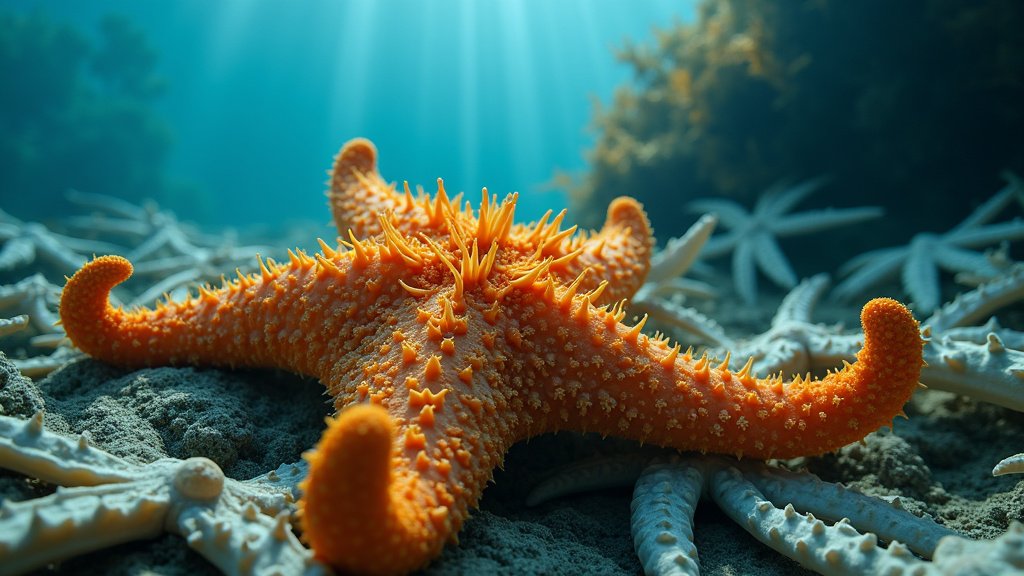
A decade-long mystery that has plagued marine ecosystems along the West Coast is beginning to unravel, thanks to a groundbreaking discovery by a dedicated team of Northwest researchers. These scientists have identified a specific bacteria that appears to be the primary culprit behind the devastating sea star wasting disease, a virulent ailment that has decimated sea star populations since its emergence in 2013.
Unraveling a Marine Catastrophe
Sea star wasting disease is a grim phenomenon that has left a trail of destruction through intertidal zones and kelp forests. The illness causes affected sea stars to exhibit a series of horrifying symptoms, including the loss of limbs and rapid decomposition. This progressive decay often leads to the swift death of the affected individuals, leaving behind ghostly white skeletons or dissolving masses.
The Devastation of Sunflower Sea Stars
Among the most tragically impacted species is the sunflower sea star. This vibrant, multi-armed echinoderm, once a common sight in coastal waters, has been particularly vulnerable to the disease. Astonishingly, approximately 90% of the global sunflower sea star population has succumbed to the wasting disease. This catastrophic decline represents a significant ecological loss, as sunflower sea stars play a crucial role in maintaining the health of kelp forest ecosystems. Their predation on sea urchins helps to prevent overgrazing, allowing kelp to flourish. The widespread loss of these keystone species may have contributed significantly to the decline of many West Coast kelp forests, impacting the intricate web of marine life that depends on these underwater forests.
Hope for Recovery and Future Strategies
The identification of the causative bacteria by Northwest scientists marks a pivotal moment in the fight against this persistent marine malady. This breakthrough offers immense hope for the future of sea star populations and the health of coastal environments. By understanding the specific pathogen responsible, researchers can now focus on developing targeted strategies to combat the disease. These new approaches could involve developing treatments, implementing preventative measures, or even exploring ways to bolster the resilience of sea star populations against future outbreaks.
This significant advancement provides potential new avenues for aiding in the recovery of sea star populations. Conservation efforts can now be informed by this critical scientific insight, potentially leading to more effective interventions and a brighter future for these fascinating marine invertebrates and the vital ecosystems they inhabit. The news is a significant piece of West Coast environmental news, offering a glimmer of optimism for marine conservationists and the public alike. This top discovery promises to reshape our understanding and management of marine diseases impacting iconic species.