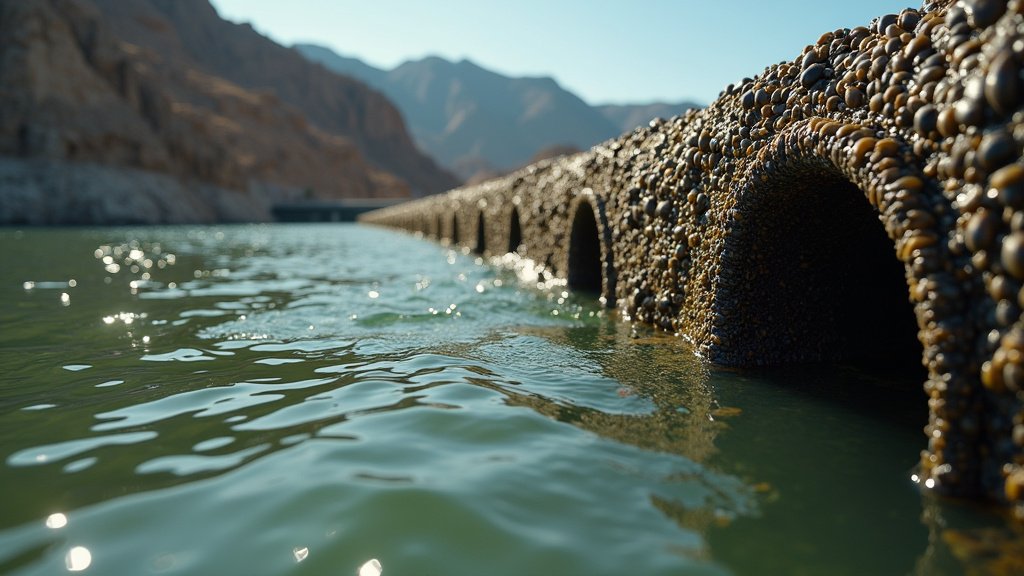
The recent confirmation of invasive zebra mussels in the upper Colorado River system marks a critical juncture for the American West, signaling a growing threat to one of the nation’s most vital water lifelines. These minuscule mollusks, notorious for their destructive potential, now inhabit stretches of the Colorado River and its associated canals, raising alarms for the region’s ecosystems, infrastructure, and the 40 million people who depend on this water.
The Alarming Incursion into Western Waters
Colorado Parks and Wildlife (CPW) has been actively monitoring for invasive species, and their efforts have confirmed the presence of zebra mussel larvae, known as veligers, in the Colorado River and the Government Highline Canal near Grand Junction and New Castle. Initial detections of these microscopic larvae occurred in July 2024, with further positive findings in June and July 2025. These discoveries mean that a significant section of the Colorado River, from the confluence of the Roaring Fork River to the Utah border, is now considered “positive” for zebra mussels. While no adult mussels have been found in the main river channel, a well-established population of adult zebra mussels has been identified in a privately owned body of water in Eagle County, which is believed to be the source of the infestation. This follows the state’s first discovery of adult zebra mussels in Highline Lake in September 2022, an infestation that ultimately led to the lake being drained for treatment.
A Vital Artery Under Siege
The Colorado River system is a cornerstone of the arid West, providing water for agriculture, industry, and municipal use across seven states and northern Mexico. The introduction of zebra mussels into this critical artery presents a multifaceted crisis. These invasive mollusks, native to Eurasia, arrived in North America via ballast water in the 1980s and have since spread aggressively, primarily through human transport via boats and watercraft. Their westward expansion is a cause for significant concern, impacting waterways from the Great Lakes to California and now inland systems.
Devastating Ecological and Economic Ripples
Zebra mussels are ecological and economic spoilers. As voracious filter feeders, they consume vast quantities of plankton, which forms the base of many aquatic food webs. This depletion of essential food sources can decimate native fish populations, including sport fish like trout, and disrupt entire ecosystems. Their presence can also lead to clearer water by removing algae, but this also increases the risk of toxic blue-green algae blooms. Economically, the damage is staggering. Zebra mussels attach themselves to any hard surface, rapidly colonizing and clogging water intake pipes for power plants, municipal water treatment facilities, dams, and irrigation systems. Globally, the economic toll is measured in billions of dollars; for instance, the power industry in the Great Lakes region faced estimated costs of $3.1 billion between 1993 and 1999 alone. In Montana, a worst-case scenario invasion was projected to cost $234 million annually. The cost of prevention and control is a fraction of managing an established infestation, highlighting the critical importance of stopping their spread.
The Challenge of Containment and Eradication
Colorado Parks and Wildlife, along with federal and local partners, is intensifying sampling efforts and implementing rapid response plans. Past treatments have included copper-based solutions and draining entire lakes, but experts caution that eradicating zebra mussels from a large river system like the Colorado is exceedingly difficult, with very few, if any, successful examples globally. The sheer volume of water and the mussels’ rapid reproduction rates—females can release up to a million eggs per spawn—make containment a monumental task. The news of this spread is a significant development in the ongoing battle against aquatic invasive species trending across the nation.
Public Vigilance: The First Line of Defense
With eradication from the river system proving an immense challenge, the focus remains on prevention and slowing the spread. CPW and partner agencies are urging all water users—boaters, anglers, and recreationalists—to practice strict boat hygiene. This includes thoroughly cleaning, draining, and drying all watercraft, trailers, and equipment after use to prevent the accidental transport of microscopic veligers or adult mussels to uninfested waters. The collective effort to protect the West’s precious water resources from these prolific invaders depends heavily on public cooperation.
This news underscores the profound and far-reaching consequences of invasive species, impacting not just the natural west but the very infrastructure that sustains millions. The battle for the Colorado River system is a stark reminder that vigilance and proactive measures are essential to safeguarding our waterways for future generations.