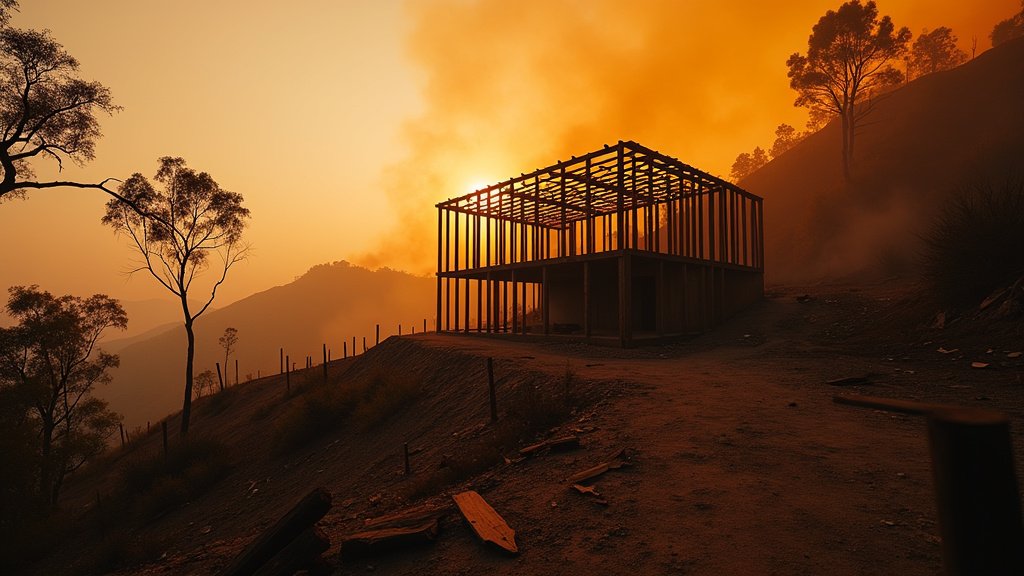
Los Angeles County faces a critical juncture as post-wildfire rebuilding efforts crawl forward, hampered by a complex web of slow permit approvals, escalating construction costs, and significant financial strain on residents. Months after devastating fires like the Palisades and Eaton blazes swept through communities, many homeowners remain displaced, struggling to navigate bureaucratic hurdles and mounting expenses on the West Coast.
Permit Approvals Lagging Despite Cleared Sites
Despite the rapid completion of debris removal—over 2.6 million tons of rubble cleared by the U.S. Army Corps of Engineers—the issuance of construction permits is proceeding at a pace that leaves many residents discouraged. As of late September 2025, Los Angeles County had approved only 405 construction permits out of 1,972 applications in its unincorporated areas, representing a roughly 20.5% approval rate. While the City of Los Angeles has seen a slightly higher approval rate, with 620 permits granted for 1,564 rebuilding applications within its jurisdiction, the overall progress remains a concern. In total, across LA County and its cities, just over 1,500 permits had been issued out of more than 4,000 applications by early October 2025.
Malibu, a community particularly hard-hit, has seen even slower progress. Nine months after the Palisades Fire, the city had issued only two rebuilding permits for beachfront and Big Rock area properties, a stark contrast to the urgency required for residents to return home. While officials have worked to streamline processes, including the suspension of certain environmental review requirements like CEQA and the California Coastal Act by Governor Newsom, the permitting pipeline remains clogged for many. The average permit approval time has reduced to around 55-60 days in the City and County of Los Angeles, a significant improvement, but this still represents a lengthy wait for those displaced.
Financial Strain and Rising Rebuilding Costs
For the thousands of homeowners affected, the path to rebuilding is fraught with financial challenges. Construction costs have surged, with estimates ranging from $350 to $900 per square foot in urban areas like the Pacific Palisades, pushing the total cost to rebuild a typical home well over $1 million, and potentially up to $2 million. Many residents find that these costs are roughly double their insurance payouts, leaving a substantial gap that many cannot afford to bridge.
This financial disparity has led some homeowners to abandon plans to return, opting instead to sell their burnt-out lots. This has resulted in declining property values for these sites in some areas, with prices in Altadena dropping to approximately $60 per square foot from $88 per square foot, and lot prices in parts of the Pacific Palisades falling by as much as 45% between March and August 2025. This trend has also attracted investors and corporations, which have been acquiring a significant portion of the sold lots, particularly in areas like Altadena.
Southern California Edison’s Compensation Program Faces Scrutiny
The Eaton Fire, which devastated over 6,000 homes in Altadena and surrounding areas, has brought Southern California Edison (SCE) into the spotlight. The utility company has announced a voluntary Wildfire Recovery Compensation Program for victims. The program aims to provide expedited payouts for incurred losses, offering an alternative to lengthy litigation. Draft protocols suggest reimbursement rates of $550 to $750 per square foot for single-family residences, potentially amounting to around $900,000 for a 1,500-square-foot home, adjusted for insurance coverage.
However, the proposed program has drawn criticism. The Eaton Fire Survivors Network has deemed the proposal “wholly inadequate,” citing concerns that it excludes many families and undervalues their losses. SCE maintains that participation is voluntary and does not constitute an admission of liability, though the company is also facing lawsuits alleging its equipment initiated the blaze.
A Long Road Ahead for Recovery
The sheer scale of destruction—estimated residential damage reaching $52 billion from the January 2025 wildfires alone—underscores the monumental task of recovery. While government agencies have worked to expedite debris removal and streamline permitting, the combination of slow bureaucratic processes, financial shortfalls, and the ongoing threat of climate change-fueled wildfires presents a daunting future for many West Coast residents. The news from Los Angeles County signals a slow, arduous journey toward rebuilding, highlighting the need for continued support and innovative solutions to help communities recover and re-establish themselves.