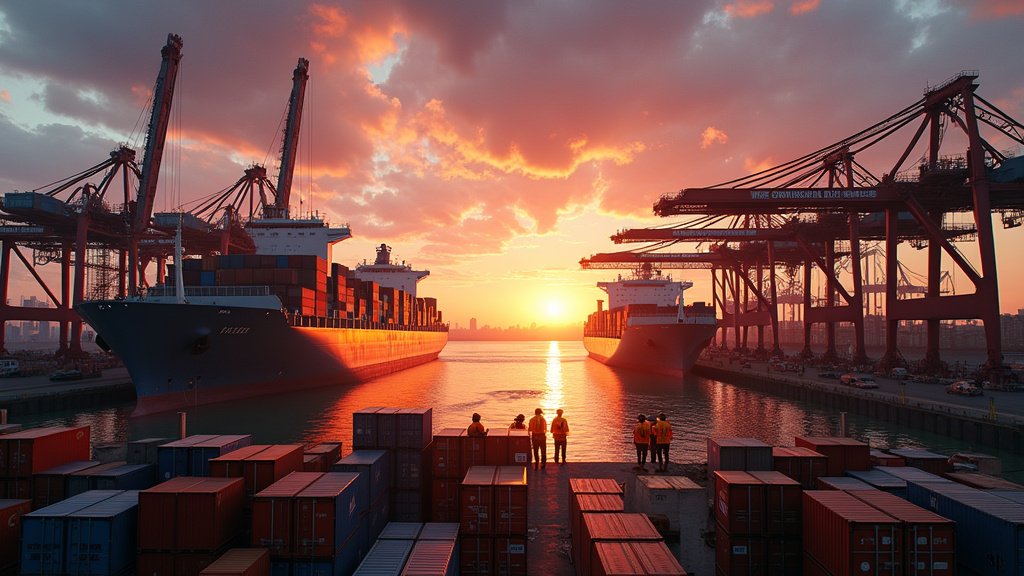
West Coast Ports and Dockworkers Strike Tentative Labor Deal, Averting Potential Supply Chain Disruptions
After months of tense negotiations, West Coast dockworkers and port authorities have reached a tentative labor agreement, a move that promises to bring much-needed stability to a critical sector of the American economy. The agreement, the details of which remain undisclosed at this time, has been hailed as a significant development, particularly given the potential for widespread disruption to the supply chain had an agreement not been reached. This deal signifies a critical turning point after a period of uncertainty for both the workers and the ports that rely on their labor.
Months of Negotiations Yield Results
The path to this tentative agreement has been a protracted one, marked by months of intense discussions between the International Longshore and Warehouse Union (ILWU), representing the dockworkers, and the Pacific Maritime Association (PMA), which represents the port operators. The stakes were undeniably high. The West Coast ports handle a significant portion of the nation’s imports and exports, making them a crucial link in the global supply chain. Any disruption could have reverberated throughout the economy, impacting businesses and consumers alike.
Details of the specifics of the agreement have not yet been released to the public. This level of secrecy is not uncommon in complex labor negotiations. Negotiations often involve sensitive financial and operational considerations that require careful consideration before being made public. The lack of immediate details, however, has not dampened the overall positive sentiment surrounding the tentative agreement. Both sides are likely to share more details in the coming days or weeks as they work to finalize and ratify the deal.
The Shadow of Supply Chain Disruption
The backdrop to these negotiations was the very real possibility of labor unrest, which could have ground port operations to a halt. Such an event would have been reminiscent of past labor disputes that significantly impacted the flow of goods, leading to increased costs and delays for businesses and consumers. The supply chain, already strained by global events and increasing consumer demand, has been a focal point of concern in recent years. The potential for further disruption was a major factor driving both sides to the negotiating table and ultimately to the successful outcome.
In recent times, global supply chains have faced a myriad of challenges. From the COVID-19 pandemic to geopolitical tensions, various factors have caused significant strain, highlighting the vulnerability of these complex networks. A disruption at major West Coast ports would have exacerbated these existing vulnerabilities, underscoring the critical importance of a smooth and efficient flow of goods.
Stability on the Horizon
The tentative agreement is expected to bring a period of stability to both the ports and the workers. For the ports, this means the assurance of a continued workforce and the ability to maintain operational efficiency. For the dockworkers, it means the security of continued employment and potentially improved working conditions. The absence of details does not detract from the promise of a more secure economic landscape.
The agreement marks a step towards fortifying the economic infrastructure of the West Coast. By averting potential disruption, the deal helps to maintain the flow of goods, protect jobs, and support economic growth in the region and beyond. The tentative agreement provides a basis for continued collaboration and a shared commitment to ensuring the efficient functioning of the ports for the benefit of all parties involved.
Looking Ahead
The coming days and weeks will be crucial as the parties move toward finalizing and ratifying the tentative agreement. The details will be scrutinized by both union members and port authorities. If ratified, the agreement will usher in a period of stability and collaboration that is essential for the continued success of the West Coast ports and the businesses and workers who depend on them. The successful resolution of these negotiations is a positive indication of a commitment to fostering a stable and productive working environment.
This tentative agreement represents a victory for all involved, setting the stage for continued economic prosperity. As the nation looks ahead, this deal acts as a source of reassurance that potential economic challenges will not be met with inaction, and that supply chain disruptions are being actively addressed, thereby contributing to a stronger and more resilient national economy.