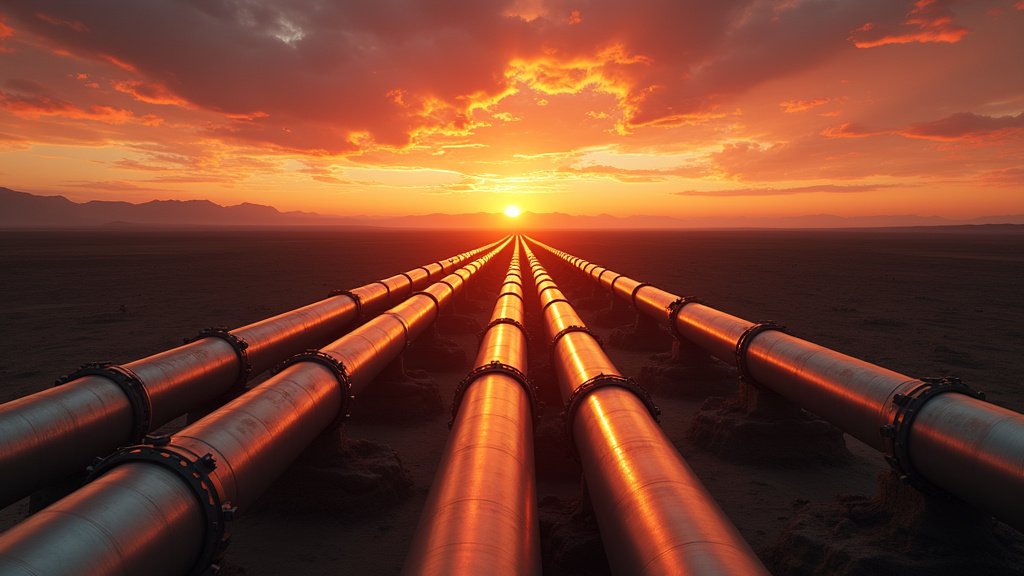
A high-stakes competition is underway among energy companies to construct a vital West Coast Fuel Pipeline, a race fueled by the impending closure of two major California refineries that threatens to send gasoline prices soaring across the region. This critical energy infrastructure projects development comes as the isolated West Coast market faces a significant fuel supply void, intensifying pressure on officials to ensure consumer price stability and potentially ushering in a new era for the West Coast Fuel Pipeline.
Looming Supply Gap from Refinery Exits
The core of the crisis lies in the planned shutdowns of two significant refining facilities. Phillips 66 is winding down operations at its Los Angeles refinery by the end of 2025. This facility accounts for roughly 8% of California’s refining capacity. Following suit, Valero Energy’s Benicia refinery, located in the Bay Area, is slated for closure by April 2026. This plant, with a capacity of 170,000 barrels per day, represents about 9% of California’s refining capacity.
Together, these two refineries account for approximately 20% of California’s in-state gasoline supply, creating a projected shortfall of nearly 280,000 barrels per day. This significant reduction in refining capacity, driven by factors including a challenging regulatory environment and escalating operational costs, highlights the urgent need for a robust West Coast Fuel Pipeline solution to counter the impending fuel supply void.
The Pipeline Race to Fill the Void with a West Coast Fuel Pipeline
With a substantial supply gap looming, energy infrastructure companies are accelerating proposals to build new pipelines connecting the Gulf Coast and Midwest refining hubs to the West Coast. West Coast drivers already contend with some of the nation’s highest fuel prices due to limited local production and minimal pipeline connectivity to major refining centers, underscoring the critical importance of a new West Coast Fuel Pipeline.
Two primary proposals are vying for market dominance. A partnership between Phillips 66 and Kinder Morgan is advancing the “Western Gateway Pipeline”. This ambitious project aims to construct a new pipeline from Borger, Texas, to Phoenix, Arizona, while also reversing the flow of existing Kinder Morgan infrastructure to bring fuel from Colton, California, to Phoenix, and utilizing the Phillips 66 Gold Pipeline to connect Midwestern barrels.
Simultaneously, HF Sinclair, a unit of ONEOK, is also making significant plays. ONEOK’s Magellan Pipeline subsidiary has initiated interest gauging for a system connecting Houston and southern Oklahoma to El Paso, Texas, and Phoenix. HF Sinclair is also considering expanding its own pipeline network across the Rockies and into the West Coast, potentially adding up to 150,000 barrels per day of capacity to markets including California and Nevada. These proposals also involve utilizing and expanding existing infrastructure, which may streamline regulatory approvals for a new West Coast Fuel Pipeline.
High Stakes: Price Surges and Market Isolation
The implications of these California refinery closures and the subsequent pipeline race are profound. Analysts forecast that gasoline prices in California could surge by as much as 75%, potentially reaching $7.35 to $8.43 per gallon by late 2026, leading to a significant gasoline price surge. This price shock is exacerbated by the West Coast’s relative isolation from continental supply networks, with no direct pipelines delivering fuel to California from across the Rocky Mountains, highlighting the need for the West Coast Fuel Pipeline.
Neighboring states like Arizona and Nevada, which rely heavily on California’s fuel exports, are also expected to face collateral damage, including price spikes and potential shortages. The unique gasoline blend required by California further complicates the ability of other regions or overseas suppliers to quickly fill the gap, potentially leading to increased reliance on imports from Asia.
Political Pressure Creates a Rare Opportunity for a West Coast Fuel Pipeline
The prospect of sharply higher fuel prices has placed considerable pressure on California Governor Gavin Newsom to find solutions and prevent consumer backlash. This situation has created an unusual political climate, offering a rare window of opportunity for the approval of new energy infrastructure projects in a state historically resistant to “Big Oil”. Governor Newsom has acknowledged the situation and signaled that regulatory efforts are underway to mitigate the impacts of the refinery closures, though some critics argue his administration’s policies contributed to the problem.
A Competitive Landscape for Infrastructure Projects
Analysts caution that the market may only be able to sustain one major new pipeline project. The first company to secure a final investment decision and substantial capacity commitments—typically around 70%—is most likely to succeed, potentially securing a multi-billion-dollar windfall. The competitive environment, coupled with the availability of waterborne imports, means that the economics of building multiple new pipelines could be precarious, making the success of any singular West Coast Fuel Pipeline crucial.
As energy companies race to secure financing and approvals for their proposed West Coast Fuel Pipeline initiatives, the outcome of this competition remains uncertain. The decisions made in the coming months will be pivotal in shaping the future of fuel supply and energy affordability on the West Coast for years to come. This top news story highlights the delicate balance between California’s climate goals and its immediate energy needs, underscoring the importance of a functional West Coast Fuel Pipeline.