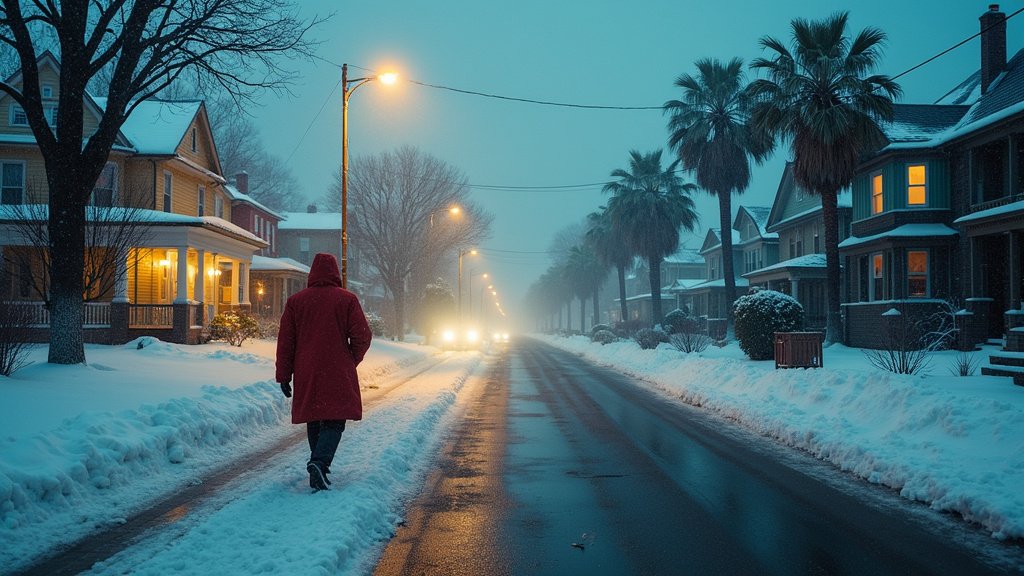
US Weather Divide: Northeast Snow Buries Region as West Coast Battles Atmospheric River Floods and Mountain Snowfall
The United States is currently experiencing a significant US Weather Divide, with starkly different weather patterns dominating opposite coasts. Heavy snow blankets the Northeast, while the West Coast grapples with intense rainfall and mountain snowfall. These atmospheric rivers are driving much of this weather, making the US Weather Divide a major news focus.
Northeast: Lake Effect Snow Grips Region Amid US Weather Divide
Cold air sweeping across the Great Lakes is picking up warmth and moisture, rising and cooling over land to create heavy snow bands. This process, known as lake-effect snow, is a defining feature of the current US Weather Divide. Many areas are experiencing significant snowfall, with Syracuse, New York, recently breaking a snow record by receiving over 24 inches. Other cities like Buffalo and Rochester are also heavily impacted by these intense snowfall rates, which can reach inches per hour, creating hazardous travel conditions. Thousands of flights were delayed or canceled, and states of emergency were declared, disrupting daily life and increasing travel costs due to this severe weather.
A larger storm system, described as a “bomb cyclone,” is contributing to the heavy snowfall. Frigid air from Canada is enhancing the snow. Experts predict that warmer lake waters may increase lake-effect snow in future decades due to climate trends, though eventually, more precipitation might fall as rain, a potential shift in these weather patterns.
West Coast: Atmospheric Rivers Unleash Fury in Stark US Weather Divide
The West Coast faces a different challenge, a critical part of the current US Weather Divide. Powerful atmospheric rivers are hitting California, bringing vast streams of moisture originating from the tropics. While atmospheric rivers are a vital water source and deliver much of the West Coast’s precipitation, they also bring severe weather, contributing to the dramatic US Weather Divide.
Flooding and Mudslides Threaten California During US Weather Divide
Heavy rainfall is causing widespread California flooding. San Diego saw significant flooding recently after more than 2 inches of rain fell, and Los Angeles received over 4 inches. Mudslides and debris flows are a major concern, particularly in areas stripped of vegetation by wildfires, as the landscape cannot absorb water effectively. Evacuation warnings were issued for some areas due to this extreme weather impacting residents’ lives. Flash flooding is particularly dangerous, making roads impassable and adding significant cost to repairs and recovery efforts. Excessive runoff leads to overflowing rivers and creeks, a common consequence of such intense weather events.
Sierra Nevada Faces Mountain Snowfall Amid US Weather Divide
The Sierra Nevada mountains are experiencing heavy mountain snowfall, a direct result of the atmospheric river systems contributing to the US Weather Divide. Mountain passes are receiving feet of snow, with snowfall totals reaching over 2 feet in some zones and up to 4 feet on higher peaks. Travel in these areas is severely impacted, with key highways like Interstate 80 and Highway 50 facing disruptions. Chain controls for vehicles are likely, and whiteout conditions with strong winds are also reported, creating hazardous conditions for travel as part of the broader US Weather Divide.
Broader Impacts and Future Trends of the US Weather Divide
Atmospheric rivers are crucial for the West’s water supply, but they can also cause catastrophic events. Climate change may be increasing their intensity and frequency, a trend that raises concerns for future weather events and the continuing US Weather Divide. This extreme weather significantly impacts travel plans, causing disruptions and increasing travel costs. Many travelers are reconsidering plans due to the unpredictable weather. Cities worldwide are grappling with rising temperatures, and understanding these weather patterns and climate trends is vital news, especially in the context of the US Weather Divide.
Conclusion: Navigating the US Weather Divide
The nation’s coasts are split by this dramatic US Weather Divide. Heavy snow paralyzes the Northeast, while relentless rain and mountain snowfall batter the West. Atmospheric rivers and cold air masses are the culprits behind this stark contrast, highlighting ongoing climate trends. Residents and travelers must stay informed about the US Weather Divide. Preparedness is key for navigating these extreme conditions.