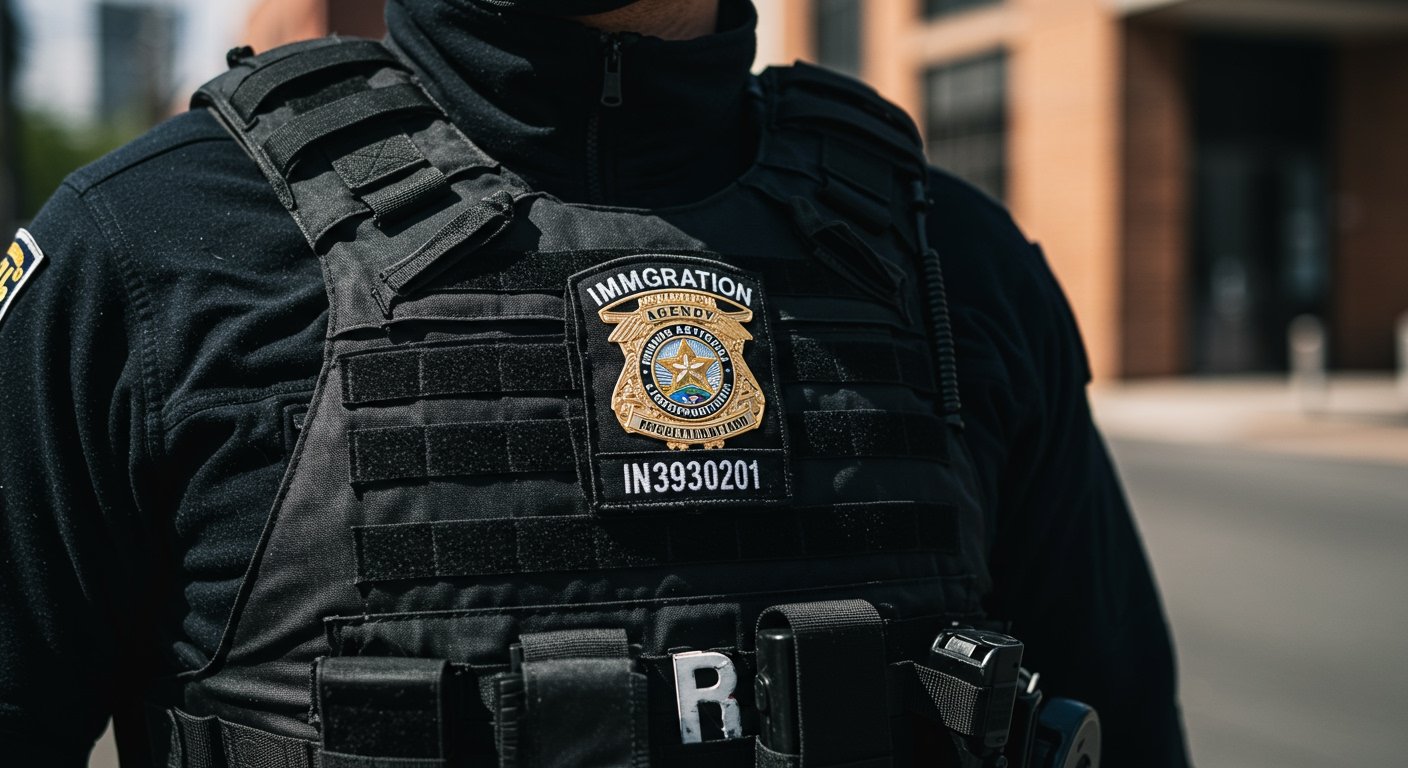
Washington D.C. – Senators Alex Padilla of California and Cory Booker of New Jersey have introduced significant legislation aimed at enhancing transparency and accountability within U.S. immigration enforcement agencies. The proposed bill seeks to mandate that all immigration enforcement officers, including personnel from Immigration and Customs Enforcement (ICE), Customs and Border Protection (CBP), and the Department of Homeland Security (DHS), as well as any deputized state or local law enforcement officers, must display clearly visible identification when engaging in public actions.
Key Provisions of the Proposed Legislation
The core requirement of the senators’ bill is the unambiguous display of identification. This identification must include the name or initials of the officer’s employing agency alongside either the officer’s name or a unique badge number. Crucially, this identification is required to remain visible at all times during public duties, unobscured by tactical gear, uniforms, or other clothing.
Adding another layer to the transparency push, the legislation would also prohibit officers from wearing non-medical face coverings that conceal their identity. Exceptions to this rule are specifically carved out for situations involving environmental hazards where face coverings are medically necessary or during authorized covert operations where revealing identity would compromise the mission.
Addressing Concerns Over Accountability
Senator Padilla, a Democrat, emphasized the need for this measure, citing recent incidents in California where immigration officials reportedly failed to identify themselves during enforcement operations. He articulated that agents operating in plainclothes, often with obscured faces and no visible identification, contribute to escalating tensions and spreading fear within communities. Furthermore, he argued that this lack of identification effectively shields officers from accountability for their actions.
Senator Booker echoed these concerns, stating that the practice of anonymity for law enforcement officials, particularly those involved in immigration enforcement, endangers public safety. He highlighted how this anonymity can cause significant confusion and fear, especially in communities that are already under heightened scrutiny regarding immigration status.
Ensuring Compliance and Oversight
The bill includes specific mechanisms designed to ensure compliance and provide recourse for the public. It mandates that the Department of Homeland Security establish clear disciplinary procedures for officers who fail to adhere to the new identification requirements. Additionally, the legislation requires DHS to report annually to Congress on the level of compliance across its relevant agencies.
To address public grievances, the bill stipulates that the DHS Office for Civil Rights and Civil Liberties must investigate complaints lodged against officers regarding non-compliance with these identification mandates. This aims to create a formal channel for addressing violations and holding individuals accountable.
Broader Push for Law Enforcement Transparency
This Senate effort by Padilla and Booker is part of a broader movement towards increasing transparency and accountability across various law enforcement sectors. It aligns with similar developments at the state level in California, including legislation introduced in Sacramento by California State Senators Scott Wiener and Jesse Arreguin. Their proposed state-level measures also seek to prevent law enforcement officers from covering their faces during operations and mandate uniform identification standards.
In a related action prior to introducing the bill, Senator Padilla, along with 13 other Democratic senators, including California Senator Adam Schiff, had already sent a letter to ICE leadership. That communication specifically questioned the agency’s existing policies regarding officers wearing masks while on duty and their procedures for visible identification. The senators indicated that the responses received further underscored the need for clearer federal mandates.
Implications for Communities and Enforcement
The proponents of the bill argue that requiring visible identification will foster greater trust between law enforcement and the communities they operate within. They contend that transparency regarding who is carrying out enforcement actions is fundamental to maintaining public safety and ensuring constitutional rights are respected. Critics of anonymity argue it erodes public confidence and makes it difficult to distinguish between legitimate officers and potentially malicious actors.
The proposed legislation now faces the process of consideration and debate within the U.S. Senate. Its passage would mark a significant shift in federal policy regarding the operational visibility of immigration enforcement personnel, potentially impacting how agencies like ICE and CBP conduct operations in public spaces across the nation.