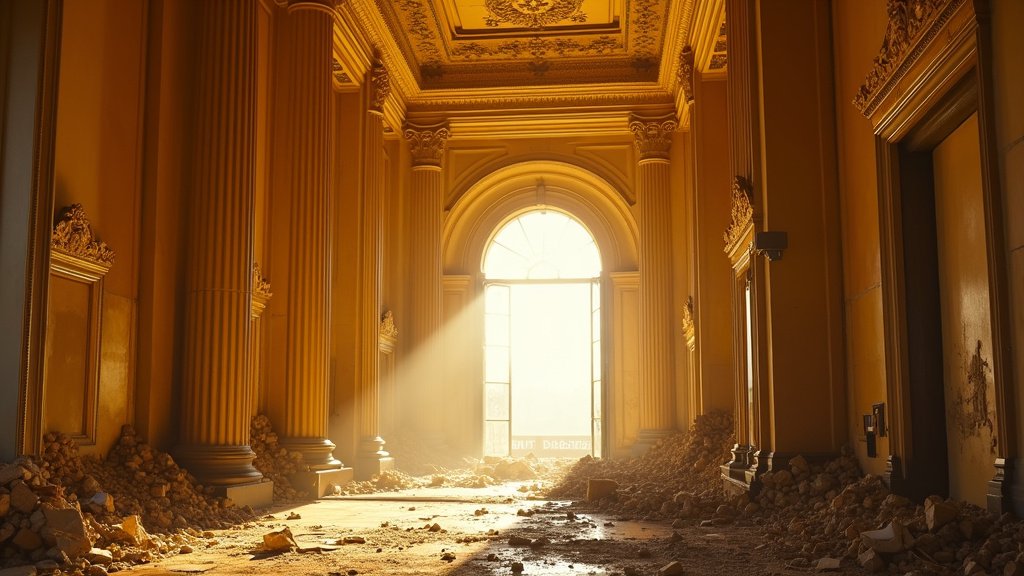
The White House, a symbol of American democracy and presidential power, has always been a canvas for its occupants, reflecting changing times and personal tastes. However, the extensive and often controversial alterations undertaken during Donald Trump’s presidency have introduced a distinct chapter, one that many believe will leave a lasting and indelible mark on the historic executive mansion.
A Grand Vision: The Ballroom and the East Wing Demolition
Perhaps the most significant and debated undertaking has been the construction of a massive, 90,000-square-foot ballroom. Estimated to cost between $200 million and $300 million, this project necessitated the demolition of a substantial portion of the East Wing, a structure that had housed offices for the First Lady’s staff, support personnel, and served as a guest entrance. While President Trump stated the ballroom would be privately funded by himself and other donors, the sheer scale of the demolition and construction has raised concerns. Critics have decried the destruction of historical space, with some preservationists labeling it a “desecration.” The White House administration has countered these criticisms by highlighting a long history of presidential renovations, emphasizing that the building has continuously evolved to meet modern needs. However, the extent of the East Wing’s demolition and the rapid pace of construction have prompted calls for stricter adherence to public review processes, including consultations with the National Capital Planning Commission and the Commission of Fine Arts. The news of these developments has resonated nationwide, drawing significant attention from current media outlets and sparking historical investigations into presidential alterations.
Gold, Glamour, and Personal Branding: Interior and Exterior Touches
Beyond the ambitious ballroom project, President Trump has overseen numerous other changes, many of which have been characterized by a penchant for opulence and a clear desire for personal branding, often drawing parallels to his Mar-a-Lago resort.
The Oval Office, the symbolic heart of American executive power, has undergone a significant aesthetic overhaul. It now features abundant gold embellishments on the fireplace, doorways, walls, and furniture. Portraits of former presidents have been reframed in elaborate gilded casings, and gold figurines and cherubs, some reportedly brought from Mar-a-Lago, now adorn the space. The presidential seal on the ceiling has also been enhanced with gold detailing. This transformation has been described by some as “gilded rococo nightmare” and “tacky.” Even a gold FIFA World Cup trophy has been prominently displayed.
The historic Rose Garden has been transformed from a manicured lawn into a paved patio, now referred to by some as the “Rose Garden Club.” This change, intended to provide a more stable surface for events, particularly for women wearing high heels, and to better replicate the experience of Trump’s Florida resort, has been met with criticism for altering a cherished historical landscape. Adjacent to the Rose Garden, the West Colonnade now features a “Presidential Walk of Fame,” displaying gold-framed portraits of former presidents. Notably, the portrait of President Joe Biden has been replaced with an image of an autopen, a subtle but pointed political statement.
Further touches include the installation of two towering 100-foot flagpoles on the White House lawns and golden ornamentation in the Cabinet Room, including decals and matching curtains. The administration has framed these changes as modernization efforts, with Trump himself stating the White House needed a more suitable space for entertaining than the current East Room.
A Historical Context of White House Transformations
It is a widely acknowledged fact that the White House has never been a static structure. Throughout its more than 200-year history, presidents have made significant alterations. Theodore Roosevelt established the West Wing in the early 1900s, separating presidential offices from the residence. Harry Truman’s administration undertook a monumental gutting and reconstruction of the entire interior from 1948 to 1952 due to structural concerns. First Ladies, too, have left their mark, from Jacqueline Kennedy’s restoration of the White House interiors and her iconic Rose Garden redesign to Lady Bird Johnson’s beautification projects. More recent occupants like Barack Obama oversaw the conversion of a tennis court into a basketball court and established the White House Kitchen Garden. These historical precedents are often cited by the Trump administration to justify its own renovations.
Enduring Questions and a Lasting Impression
Despite the historical context, the scale, style, and perceived process of President Trump’s renovations have been particularly polarizing. The extensive use of gold, the paving of the Rose Garden, and the demolition of the East Wing for a ballroom have been viewed by many as a departure from, and even a desecration of, the building’s historical integrity. The personal branding aspect, with echoes of Mar-a-Lago, and the bypassing of traditional review processes have drawn sharp rebukes from historians, preservationists, and critics. The current news cycle and ongoing investigations into the project’s funding and approvals underscore the contentious nature of these transformations. As the ballroom project nears completion, the ultimate legacy of these changes remains a subject of intense debate, with some seeing them as a bold modernization and others as a gaudy imposition that will define the White House for decades to come. The impact of these renovations is a testament to the enduring fascination and controversy surrounding the nation’s most iconic residence, with the current discussions spanning across national news and even reaching the West Coast.
These extensive changes, whether viewed through the lens of historical continuity or disruptive personalization, undoubtedly represent a significant reshaping of the White House, promising to influence its appearance and symbolic meaning for generations.