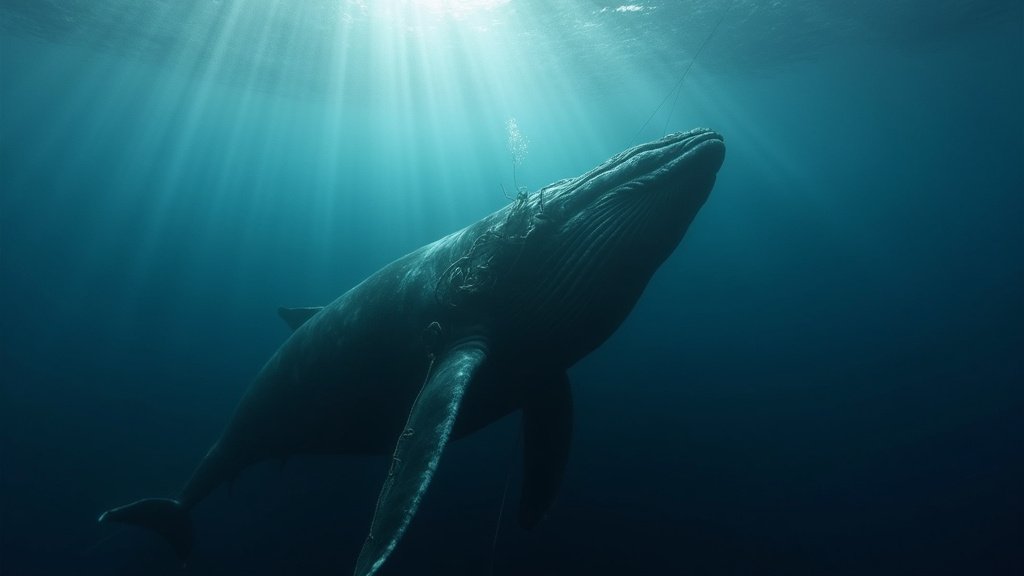
Whale entanglements in fishing gear along the U.S. West Coast have surged to their highest point in six years, prompting urgent research and collaborative efforts to protect marine mammals and sustain vital fisheries. In 2024, preliminary data revealed 34 whales entangled in fishing gear, with 36 confirmed cases reported by NOAA Fisheries across Washington, Oregon, and California. This alarming trend marks the most significant number of entanglements since 2018.
A leading initiative addressing this crisis is spearheaded by Oregon State University (OSU), which has garnered national recognition for its work. The OSU-led project, recognized with a W.K. Kellogg Foundation Community Engagement Scholarship Award, focuses on understanding and reducing whale entanglements, particularly in the Dungeness crab fishery, which is a cornerstone of the Oregon coast’s economy.
The Escalating Crisis on the West Coast
The entanglements primarily involve humpback whales, which accounted for 29 of the confirmed cases in 2024, alongside four gray whales and one fin whale. These incidents, often caused by static vertical lines used in commercial fishing gear, can lead to severe injuries, starvation, and ultimately death for the whales. The commercial Dungeness crab fishery is frequently implicated, with 12 of the 17 traced entanglements in 2024 linked to this sector. This problem extends beyond U.S. waters, with gear from Oregon and Washington fisheries documented entangling whales in Mexico and Canada. Experts point to a confluence of factors, including the overlap of whale feeding grounds with fishing areas during critical seasons, and disruptions caused by climate change-induced marine heat waves that alter whale migration and feeding patterns.
OSU’s Scientific Approach to Mitigation
Leading the charge is Dr. Leigh Torres, a researcher at OSU’s Marine Mammal Institute and Oregon Sea Grant Extension marine mammals specialist. Since 2016, Dr. Torres and her transdisciplinary team have collaborated with the Oregon Department of Fish and Wildlife (ODFW), commercial fishing industry members, and environmental organizations to map and analyze entanglement risks. Their extensive research involved logging over 42,000 miles of surveys and tracking more than 3,500 whales, combining this data with oceanographic information to pinpoint high-risk “hot spots” where whales and fishing gear frequently overlap. This scientific foundation has been crucial in informing management decisions and developing targeted strategies.
Collaboration: The Key to Conservation
Success in tackling whale entanglements hinges on robust partnerships. Oregon Sea Grant convened the Oregon Whale Entanglement Working Group in 2017, bringing together fishermen, scientists, state regulators, and conservation groups to foster trust and develop best practices. This collaborative environment was vital in identifying significant knowledge gaps about whale distribution along the Oregon coast, which previously limited effective management strategies. The project’s success is a testament to the strength of these partnerships, aiming for both environmental stewardship and economic resilience for coastal communities.
Pinpointing Risk and Implementing Solutions
Research has identified key periods and locations of heightened risk. The overlap between whale feeding behaviors and the Dungeness crab fishing season, particularly in the spring when whales feed closer to shore, presents a critical window for entanglement [Initial Context, 14, 35]. Findings from OSU’s research informed ODFW regulations adopted in 2020, which included measures like reducing crab pot limits and prohibiting crabbing outside of 40 fathoms after May 1st.
However, concerns persist about the sufficiency of current measures. Environmental groups and scientists advocate for the adoption of innovative technologies, such as “ropeless” or “pop-up” fishing gear. This technology eliminates the need for static vertical lines in the water column, thereby virtually removing entanglement risk. While progress has been made, with some entanglements traced to specific fisheries, the overall number of incidents underscores the need for continued and potentially more stringent actions.
Expanding the Reach for a Healthier Coast
Recognizing that whale migration and fishing activities span the entire West Coast, this vital project is expanding its scope beyond Oregon [Initial Context]. The goal is to synthesize findings and implement effective strategies across Washington, California, and beyond, fostering a coordinated, coast-wide approach to whale protection. The ongoing efforts are not only critical for the survival of whale populations but also for ensuring the long-term viability of the fisheries that depend on a healthy marine ecosystem. This comprehensive approach is vital for the future health of our ocean and its inhabitants.