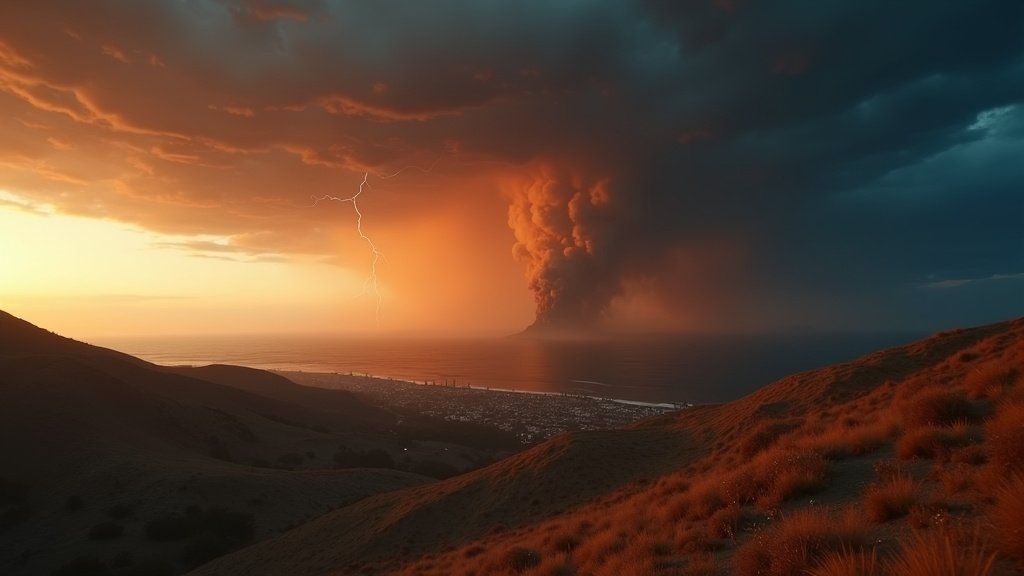
Southern California is confronting a severe convergence of environmental threats this week, as an unprecedented “trio of impactful hazards” descends upon the `west coast`. Residents are bracing for extreme heat, a dramatically heightened risk of wildfires, and the potential for disruptive thunderstorms. This concerning weather pattern compounds an already challenging period for the region, marked by ongoing `investigations` into past disasters and high-profile legal proceedings, making it a pivotal moment in `current news` across the state.
Unpacking the Environmental Triple Threat
The National Weather Service (NWS) has issued widespread warnings as Southern California prepares for what meteorologists describe as the most significant heat wave of the year. Ariel Cohen, the meteorologist in charge at the NWS Oxnard office, emphasized the critical need for preparedness. Temperatures are forecast to climb dramatically, with interior areas expected to reach between 95 and 105 degrees. Some valleys and deserts could even experience scorching highs of up to 110 to 116 degrees, posing a significant risk of heat-related illnesses for all populations, particularly the vulnerable. Compounding the daytime heat, overnight lows will offer little respite, remaining above 70 degrees in many locations.
This `trending` heat is a primary driver of the escalating fire danger. Red Flag Warnings have been activated across Southern California’s mountains and foothills, signaling conditions ripe for rapid and explosive fire behavior. The dry vegetation and substantial fuel loading, exacerbated by longer fire seasons and extended droughts attributed to climate change, create an incredibly volatile landscape.
The third element of this hazard triad is the anticipated monsoonal thunderstorms. Forecasts indicate a 5% to 30% chance of these storms developing from Friday through Sunday. While some rain could offer localized relief, the primary concern is the potential for dry lightning strikes, which can ignite new wildfires. These storms may also bring localized gusty winds, minor flooding, and dangerous debris flows, especially in areas with recent burn scars.
In response, fire departments across the `coast` and inland regions are proactively prepositioning resources and augmenting staffing. The California Governor’s Office of Emergency Services has dispatched additional firefighting assets to Los Angeles County, underscoring the seriousness of the looming threats.
Echoes of Past Disasters: The Eaton Fire `Investigations`
The current fire concerns are particularly poignant given recent history. The region is still grappling with the aftermath of the devastating Eaton Fire, which ignited on January 7, 2025, near Altadena, driven by hurricane-force Santa Ana winds. This blaze became one of California’s most destructive, burning over 14,000 acres, destroying more than 9,400 structures, and tragically claiming 19 lives. Many victims resided in west Altadena, a predominantly Black neighborhood, where evacuation warnings were reportedly issued hours later than in other areas.
`Investigations` into the Eaton Fire’s cause remain ongoing, with a significant focus on the potential involvement of high-tension power lines operated by Southern California Edison (SCE). Lawsuits have been filed against SCE, alleging negligence and a failure to de-energize power lines despite Red Flag Warnings being in effect. Beyond the official death toll, new research published in the Journal of the American Medical Association estimates that the combined Eaton and Palisades fires may have been far more deadly, suggesting an excess of 440 deaths in Los Angeles County during that period, likely linked to factors such as poor air quality and disruptions to health services.
Legal `News` Continues: The Tom Girardi Sentencing
Adding to the complexities of `current` events, the high-profile legal saga of disbarred attorney Thomas Vincent Girardi recently reached a significant milestone. In June 2025, Girardi, 86, was sentenced to 87 months in federal prison for embezzling tens of millions of dollars from his clients over a years-long scheme. He was also ordered to pay a $35,000 fine and over $2.3 million in restitution.
Girardi, once a celebrated figure in the legal community, was convicted of four counts of wire fraud in August 2024. Prosecutors revealed he diverted at least $15 million, using the funds to support a lavish lifestyle, including private jet travel, luxury items, and to finance the entertainment career of his estranged wife, Erika Jayne, a star of “The Real Housewives of Beverly Hills.” His firm, Girardi Keese, was ultimately forced into involuntary bankruptcy. This case represents a stark reminder of the long-term `consequences` of financial misconduct on the `west coast` and beyond.
Preparing for the Week Ahead
As Southern California confronts the immediate challenges of extreme heat, fire risk, `and` thunderstorms, the backdrop of ongoing `investigations` and legal `news` highlights the region’s resilience and its continuous efforts to address both natural disasters and systemic issues. Authorities urge residents to remain vigilant, stay hydrated, seek shaded or air-conditioned environments, and be prepared for potential evacuations or power outages. The coming days will test the preparedness and adaptability of communities across the Southland.