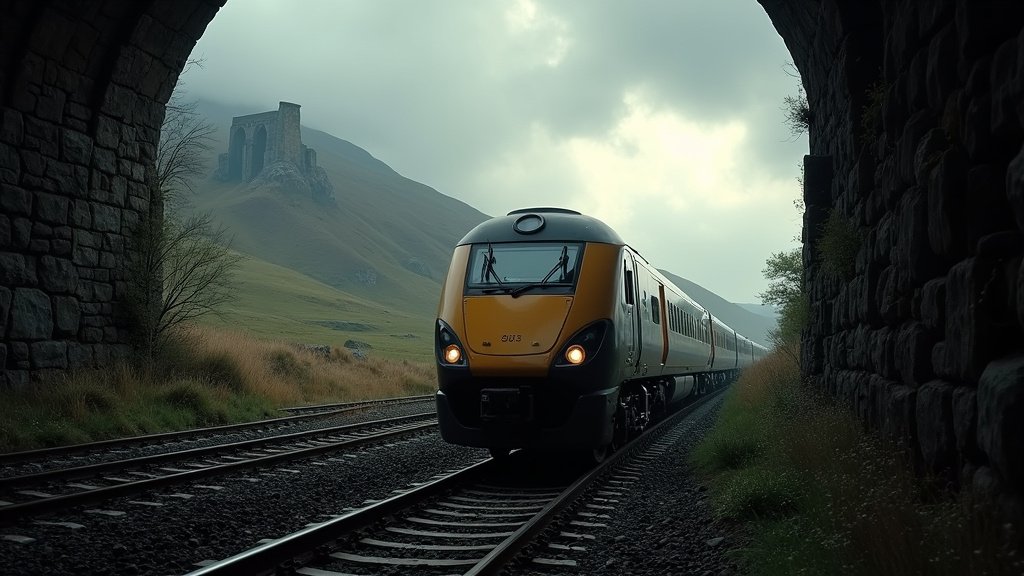
In early January 2026, a critical section of the West Coast Main Line (WCML) will close for two weeks to allow for the replacement of Clifton Bridge, a vital structure near Penrith, Cumbria, that carries the railway over the M6 motorway. This essential engineering project, part of a £60 million investment by Network Rail, necessitates a significant diversion for passenger services, with the historic Settle and Carlisle Line stepping in to carry the load.
The Clifton Bridge Replacement Project
The aging Clifton Bridge, originally built in the 1960s, has reached the end of its operational life. Its current condition restricts traffic, allowing only one train at a time and leading to delays on this key artery of the UK’s rail network. The bridge replacement is scheduled to take place between January 1 and January 14, 2026, a period chosen for its typically lower rail traffic volume, minimising disruption where possible.
Network Rail, in collaboration with National Highways, will implement extensive closures. The WCML will be shut between Preston and Carlisle. Concurrently, the M6 motorway will face weekend closures between Junctions 39 and 40 to facilitate the demolition of the old bridge and the installation of its modern successor. This operation is a significant undertaking, part of Network Rail’s broader commitment to modernising the West Coast Main Line through projects like “Trilink,” which involves upgrading signalling, overhead wires, and track infrastructure over several years.
Settle and Carlisle Line Steps In
To maintain connectivity between London and Scotland, and to minimise passenger inconvenience, Avanti West Coast will reroute its services via the scenic Settle and Carlisle Line. This marks the first time in over a decade that this historic route will serve as a major diversionary path for WCML traffic.
Avanti West Coast plans to operate a shuttle service approximately every two hours between Preston and Carlisle, running non-stop along the picturesque 73-mile route. Given that the Settle and Carlisle Line is not electrified, the operator will deploy its flexible bi-mode Class 805 Evero trains, capable of running on diesel power, to navigate the route. This approach aims to keep passengers on trains, avoiding the need for lengthy rail replacement bus services and offering a unique journey through the Yorkshire Dales and North Pennines, complete with iconic sights like the Ribblehead Viaduct.
The Value of Integrated Network Planning
The diversion highlights the enduring value of the Settle and Carlisle Line, a route that has historically been a vital corridor for both passengers and freight. While passenger diversion is the immediate focus, the line’s capacity for freight, particularly aggregates from local quarries, is well-established and contributes to its operational justification.
This event underscores a broader trend and necessity in railway planning: the integrated approach. By designing and maintaining routes that can serve both freight and passengers, the network gains resilience and efficiency. Freight can help sustain routes during off-peak passenger times, while passenger traffic can justify the economic viability of lines that might struggle on freight alone. The West Coast Main Line itself is undergoing a massive modernization programme, with substantial investments aimed at increasing capacity for both passenger and freight services, ensuring its future as a critical national transport link.
As engineers undertake this crucial bridge replacement, the Settle and Carlisle Line will once again demonstrate its adaptability and importance, ensuring that a vital part of the West Coast Main Line remains operational, even when the primary route is temporarily closed. Passengers planning to travel between January 1 and 14, 2026, are strongly advised to check their journey details in advance.